

Bad Credit Excavator Financing: What Lenders Actually Weigh When the Credit File Isn't Clean
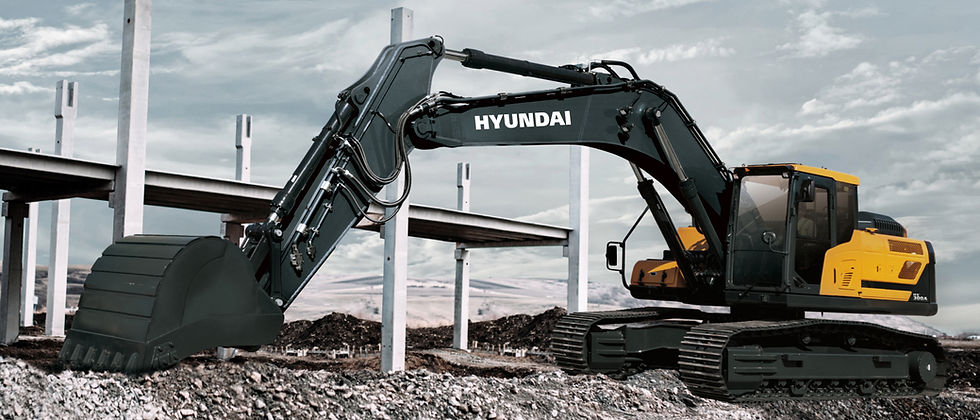
A damaged credit score is the single biggest reason excavation contractors assume they can't get approved for a new machine, and it's also the assumption that costs them the most money -- because it keeps them renting a Hyundai HX300A L or a comparable large-frame excavator by the month instead of building equity in one. Excavator financing for a borrower with a bruised credit file is absolutely possible nationwide, but it gets approved on a different set of facts than a clean-file application does, and almost none of those facts are the FICO number itself.
This isn't a story about predatory high-rate lenders exploiting desperate borrowers. It's about understanding that equipment lenders underwrite the machine and the business cash flow first, and the personal credit score is one input among several -- not the single gate it's treated as in a car loan or a credit card application.
Why Excavator Financing Isn't Underwritten Like a Car Loan
A car loan is largely a credit-score decision because the lender has almost nothing else to go on -- most car buyers don't have years of business financials, and the vehicle itself depreciates fast enough that collateral value alone won't save a bad loan. Excavator financing works differently because the collateral is a working asset that generates revenue for the business that owns it, and because equipment lenders are used to underwriting businesses, not just individuals.
A Hyundai HX300A L sitting on a mass-excavation or utility jobsite isn't a depreciating convenience item -- it's the thing that lets the business bill hours. Lenders who finance heavy equipment for a living know this, and they build their underwriting around it accordingly.
The Factors That Actually Move the Needle
When a credit file isn't clean -- a past bankruptcy, a string of late payments, a thin file from a relatively new business -- lenders who still work these deals are looking hard at a specific list of compensating factors. None of them are secret, but most contractors never ask what they are before they apply.
Time in business and time in the trade. A general contractor or excavation subcontractor who's been doing this work for eight years, even under a business entity that's only been formally registered for two, reads very differently to an underwriter than someone brand new to the industry.
Trailing cash flow, not just a credit score. Bank statements showing consistent deposits from invoiced work carry real weight -- a business depositing $40,000-$60,000 a month from excavation and site-prep contracts tells a different story than the credit report alone does.
The size of the deposit the borrower can put down. A larger down payment -- qualitatively, this can range from $0 for a strong file to a meaningful 20-40% of the machine's value for a weaker one -- directly offsets a thinner credit file by reducing the lender's exposure. There's no fixed number; it's negotiated against the whole file.
A personal guarantee from an owner with real assets. Even when the business entity's credit is thin, an owner willing to personally guarantee the note and who has home equity or other assets gives a lender something concrete to underwrite against.
What caused the credit problem, and whether it's resolved. A credit hit from a documented slow-pay dispute on a single large municipal contract reads very differently than a pattern of chronic late payments across many accounts. Lenders who specialize in this space ask about the story, not just the score.
Where a Discharged Bankruptcy Fits Into Excavator Financing
A Chapter 7 or Chapter 13 bankruptcy on the file doesn't automatically close the door on excavator financing the way it would at a typical bank branch. Most specialty equipment lenders have a standing policy around discharge date -- commonly looking for a bankruptcy that's been discharged for a meaningful period, often a year or more, with no new derogatory marks since. The exact seasoning period varies by lender and by how strong the rest of the file is, so it's worth having an honest conversation about timing rather than assuming either an automatic yes or an automatic no.
Contractors and roofers coming out of a difficult stretch -- a slow season, a client who didn't pay, a partner who exited the business poorly -- often assume that history permanently disqualifies them. In practice, a cleanly discharged bankruptcy with a documented reason and a track record since then is a story a specialty lender can work with far more easily than an open collections account that's still accumulating.
Structuring the Deal Around the Weak Point, Not Around the Score
The most useful mental shift for a contractor with credit challenges is to stop thinking in terms of "will I get approved" and start thinking in terms of "what structure gets this approved." A lender working a thin-file deal on a Hyundai HX300A L might require a larger deposit, a shorter term, a co-signer, or a UCC-1 filed against other equipment the business already owns free and clear -- any one of which can be the difference between a decline and an approval on the exact same credit file.
This is also where working with a broker or direct lender who specializes in equipment -- rather than walking into a community bank that mostly writes real estate and working-capital loans -- makes a real difference. A generalist lender sees a bad credit score and stops reading. A specialist sees the same file and starts asking what collateral, down payment, and guarantee structure would make it work.
Rebuilding Credit Through the Loan Itself
One detail that gets lost in the conversation: a properly structured equipment loan, paid on time, is one of the more effective ways a contractor can rebuild business credit specifically, because equipment lenders commonly report to the commercial credit bureaus in a way that distinguishes business credit from the owner's personal file. A contractor who takes on excavator financing at a less favorable structure today, pays it reliably, and comes back in 18-24 months for the next machine often finds the second deal looks completely different -- better terms, less documentation, a smaller deposit requirement -- simply because the payment history now speaks for itself.
Roofing contractors adding a compact excavator for drainage and tie-in work, demolition subs scaling into a larger-frame machine, and utility contractors replacing an aging rental with owned equipment are all common paths into this exact situation: credit that doesn't look great on paper, attached to a business that's clearly capable of making the payment.
Documentation That Strengthens a Thin-File Application
A borrower with credit challenges who shows up to an application with nothing but a credit report is asking a lender to make a decision on the single worst piece of evidence available. The applications that actually get approved tend to come with a short packet of supporting material the applicant pulled together proactively, rather than waiting to be asked for it piece by piece.
Three to six months of business bank statements. Consistent deposits, even with some volatility, tell a cash-flow story a credit score can't.
A signed contract or purchase order tied to the new excavator. If the Hyundai HX300A L is going to work a specific, already-won job, showing that contract gives the lender a concrete reason the machine will generate revenue immediately rather than sit idle.
A simple written explanation of what caused the credit issue. One paragraph, factual, no excuses -- a late-paying client, a medical event, a partner who exited badly -- framed around what's changed since. Underwriters read dozens of these and can tell the difference between an honest account and a vague one.
Proof of other on-time obligations. Current rent or mortgage payments, an existing equipment lease paid reliably, or trade references from suppliers all help counterbalance a rough patch elsewhere on the credit file.
None of this guarantees an approval, and no responsible lender will promise one sight-unseen. But a complete, honest packet consistently gets read differently than a bare application with a low score and nothing else attached -- and it's the difference between a lender saying no reflexively and a lender actually working the file to find a structure that fits.
A Realistic Example of How This Plays Out
Consider a two-year-old excavation and utility-line subcontracting business with a 580 owner credit score following a divorce-related late-payment stretch two years earlier, now fully current on every obligation. The business deposits roughly $45,000 a month from a mix of municipal and private utility work, and the owner wants to move off a rented excavator onto an owned Hyundai HX300A L to stop paying rental fees on a machine the crew uses nearly every week.
A generalist bank sees the 580 score and declines outright. A specialty equipment lender working the same file sees two years of business banking history, a documented and resolved reason for the credit dip, and a machine that will immediately replace a rental expense with a loan payment that's often comparable or lower -- and structures an approval around a larger deposit and a personal guarantee rather than declining. The score didn't change. The story around it did, because the owner brought the right documentation to the conversation instead of leading with the number on the credit report.
Ready to Move Forward?
BFC Equipment Loans works with excavation, utility, demolition, and site-development contractors nationwide to structure equipment financing around how a business actually operates, not a one-size-fits-all credit box. Visit our home page to see the full range of equipment we finance, or head straight to the equipment financing application to get a real answer on your file. If you're also buying or selling used iron, browse our equipment marketplace, and if you want more of this kind of breakdown delivered regularly, subscribe to the blog.


Comments