

What BLS Wage Data Actually Says About Equipment Operator Pay, and What It Means for Hiring
Most operator-shortage conversations stay qualitative: hard to find, hard to keep, not enough people in the pipeline. The Bureau of Labor Statistics tracks a specific occupational code, Operating Engineers and Other Construction Equipment Operators, through its Occupational Employment and Wage Statistics program, and that data tells a more specific story about where pay has actually moved, which matters just as much to a hiring budget as it does to an equipment budget.
The occupation code covers a wide range of real jobs: a skid steer operator on a landscaping crew and a large hydraulic excavator operator on a heavy-civil pipeline job both fall under the same broad classification, which is part of why a published national median figure can understate what a genuinely skilled, versatile operator commands in a tight regional market.
It also helps to understand how the government actually puts this number together before leaning on it too heavily. The Occupational Employment and Wage Statistics program surveys a large sample of establishments rather than individual workers, and reports statistics at the metropolitan and state level in addition to the national figure, which means a contractor who digs one level deeper than the headline national number, into their own metro or state area's published data, usually gets a far more usable figure than the national median most news coverage actually quotes.
Why the Median Number Understates the Real Market
National median figures smooth over huge regional and specialization differences. An operator in a high-cost metro market running a large excavator on a heavy-civil or pipeline job, comfortable with crane-adjacent rigging work, commands meaningfully more than the same job title in a lower cost-of-living region running compact equipment on residential site work. Treating the national median as the real local number is one of the more common mistakes a contractor makes when pricing labor into a bid.
BLS wage data also lags the real market by months because of how the survey is collected and published, which means a contractor relying only on the published figure risks anchoring a recruiting offer to a number that was already stale when it was published, in a market where competing offers from other contractors are moving in real time.
What Is Actually Driving the Pay Growth
Three forces are pushing operator pay up faster than general wage inflation: a wave of experienced operators aging into retirement without an equally large cohort behind them, a construction backlog across infrastructure, data center, and manufacturing-reshoring work that keeps demand for operating hours high, and a growing willingness among general contractors to pay a premium for an operator who is comfortable running GPS grade control and telematics-equipped machines rather than needing hand-holding on modern equipment.
That third point is worth sitting with. A contractor who finances newer, telematics-equipped machines from CAT, John Deere, or Komatsu is not just buying productivity and uptime. They are buying access to a labor pool that increasingly prefers to work on modern equipment, and in a tight labor market that preference genuinely affects who applies for an opening in the first place.

Public and federally funded work adds another layer on top of base wage data that a contractor bidding that kind of project cannot treat as optional. Davis-Bacon and related state prevailing-wage rules set minimum wage and benefit rates by craft and county on covered public projects, and those published prevailing-wage determinations, not the general BLS median, are the actual number a contractor needs to price a bid correctly. A contractor who only bids private work for years and then picks up a public infrastructure project for the first time can genuinely misjudge labor cost by relying on habits built around the private-market number instead.
Overtime and seasonal demand spikes move the real cost further still. A contractor racing to finish site work before a winter shutdown, or chasing a compressed schedule on a storm-recovery contract, frequently ends up paying significant overtime to keep experienced operators on a job rather than losing them to a competing crew, and that overtime premium rarely shows up anywhere in a standard annual wage figure. Building a seasonal overtime cushion into a bid, rather than assuming straight-time hours for the whole job, is one of the more reliable ways to protect margin on a schedule-driven contract.
Non-wage compensation has become a bigger part of the real competition for operators than it used to be, and it deserves its own line in a hiring budget rather than being treated as a rounding error on top of the hourly rate. Health coverage, retirement contributions, paid time off, and increasingly a clear path toward a lead-operator or foreman role all factor into whether an experienced operator takes one offer over another in a market where multiple contractors are often recruiting the same small pool of candidates at once.
The Certification and Credentialing Premium
Wage data broken out by credential, where it exists, consistently shows a premium for operators holding an NCCER credential or a union apprenticeship certification over those without one, and that premium has been widening rather than narrowing as more public and GC contracts specifically require certified operators on certain classes of equipment.
That trend connects directly to the equipment side of the business, because the certified operator shortage increasingly runs through the same manufacturer and dealer-sponsored training infrastructure covered elsewhere on this site, which means a contractor's choice of which brands to run can have a real, if indirect, effect on which certified operators are available to recruit locally.
Regional cost-of-living differences compound all of this in ways a single national conversation about operator pay tends to flatten out. A contractor relocating a crew between a high-cost metro market and a lower-cost regional market, or bidding a job outside their usual territory, needs to re-anchor their wage assumptions to the local market rather than carrying their home-market number with them, since the gap between the two can be the difference between a competitive bid and a crew that cannot be staffed at the rate that was quoted.
What This Means for a Hiring and Equipment Budget
A contractor budgeting for a new hire this year should expect to pay meaningfully above whatever number they remember from a few years ago, and should build that into a bid rather than discovering it mid-negotiation with a candidate who has other offers in hand. Treating the wage line as flat year over year, the way a lot of smaller contractors still do when pricing labor into a bid, is one of the more common and avoidable margin-eroding mistakes in a tight labor market.
There is also a workforce-composition angle worth naming directly. Women remain just 3.8 percent of equipment operators despite being a record share of the overall construction workforce, and the retention and cab-ergonomics data behind that gap points to a real, underexploited recruiting pool for a contractor willing to think seriously about PPE fit and cab accessibility when speccing a new machine.
The labor force behind these numbers is also shifting in ways worth tracking separately. Foreign-born workers make up a disproportionate share of the construction labor force relative to the overall economy, and a hiring and wage strategy built without accounting for that reality is building against the actual shape of the available labor pool rather than with it.
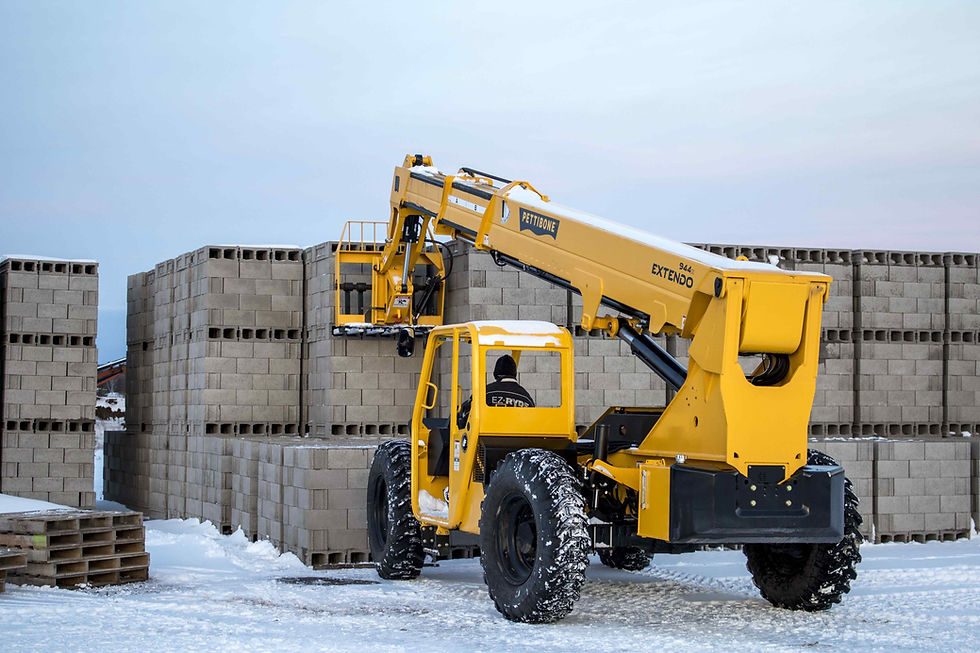
Utilization and scheduling intersect with wage data in a way worth naming directly too: a contractor paying a premium wage for a genuinely skilled operator gets a poor return on that investment if the same operator spends a meaningful share of the day idling, waiting on another trade, or running a machine that is not well matched to the task. Pairing a strong wage with strong equipment utilization, rather than treating the two as separate budget lines, is where the real productivity gains in a tight labor market tend to come from, and it is a planning conversation worth having at the same time as the hiring conversation rather than afterward.
Where Equipment Financing Fits the Conversation
None of this is an argument that a contractor can simply buy their way out of a tight labor market by financing more equipment. It is an argument that the equipment decision and the labor decision are more connected than a lot of fleet owners treat them. A smaller crew running well-equipped, modern machines with GPS grade control and intuitive controls can often out-produce a larger crew running older equipment, and that math changes how many operators a given volume of work actually requires.
A realistic view of what operator pay actually costs this year, built into a bid alongside a clear-eyed equipment plan, is a stronger foundation than either number considered on its own. BFC finances equipment for contractors nationwide building exactly that kind of lean, well-equipped fleet, whether the business already has a payroll history or is just getting started. See our construction equipment financing overview for how we evaluate applications across credit profiles.
Explore Financing With BFC
Whatever stage your fleet is at, financing that matches how your business actually makes money is one decision away. Visit BFC's home page to see how we work with contractors nationwide, apply for equipment financing to get a decision started, browse our equipment for sale and financing marketplace for your next machine, or subscribe to our blogfor more contractor-focused guides like this one.



Comments