

Bobcat MaxControl: Remote Operation for Skid Steers and Compact Track Loaders
Updated: Oct 4
Picture a skid steer working the edge of an open trench, or clearing debris inside a structure that's already been flagged as unstable, with nobody sitting in the seat. That's not a concept video, it's Bobcat MaxControl, a system that lets an operator run a skid steer or compact track loader from an iPhone or iPad standing well clear of the machine. It's one of the more quietly significant pieces of technology Bobcat has released in the compact equipment space, and it's worth understanding if your crews ever work in conditions where you'd rather not have anyone in the cab.
What MaxControl Actually Is
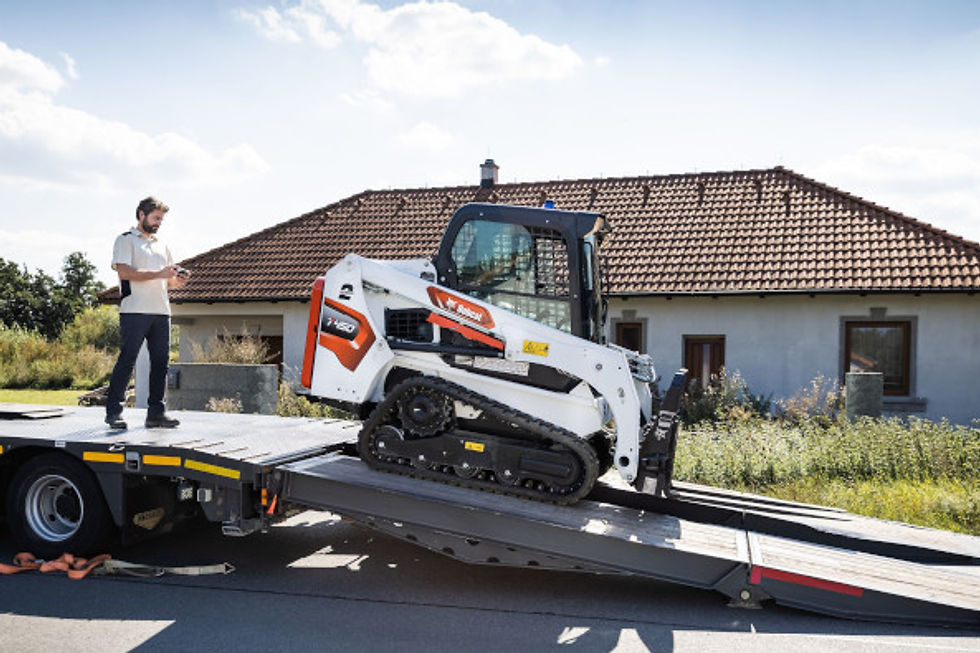
MaxControl turns a loader into something closer to a large, heavy-duty drone. The retrofit kit is simple on the hardware side: a component box and a single wiring harness, installed on the machine, is all it takes. From there, an operator controls the loader through a dedicated iOS app on an iPhone or iPad, or through an iOS-compatible game controller. Bobcat demonstrated the system with a SteelSeries Nimbus controller, with Xbox controller support in development at launch. Wireless range runs up to 300 feet, which covers most of the working radius a loader would ever need on a jobsite.
The compatibility list matters here too. MaxControl works with Bobcat skid-steer and compact track loaders from the M2-Series forward that are equipped with Selectable Joystick Control, a spec that goes back to 2004. Bobcat estimated roughly 250,000 loaders already in the field could be retrofitted with the system, which means this isn't a feature locked to brand-new machines only, a fleet owner running older M2-Series equipment can add this capability without replacing the loader itself.
No Real Predecessor, and That's the Honest Story
It's worth being straightforward about this one: MaxControl doesn't replace an earlier Bobcat remote-control product, because there wasn't one. This is Bobcat's first system of its kind, a genuine step beyond standard in-cab joystick operation rather than an upgrade to something that came before it. When a manufacturer introduces something genuinely new instead of iterating on an existing line, it's worth noting plainly rather than manufacturing a comparison that doesn't exist. The real comparison here isn't MaxControl versus an older Bobcat system, it's remote operation versus an operator physically sitting in the seat, and that's the framing that actually matters for a contractor deciding whether this is worth adding to a fleet.
Where This Actually Changes a Jobsite
The clearest use case is distance from hazard. Demolition contractors clearing debris inside a structure with a compromised roof or wall, environmental remediation crews handling contaminated material, and excavation crews working the edge of a trench next to utility lines all have scenarios where keeping a human body out of the machine's immediate working area is a genuine safety upgrade, not a convenience feature. MaxControl lets the same skilled operator run the loader from a safe vantage point instead of either taking the risk or bringing in a second piece of equipment to do the job differently.
There's a labor efficiency angle too. Bobcat has described the system as functioning like "an extra set of hands when help is limited," letting a single operator handle tasks that would otherwise require two people, one running the loader and one spotting or guiding material placement from outside the cab. It also cuts down on the repeated climbing in and out of the cab that eats time on jobs where an operator needs to step outside frequently to check placement or clear obstacles, and on a job with multiple loaders running, one operator can switch between machines within the app rather than needing a dedicated body in every seat.

Confined-Space Work Gets a Real Second Option
Think about jobs that currently get handled with a mini excavator threading into a tight basement opening, or a loader working inside a partially collapsed structure during disaster cleanup. Those jobs have traditionally come down to either accepting the risk of putting an operator in a confined, potentially unstable space, or bringing in specialized remote-demolition robots that cost far more than a standard loader and require their own dedicated operator training. MaxControl sits in between those two options. It takes a machine your operators already know how to run and lets them run it from outside the danger zone, using controls that are deliberately built to feel like the in-cab joystick experience rather than an entirely new skill set. For a contractor who takes on post-disaster cleanup, confined utility work, or structural demolition as part of their business, that middle option is genuinely useful rather than a novelty.
Built on Hardware That's Already in the Field
Because MaxControl runs through a retrofit kit rather than requiring an all-new machine, it changes the calculation for contractors who already own a fleet of M2-Series or newer Bobcat loaders. You're not looking at a full equipment replacement to get this capability, you're looking at adding a kit to equipment you already operate. That matters for a fleet owner deciding where to spend capital this year: the retrofit path is a real option alongside buying a newer machine outright, and either path is something BFC can help finance.
Operator Training Is Still Part of the Equation
It's tempting to treat remote control as something that eliminates the need for a skilled operator, but that's not quite right. MaxControl still requires someone who understands how the loader behaves, how it handles on uneven ground, and how to judge clearances and bucket position, just from a different vantage point instead of the seat. The skill transfers; what changes is where the operator is standing while they use it. Crews that already run Bobcat loaders well tend to pick up remote operation quickly, which is one more reason this fits naturally into an existing fleet rather than requiring a specialized new hire.
What's Still Coming
Bobcat has talked publicly about where MaxControl goes next, including object avoidance that identifies obstacles on a jobsite map in real time, and programmed navigation that would let a machine execute a pre-recorded sequence of tasks on its own. Neither of those is standard functionality today, and it's worth being clear about that distinction rather than describing future roadmap items as current features. What's shipping now is remote operation with a 300-foot range and a straightforward retrofit path, which is already a meaningful capability on its own without needing the future features to justify it.
Where This Fits Next to Bobcat's Other Tech Investments
MaxControl isn't happening in isolation. Bobcat has been investing across several fronts in making its compact equipment smarter and safer to operate, from the Stage V-compliant T650 compact track loader to telematics platforms that compete directly with CAT's offering, which BFC has broken down in our CAT VisionLink vs. Bobcat Machine IQ comparison. It's also worth seeing MaxControl in the context of where the industry's autonomy conversation is heading overall, which we covered in detail when CAT announced its push toward Level 4 autonomous construction equipment. Remote operation and full autonomy aren't the same thing, but they're both responses to the same underlying pressure: getting skilled labor out of harm's way without sacrificing productivity.
Financing the Fleet That Can Run This
Whether you're adding a MaxControl retrofit kit to loaders you already own or financing a newer compact track loader that already supports it, the underlying equipment financing math doesn't change. A skid steer or compact track loader you need on a regular basis is a bad candidate for repeat rentals, because every rental invoice for a machine you're going to need again next month is money that's gone for good, while a financed, owned machine builds toward something that's actually yours. BFC finances skid steers and compact track loaders for contractors nationwide, startups and established businesses, with deposit terms that flex to your credit profile instead of a single rigid bank requirement.
For demolition, remediation, and excavation contractors specifically, that math gets stronger once you factor in what a safety-focused technology like MaxControl can do for your insurance conversations and your ability to win work that requires documented safety protocols around hazardous material handling. Financing the right loader isn't just an equipment decision, it's part of how you position your business to win more of that work.
Compact Track Loader and Skid Steer Financing, Built Around Your Credit Profile
Equipment financing for a compact track loader or skid steer works differently depending on where your business stands. A newer contracting company with limited time in business can still get financed, typically with a more meaningful down payment to offset the limited track record, while an established operation with strong credit can often move forward with little to nothing down. Either way, BFC looks at the whole picture, the equipment, the use case, and the business, rather than running a single credit-score cutoff that knocks out otherwise solid operators. That matters especially for specialty crews, demolition and remediation contractors in particular, where the equipment itself often supports the kind of documented, safety-forward operation that makes a lender more comfortable saying yes.


Comments