

Bobcat T770 Compact Track Loader: What Changed From the T750
Updated: Oct 3
The large-frame compact track loader is the machine a lot of growing contractors graduate into once a mid-size CTL starts feeling underpowered on truck loading, heavy material handling, or grading work. Bobcat's T770 sits right at the top of that large-frame class, and it's worth understanding what actually changed when it replaced the T750 it's built on, rather than assuming a model number change is just a sticker update.
The T770 and T750 Share More Than You'd Expect, and That's the Point
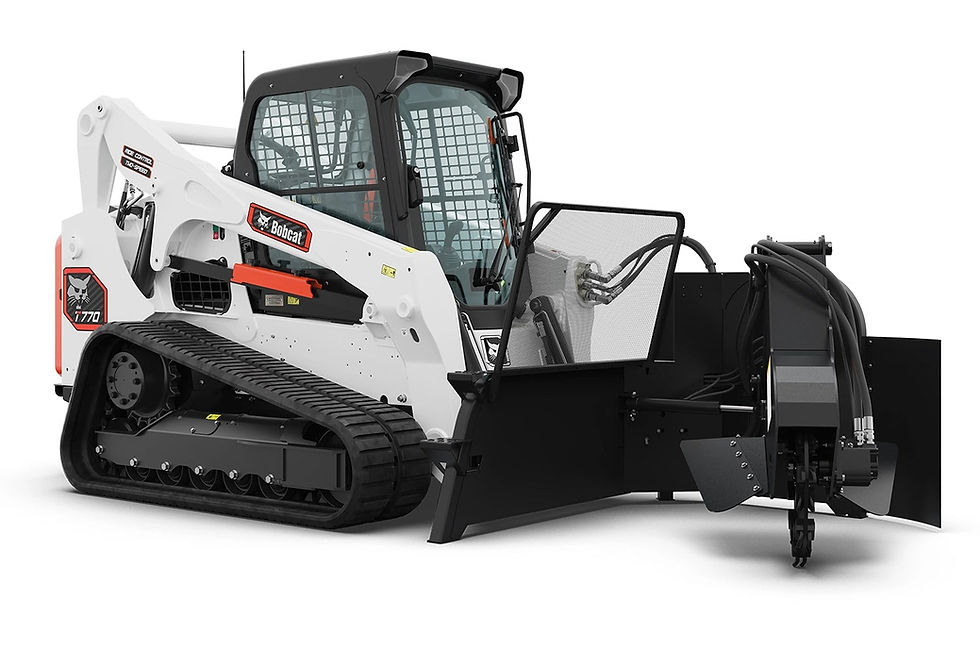
Here's the part that catches people off guard: the T770's core numbers are nearly identical to the T750 it replaced. Rated operating capacity sits at 3,475 lbs, tipping load at 9,929 lbs, operating weight at 10,515 lbs, and the engine still makes 92 horsepower, the same figures the T750 carried. Bobcat didn't chase a bigger number on the spec sheet. Instead, the real engineering work went into the engine itself: the T770 runs a 3.4-liter Bobcat-branded engine that meets Tier 4 Final emissions entirely through Selective Catalytic Reduction, with no diesel particulate filter required at all.
That's a genuinely different approach than the T750, which needed both a DPF and SCR to hit the same emissions standard. Dropping the DPF isn't a minor footnote. A DPF requires periodic active or passive regeneration cycles that can interrupt a workday, adds a failure point that gets expensive to replace, and adds exhaust system complexity that eventually needs service. An SCR-only design simplifies the exhaust system meaningfully, which matters on a machine that's going to rack up thousands of hours of real jobsite work.
What You Actually Feel in the Cab
The hydraulics got real attention too. Standard auxiliary flow runs 23 gpm, with a high-flow option reaching 36.6 gpm for attachments that need it, matching what the T750 offered but refined through the broader update. Lift height at the bucket hinge pin reaches 132 inches, or 11 feet, giving real reach for truck loading without stepping up into a wheel loader. CAT and other large-frame competitors in this class run similar numbers, but the T770's combination of lift height and rated capacity makes it a legitimate truck-loading machine, not just an oversized skid steer replacement.
Inside the cab, CAT-class operators and Bobcat loyalists alike will notice the DEF level indicator built into the cab display, along with an SCR error icon that alerts the operator once diesel exhaust fluid drops to 25 percent remaining. That's a small detail, but it's the difference between an operator who runs out of DEF mid-shift because nobody was tracking it, and one who gets a heads-up with enough runway to top off before it becomes a problem.
Compatible with Grade Control Most Competitors in This Class Don't Offer
One upgrade that genuinely sets the T770 apart from a straight T750 replacement is compatibility with Bobcat's newer 3D grade control system, built on Trimble technology. Grade control on a CTL isn't as common a conversation as it is on an excavator or a dozer, but for a contractor doing finish grading, pad prep, or site work where hitting elevation matters, having that option available on a large-frame loader instead of needing a separate dozer or excavator pass is a real production advantage. It's a sign Bobcat is positioning the T770 as more than a loading and material-handling machine.
Named Trades That Actually Run This Machine
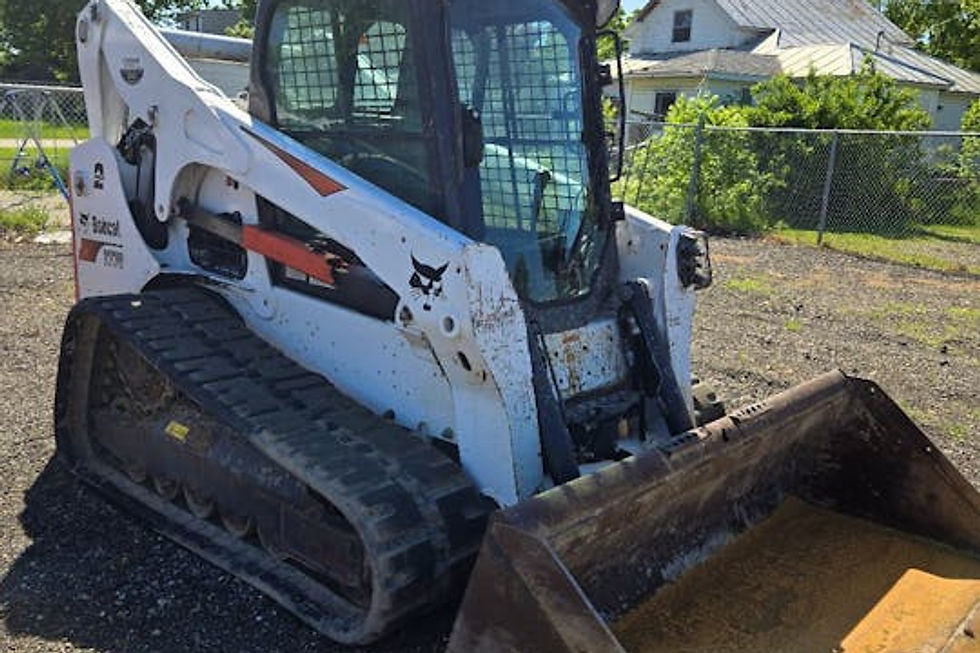
Site development contractors use the T770 for rough grading, pad prep, and moving large volumes of material between phases of a job where a mid-size CTL would be cycling constantly and a wheel loader would be overkill for tight access. General contractors running their own dirt work lean on the T770's lift height and capacity for truck loading on commercial and residential site work. Demolition and debris-hauling crews use the high-flow hydraulics option to run heavier-duty grapples and buckets without hydraulic starvation. Land-clearing and agricultural-adjacent contractors running root grapples or brush cutters benefit from the extra tractive effort a large frame provides over a mid-size unit.
The Rent-vs-Own Math on a Machine This Size
A large-frame CTL like the T770 isn't a once-a-season rental for most of the businesses that actually need one. If you're renting a machine in this class more than a handful of times a year, you're already paying for a large share of what ownership would cost, without building any equity and without the machine sitting ready on your lot the morning a job starts. Rental companies also stock these in limited numbers relative to mid-size CTLs, which means availability isn't guaranteed exactly when you need it, especially during a regional construction surge when every contractor nearby wants the same machine.
Equipment financing changes that equation. A financed T770 is available on your schedule rather than whatever the rental yard has on the lot, and every payment builds toward outright ownership instead of disappearing the moment the job wraps. BFC structures deposit requirements around the real strength of the borrower and the business, ranging from no money down for strong, established credit up to a modest percentage for newer operations still building a credit file, serving contractors nationwide rather than one region. Whether you're a demolition sub bidding your first large-frame job or a site-development company replacing an aging T750, financing a machine this size is a realistic path regardless of where your credit currently sits.
This Is Not a Minor Claim: The T770 Has an Actual Resale Track Record
Rather than take resale reputation on faith, it's worth knowing that the T770 specifically has won EquipmentWatch's Highest Retained Value Award in the compact track loader category, part of a run that's made Bobcat the winner across its compact equipment categories for six consecutive years running. EquipmentWatch's methodology isn't a popularity contest. It analyzes depreciation data across more than 12,000 models with up to 30 model years of history, running a proprietary algorithm that projects residual values up to 84 months forward using fair market and forced liquidation data, then awards the models projected to retain the highest percentage of original value after a five-year period within their category. That's a real, data-driven signal that a T770 you buy today is likely to be worth a genuinely competitive share of what you paid when it's time to trade in or sell, which matters for total cost of ownership even if the purchase price looks similar to a large-frame competitor's on day one.
How the T770 Fits Against the Rest of Bobcat's Current Lineup
Bobcat has been restructuring its compact loader lineup into Classic and Pro tiers across several models, and it's worth understanding where a large-frame machine like the T770 sits relative to that newer structure before you buy. We've broken down how the Classic vs. Pro split actually works, and the T770 remains a distinct large-frame option alongside that restructuring rather than being folded directly into it, which is worth clarifying before you start comparing spec sheets across the current catalog.
If you're also running excavation work alongside your loader fleet, it's worth understanding how CAT and Bobcat's telematics platforms differ when you're deciding how to monitor a growing mixed-brand fleet, since a large-frame CTL running alongside excavators and other equipment benefits from fleet-wide visibility rather than a brand-by-brand patchwork. And if your business runs both CAT and Bobcat iron side by side, understanding the real difference between CAT's CVA and Bobcat's Protection Plus coverage before you add another machine to the fleet is worth doing before, not after, you've financed it.
Undercarriage Costs Are the Line Item That Surprises New Large-Frame Owners
Anyone stepping up from a mid-size CTL or a skid steer into a large-frame track loader for the first time should go in understanding that undercarriage wear is a genuinely different cost category than what they're used to. Tracks, rollers, and idlers on a machine moving 10,500 lbs of operating weight across rough, debris-strewn demolition or site-development ground wear faster and cost more to replace than on a lighter machine, and that's true across every brand in this class, not just Bobcat. Budgeting realistically for undercarriage replacement over the life of the machine, rather than being surprised by it at hour 3,000, is part of actually understanding what a large-frame CTL costs to run, not just what it costs to buy or finance.
Visibility and Operator Comfort Matter More the Longer the Shifts Get
A large-frame CTL doing truck-loading cycles all day is a machine an operator sits in for long stretches, and the cab environment matters more here than on equipment used in shorter bursts. Clear sightlines to the bucket edge and the loader arms at full lift height reduce the fatigue and guesswork that come with blind spots, which matters directly for safety when you're cycling near a truck bed repeatedly for hours. A well-laid-out cab with proper climate control and low noise and vibration isn't a luxury on a machine like this, it's a factor that affects how consistently an operator can run a full shift without the kind of fatigue that leads to mistakes late in the day.
Financing a Large-Frame CTL the Right Way
The T770 occupies a specific niche: more capable than a mid-size CTL, more maneuverable and versatile than a wheel loader, and genuinely useful across site development, demolition, and land-clearing work. Whether you're adding your first large-frame loader or replacing an aging T750, BFC structures financing around your actual business and credit profile rather than a generic one-size product, with terms that make sense for contractors building toward ownership instead of renting indefinitely.



Comments