

Bobcat's Tiller Attachment vs. CAT's LT114 and LT118: Three Widths, One Honest Data Gap
A rear-mounted tiller doesn't get the attention a mulcher or a grapple does, but for landscape contractors, erosion-control crews, and anyone prepping ground for seed, sod, or a soil amendment, it's one of the highest-utilization attachments a skid steer or track loader can carry. It turns a carrier that's already on site for grading or material handling into a ground-prep machine without a second piece of equipment showing up on the trailer.
Bobcat's Tiller: Three Widths, Clear Numbers
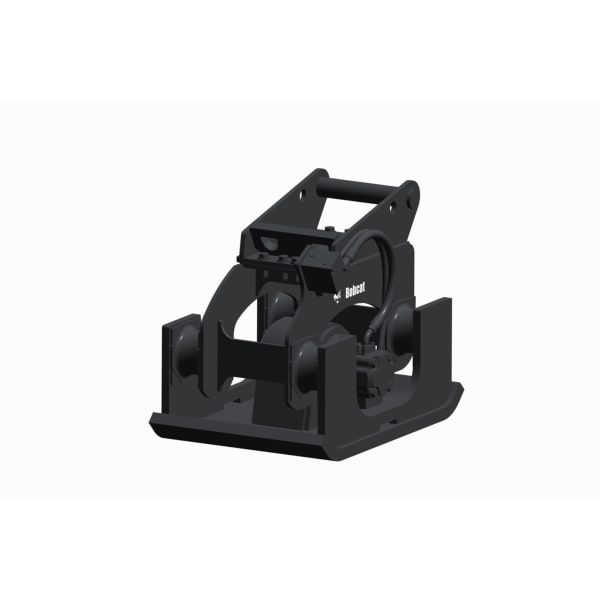
Bobcat publishes its tiller attachment in three widths, and the spec table is straightforward. The 40 in model weighs 475 lb. The 62 in model weighs 660 lb. The 76 in model, the widest, weighs 749 lb. Carrier compatibility spans a wide band of Bobcat's own lineup: compact track loaders T590, T770, and T870, the MT100 mini track loader, skid-steer loaders S16 and S18 on the small end, the full S450 through S770 skid-steer range, and the UW56 Toolcat utility work machine.
That carrier spread is worth noting on its own. A tiller that can mount on something as small as an S16 or MT100 mini loader, down at the compact end of the lineup, and also on a full-size S770, means a contractor isn't locked into a single machine class to use this attachment. A landscape crew running mini track loaders for tight residential access can tiller the same way a site-development crew running full-size skid steers can, just at a different working width.
Where CAT's LT114 and LT118 Stand, and an Honest Flag
CAT sells a comparable landscape rotary tiller attachment in two published models, the LT114 and the LT118, sized at 53.3 in and 72.8 in respectively. Here's where we have to be straightforward rather than paper over something that doesn't add up: CAT's publicly listed operating weight for both the LT114 and the LT118 shows the same figure, 925.9 lb, despite the meaningfully different working widths. A wider tiller housing, more tines, and a longer rotor shaft should produce a real weight difference between a 53.3 in unit and a 72.8 in unit, the way Bobcat's own three widths each carry a distinct weight.
We're not going to guess which number is wrong, or quietly pick one and present it as settled fact. The most likely explanation is a publishing error somewhere in CAT's spec sheet, a shared placeholder figure that didn't get updated for both models, but we can't confirm that without CAT's own correction, and it's not our place to invent a split that sounds plausible. If an exact CAT tiller weight matters for your trailer's rated capacity or your carrier's lift-arm rating, that's a number to confirm directly with a CAT dealer before you commit to a purchase, not one to take from any secondhand source, including this one.
What a Tiller Actually Does That a Box Blade Doesn't
It's worth being clear about where a tiller fits relative to other grading attachments, since the two get confused. A box blade, which we've written about separately, moves and levels material that's already loose or workable, cutting high spots and filling low ones in a single pass. A tiller does something mechanically different: its rotating tines actively break up and mix compacted or undisturbed soil, turning hard ground into a workable seed bed or blending in an amendment like compost, lime, or gypsum throughout the top several inches of soil rather than just moving material around on the surface. On a lot of jobs, the sequence is tiller first to break and mix the ground, then a box blade or a landscape rake to finish-grade it level. Owning both attachments on one carrier covers that whole sequence without renting a second machine mid-job.
Who Actually Uses This Attachment
Landscape contractors prepping new sod or seed installations, where a properly tilled bed is the difference between a lawn that establishes and one that doesn't; erosion-control and site-restoration crews breaking up compacted construction traffic areas before reseeding a disturbed site to meet a stormwater permit's revegetation requirement; and agricultural-adjacent operations, orchard and vineyard support work, small-acreage farming services, where a skid steer tiller covers ground a dedicated farm tractor attachment would otherwise be needed for. Any of these operations running the attachment even a few days a month gets real utility out of owning it outright rather than chasing a rental unit every time a job calls for ground prep.
Rotor Direction and Why It Matters for Finish Quality
One detail worth understanding before you buy: tiller rotors can run in different rotational directions relative to the direction of travel, and that choice affects the finish. A standard rotation throws soil backward and tends to leave a rougher, clod-heavier finish, fine for breaking up hard ground or incorporating a heavy amendment. A reverse, or counter-rotation, design pulls soil up and over the rotor, producing a finer, more uniform tilth that's better suited to a finished seed bed. Confirming which rotation direction a specific tiller model uses, and whether that matches the finish quality your typical job calls for, is worth a direct conversation with your dealer rather than an assumption based on the attachment's size alone.
Tine Wear and the Maintenance Item Most Owners Ignore
The tines themselves are the attachment's primary wear component, and they take a beating differently depending on soil type. Sandy or loamy soil is comparatively gentle on tines, while rocky ground or heavy clay accelerates wear on the tine tips noticeably faster, to the point where a crew working consistently rocky sites should expect to replace tines meaningfully more often than one working clean, rock-free topsoil. Most manufacturers, Bobcat included, design tines as a bolt-on replaceable wear item specifically because of this, rather than welding them permanently to the rotor shaft, so budgeting for periodic tine replacement is a normal cost of ownership rather than a sign anything's wrong with the attachment. Skipping that replacement and running worn tines doesn't just slow the work down, it also puts more strain on the gearbox and drive components as dull tines fight the soil instead of cutting through it cleanly.
It's also worth checking how the tiller's gearbox is driven and sealed before you buy, since that's the component most likely to fail expensively if it's neglected. A tiller runs off the carrier's auxiliary hydraulic circuit the same way a mulcher or a trencher does, and the gearbox that converts that hydraulic flow into rotor speed needs its own oil level and condition checked on a regular service interval, not just left alone until something breaks. A dealer's recommended service schedule on that gearbox is a short, cheap habit that avoids a genuinely expensive repair down the line.
Rent-vs-Own on a Seasonal, High-Utility Attachment
Tillers sit in an interesting middle ground on the rent-vs-own question. They're not quite as universally stocked at a general rental counter as a bucket or a pallet fork, but they're common enough that a contractor can usually find one in a pinch, unlike a highly specialized attachment. The case for owning comes down to frequency and timing control: landscape and site-restoration work tends to cluster in spring and fall planting windows, exactly when every other contractor in the region is also trying to rent the same attachment, and a tiller that's already on your trailer means a ground-prep job never waits on rental-counter availability during your busiest season.
Financing a tiller alongside the skid steer or track loader it mounts to, or adding it onto an already-financed carrier, keeps the attachment's cost on the same predictable note as the machine instead of treating it as a separate rental line item every season. We'd rather talk through your actual seasonal volume, how many sod, seed, or site-restoration jobs you run each spring and fall, than quote a flat payment figure that ignores how that revenue actually arrives. Down payment requirements on an attachment addition to an existing loan tend to run lighter than financing a full carrier, since there's less principal at stake, but the exact structure depends on your credit profile and how the deal gets put together.
The Bottom Line
A tiller earns its place in a landscape or site-restoration fleet by doing something no other common attachment does, actively breaking up and mixing soil rather than just moving it. Bobcat gives you three clearly specified widths to match your typical job size and carrier class. CAT's LT114 and LT118 cover a comparable width range, even where CAT's own public spec sheet currently shows an inconsistency on operating weight that's worth confirming directly with a dealer rather than taking at face value from any source. Either way, if ground prep is a recurring part of your work, this is an attachment worth owning rather than scrambling to rent every planting season.
See how a box blade fits into a finish-grading sequence alongside a tiller, read our comparison of CAT bale spears and Bobcat bale forks for hay and erosion-control work, or see our full skid steer financing options.
Ready to Add a Tiller to Your Own Equipment Note?
Visit our home page to see everything BFC finances, apply for equipment financing to get started today, browse our equipment for sale and buy/sell marketplace if you're ready to add a machine, or subscribe to our newsletter for more equipment and financing content like this.


Comments