

Buying a Used John Deere Wheel Loader: What Actually Holds Resale Value
A used John Deere 644 G-Tier and a used 644 P-Tier wheel loader can look like the same machine at a glance, same frame class, similar bucket capacity, same general silhouette. They are not priced the same on the used market, and they shouldn't be. Deere's P-Tier generation brought real horsepower, breakout force, and serviceability gains over the G-Tier lineup it's replacing, and a buyer who doesn't know which tier they're actually looking at is negotiating blind. Here's what actually drives resale value on a used John Deere wheel loader, nationwide, before you buy or finance one.
G-Tier to P-Tier Wasn't a Cosmetic Change
When Deere rolled out its P-Tier large wheel loaders, the 744, 824, 844, and 904, the gains over the G-Tier machines they replaced were measurable, not marketing language. Horsepower rose 3% on the 744 and 824, 9% on the 844, and 7% on the 904. The 844 and 904 also burned less fuel, 2% to 9% less on the 844 and 3% to 7% less on the 904, while bucket breakout force and hydraulic pressure increased across the line. The cab entry door opening grew 79% larger than the previous series, a real ergonomics win for an operator climbing in and out dozens of times a shift, and JDLink telematics became standard across every P-Tier loader rather than an upsell.
That combination, more power, better fuel economy, and standard telematics, is exactly why a used P-Tier wheel loader holds a real premium over a G-Tier machine in similar condition. It's not nostalgia or brand loyalty driving that gap, it's a documented spec difference a buyer can verify before they pay for it.

Ground-Level Servicing Changes What Downtime Actually Costs
The 744 and 824 P-Tier models added ground-level servicing, including a remote engine oil dipstick, so routine maintenance checks don't require a technician climbing onto the machine every time. High-capacity, heavy-duty axles come standard with axle cooling filtration, and a standard lockup torque converter improves both fuel economy and response under load. None of that shows up as a bigger bucket number, but it directly affects how much a wheel loader actually costs to keep running over a multi-year ownership period, which is exactly the kind of detail that separates a genuinely informed used-equipment buyer from someone just comparing bucket capacity and asking price.
Lenders and dealers both lean on third-party data to price a used wheel loader, and understanding where that valuation data actually comes from is worth knowing before you negotiate, since it's the same data your financing offer will likely be built on.

Matching Loader Size to the Job Actually Changes the Economics
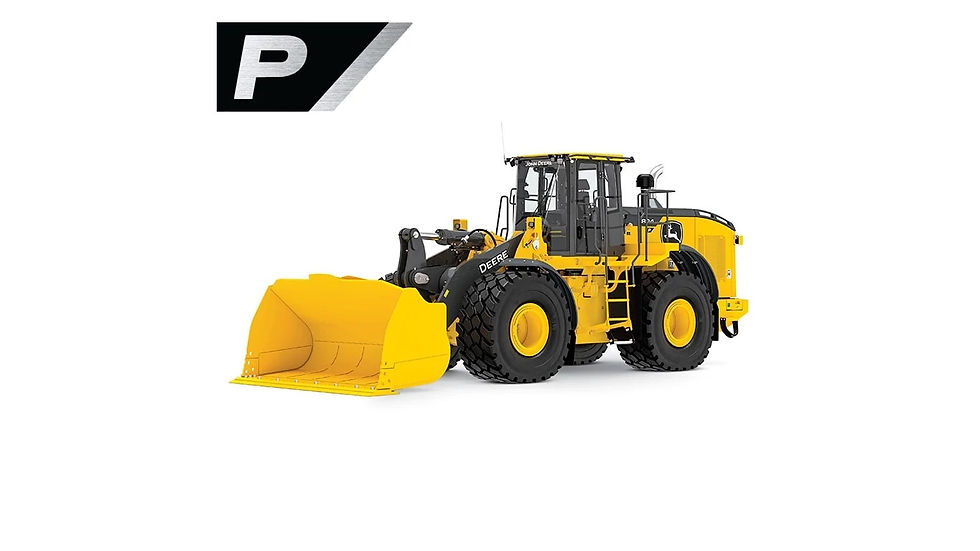
The P-Tier large wheel loader line spans a real range, from the 744 up through the 904, and the right size for a given operation depends on the material being moved and the truck beds being loaded, not just on what's available used nearby. A material yard loading smaller dump trucks all day doesn't need the breakout force or operating weight of a 904, and paying for that extra capacity in fuel burn and tire wear on every single cycle adds up fast over a season. Conversely, an aggregate operation running larger haul trucks that's undersized on loader capacity ends up running more cycles than necessary to fill each truck, which costs time just as surely as an oversized machine costs fuel. Matching loader class to the actual haul truck fleet and material density on your jobsite is one of the most overlooked ways to control real operating cost on a wheel loader, used or new.
Advanced Vision and Obstacle Detection Are Optional, and That Matters for Resale
Deere offers an Advanced Vision System and an Advanced Obstacle Detection System as options on P-Tier wheel loaders, not standard equipment. A used loader that already has these installed is a genuinely safer machine around ground personnel on an active jobsite, quarry, or yard, and that safety case translates into real resale value for fleet buyers who have to account for it in their own insurance and safety programs. If a listing doesn't specify whether these systems are present, ask, because the base P-Tier spec sheet alone won't tell you.
Tire and Axle Condition Decide the Real Price on Any Wheel Loader
Tires are one of the single largest line-item costs on a used wheel loader, and a machine that looks clean everywhere else can still be sitting on tires that need replacing within a few hundred hours, a cost that can run into five figures depending on the size class. Check tread depth and sidewall condition carefully, inspect the axles for play and listen for bearing noise during a test drive, and confirm whether the standard axle cooling filtration on P-Tier models has actually been serviced on schedule rather than just being present on the spec sheet.
Tire choice itself is worth asking about too. Wheel loaders can run on standard radial tires, foam-filled tires, or solid tires depending on the application, and a quarry or demolition yard running solid or foam-filled tires to avoid punctures has already absorbed a cost that a buyer moving the machine to a different, lower-abrasion application doesn't necessarily need to carry forward. Match the tire type on a used listing to your actual jobsite conditions rather than assuming the prior owner's setup is automatically right for your operation.
Bucket and Attachment Configuration Changes the Real Value Too
A used wheel loader's bucket configuration matters as much as the carrier itself. General-purpose buckets, light-material buckets, and multi-purpose (4-in-1) buckets all carry different capacities and different resale expectations, and a machine listed with just a bare bucket price can be hiding the fact that the buyer will need to source forks, a grapple, or a different bucket size separately to actually do the work they need done. Ask specifically what's included in the sale and whether any quick-coupler system is present on the loader arm, since swapping attachments on a machine without one means shop time and downtime every time the job changes.
Counterweight configuration is another detail worth checking on a used P-Tier loader, since Deere offers different counterweight options across the 744 through 904 line to balance the machine for different bucket sizes and material densities. A loader configured for aggregate handling and one configured for lighter material handling aren't interchangeable without adjustment, and a buyer planning to use the machine differently than its prior owner did should factor that into the price.
Financing a Used Wheel Loader the Right Way
Wheel loaders tend to sit at the higher end of the price spectrum among the equipment classes a general contractor, quarry operator, or material yard runs, which makes the financing structure matter even more than it does on a smaller machine. A lender who understands the real difference between a G-Tier and P-Tier loader, and who looks at documented tire condition, axle service history, and JDLink usage data rather than just an hour meter and a asking price, can put together a term that actually reflects the specific unit's remaining working life instead of a generic depreciation curve applied to every wheel loader regardless of configuration.
That kind of equipment-specific underwriting is exactly what separates a financing partner who actually knows construction and material-handling equipment from a generic bank loan officer working off a spreadsheet. Clean documentation, verified tier generation, and an honest accounting of tire and axle wear all strengthen both the financing approval and the resale value down the line.
The Rent-vs-Own Math on a Wheel Loader
Material yards, aggregate and quarry operations, and general contractors doing their own site material handling all tend to rent a wheel loader before committing to buy one, which makes sense for a seasonal or one-off job. But a business renting a wheel loader more than a handful of times a year, or keeping one on long-term rental because buying outright feels like a bigger commitment, is paying for most of the machine's value in rental fees without ever building equity in an asset they can resell. Financing a used P-Tier loader with the ground-level service features, standard telematics, and documented tire and axle condition described above puts a contractor on the ownership side of that math instead.
If you're weighing a Deere wheel loader against another brand's used market, our breakdown of what holds resale value on a used Komatsu wheel loader runs through the same kind of honest, spec-level comparison.
What To Actually Check Before You Buy
Confirm G-Tier vs. P-Tier generation and the actual horsepower, fuel-burn, and breakout-force differences that come with it.
Ask whether Advanced Vision or Advanced Obstacle Detection is installed, since neither is standard.
Check ground-level service points and confirm the remote engine oil dipstick and axle cooling filtration have actually been maintained.
Inspect tires and axles closely. Tire replacement cost alone can swing the real value of a used loader by thousands of dollars.
Confirm JDLink telematics history is available so you can verify the machine's actual usage pattern, not just its hour meter.
Finance It the Right Way
BFC structures wheel loader equipment financing for construction and material-handling businesses nationwide, startups and established companies, strong credit and challenged credit. Start at our home page, browse equipment for sale, or go straight to our equipment financing application once you've found the right machine. You can also subscribe to our blog for more breakdowns like this one.


Comments