

Dealer Service Agreements and Semi Truck Financing: Bundle or Pay Separately?
A Freightliner Cascadia dealer offers an extended powertrain or full-coverage service agreement alongside a new truck purchase, and the owner-operator financing the deal has to decide whether to pay for that coverage separately or roll it into the semi truck financing itself. It is the same basic question a contractor financing a wheel loader or excavator faces with a dealer-offered service plan, but it carries extra weight on an over-the-road truck, where unscheduled downtime does not just slow a jobsite down, it stops revenue entirely until the truck is back on the road.
Lenders do not treat every add-on the same way. A bank or finance company may be comfortable financing the truck's purchase price while declining to extend that same financing to an attached service agreement, effectively treating the agreement as a soft cost outside the core collateral. Other equipment and commercial vehicle lenders will finance the service agreement right alongside the truck, recognizing that a well-maintained Cascadia, with scheduled service actually performed on time, represents better collateral over the life of the semi truck financing than an identical truck running without that safety net. Which approach a specific lender takes is worth asking about directly, since it is not consistent across the industry.
The Case for Bundling It Into the Loan
For an owner-operator, the practical argument for bundling a service agreement into semi truck financing comes down to cash flow discipline. Running a truck without a maintenance agreement in place means repair costs show up as unpredictable, lump-sum expenses exactly when they are least convenient: often mid-trip, sometimes far from home, always competing with fuel and other immediate operating costs. A driver without that cushion sometimes defers a service interval simply because the invoice landed at a bad moment, and deferred maintenance on an engine or transmission rarely stays a small problem for long. Financing the service agreement spreads its cost the same way the truck's purchase price is spread, removing the temptation to push a service interval back when cash is tight that particular week.

There is a collateral logic that works in the lender's favor here too. A truck kept current on scheduled maintenance holds its value better and breaks down less over the life of the loan, which matters directly to a lender whose only real protection is the truck itself. That shared interest is part of why some lenders will finance the agreement even when they are more conservative about financing other kinds of add-ons.
Lenders vary on whether they will finance a service agreement alongside the truck or only the base purchase price
Bundling spreads the agreement's cost the same way the truck's price is spread, reducing the odds of deferred maintenance when cash is tight
A well-maintained truck is better loan collateral, giving some lenders a direct incentive to finance the agreement too
Coverage terms vary significantly: some agreements cover scheduled maintenance only, others extend to major powertrain components
Check whether the agreement transfers to a new owner if the truck is sold or traded before the loan term ends
What to Read Before You Decide
Not every service agreement deserves to be financed, and the decision should start with what the specific agreement actually covers. A basic agreement limited to scheduled maintenance, oil changes, filters, and routine inspections, is a very different value proposition than a comprehensive agreement extending into major powertrain or component coverage closer to an extended warranty. An owner-operator running heavy annual mileage gets more realistic use out of broader coverage than someone running a lighter regional route with fewer total engine hours accumulated per year. Reading the actual coverage terms, not just the sales pitch, before financing it prevents paying interest over several years on coverage that was never likely to pay for itself.
Transferability matters too. Some agreements move with the truck to a new owner if it is sold or traded before the term ends, which can meaningfully help resale value down the line. Others are tied to the original purchaser and simply expire with no residual value if the truck changes hands early. That detail changes the real economics of financing the agreement over its full term.
Fleet-Level Agreements for Multi-Truck Operators
An owner-operator who grows into a small fleet of two or three trucks sometimes finds better terms available on a fleet-level service agreement than on separate agreements negotiated truck by truck. Manufacturers and dealers both have an incentive to keep a repeat multi-truck customer, and that can translate into more favorable coverage terms or pricing than a single-truck purchase would command on its own. If you already have one financed truck under a manufacturer service agreement and are financing a second, it is worth asking directly whether a combined or fleet-level arrangement is available before simply replicating the same single-truck agreement a second time.
When Paying Separately Makes More Sense
An owner-operator with strong, predictable cash flow and a disciplined habit of setting aside a maintenance reserve each month may come out ahead paying for service separately rather than financing it. This keeps the core semi truck financing balance leaner and avoids paying financing charges on a service contract whose total cost, spread over several years of interest, can end up higher than simply paying for covered repairs as they occur, particularly for a well-run truck with a clean maintenance track record already.
Why This Matters More for Over-the-Road Trucks Specifically
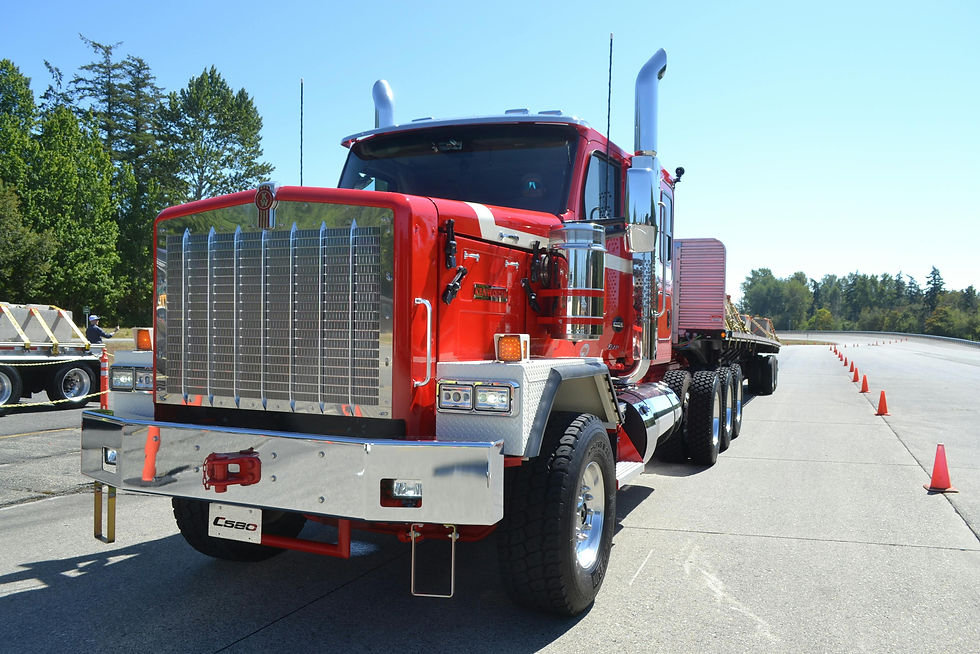
The stakes around maintenance and service coverage are genuinely higher for a long-haul semi truck than for a lot of other financed equipment, simply because of how the asset earns money. A wheel loader or excavator sitting idle for a few days while a part is sourced is a real cost, but the jobsite and the business around it generally continue functioning. An over-the-road truck that is down is a driver earning nothing at all until it is repaired, with no offsetting work happening in the meantime. That difference is a big part of why extended service coverage, and the decision of whether to finance it, deserves more deliberate attention on a semi truck financing deal than it might get on other equipment purchases where downtime carries a smaller and more contained cost.
Dealer-Offered Versus Third-Party Agreements
Not every extended service agreement attached to a semi truck financing deal comes from the manufacturer itself. Dealers frequently offer third-party administered agreements alongside or instead of a manufacturer-backed program, and the two are not interchangeable. A manufacturer-backed agreement is typically honored at any authorized dealer network-wide, which matters enormously for an over-the-road truck that may need service hundreds of miles from where it was purchased. A third-party agreement's network can be narrower, and the financial strength of the administrator standing behind the claims matters in a way it simply does not with a manufacturer's own program, since a third-party administrator that goes out of business leaves the agreement worthless regardless of how many payments were made toward it.
Before financing either type of agreement into a semi truck loan, it is worth confirming where the truck can actually be serviced under that coverage, what the claims process looks like, and whether the administrator has a verifiable track record. A lower upfront price on a third-party agreement is not a bargain if it turns out to cover only a narrow service network or comes from an administrator with a thin financial history. This is exactly the kind of detail that is easy to skip past during a dealership purchase but very much worth confirming before adding years of financing charges on top of the agreement's base cost.
Making the Right Call for Your Operation
There is no single correct answer, and that is the honest takeaway. A newer owner-operator without much of a maintenance reserve built up yet, running high annual mileage, tends to benefit from bundling a service agreement into semi truck financing, since it protects against deferred maintenance at exactly the moments cash is tightest. A more established operator with healthy reserves and a clean maintenance history may do better paying separately. Either way, this decision deserves a direct conversation with your lender rather than a default answer based on whatever the dealer happens to offer first.
Ready to Finance Your Next Truck?
BFC Equipment Loans structures semi truck financing nationwide, including conversations about whether to bundle extended service coverage into your loan, across Freightliner and other approved manufacturers. Apply now to get started, or visit our Financial Center to see financing and leasing options for semi trucks and other commercial equipment.
For more, see our pieces on GAP insurance and semi truck financing and bank statement financing for a dump truck or semi truck loan.
Visit our homepage to learn more about BFC Equipment Loans, browse equipment for sale if you're buying or selling, or subscribe to our blog for more financing strategy content.


Comments