

The 15% Tariff Window: Why Equipment Trade Relief Won't Last Into 2028
There's a piece of trade policy that hasn't gotten nearly the attention the original tariff increases did, and it matters if you're pricing a new excavator, dozer, or wheel loader right now. In June 2026, the federal government quietly cut the tariff rate on a category of agricultural, construction, and mobile industrial equipment from 25% down to 15%, provided that equipment meets a revised domestic-content threshold. It's real relief, on real machines, at a real moment when contractors have been feeling tariff-driven price pressure for the better part of two years. But the relief comes with an expiration date built into it, and understanding both halves of that story, the discount and the deadline, matters more for your next equipment decision than either half alone.
What Actually Changed in June 2026
Effective June 8, 2026, and running through the end of 2027, the tariff rate on qualifying construction and mobile industrial equipment from qualifying trade partners dropped from 25% to 15%. The mechanism that makes a given machine eligible also changed in a way that's easy to miss: the required threshold of U.S.-made content was lowered from 95% down to 85%, which widens the pool of models that can actually qualify for the reduced rate. That's a meaningful shift. A machine that couldn't clear the old 95% domestic-content bar, because it uses a globally-sourced hydraulic component or an engine built at a non-U.S. plant, may clear the new 85% bar and qualify for a real price break it wouldn't have gotten a year ago.
It's worth being precise about what this relief is and isn't. It's not a blanket tariff repeal, and it's not aimed at every category of imported machinery. It's a targeted carve-out for agricultural, construction, and mobile industrial equipment specifically, from a defined set of qualifying trade partners, and it only applies once a machine clears the domestic-content math. For contractors who've grown used to treating "tariffs" as a single flat number that applies uniformly across every purchase, this is a reminder that the actual policy is more granular than that, and getting the granular detail right on a specific unit is where the real savings live.
The Manufacturers Are Still Absorbing Real Costs
Even with the June relief in place, the major equipment makers are still eating substantial tariff-related costs, which is worth understanding because it's a big part of why the relief isn't described as permanent. Caterpillar has reported hundreds of millions of dollars in extra manufacturing costs tied to tariffs, and the company's own guidance puts the total tariff impact at more than $2 billion for 2026. Kubota disclosed roughly $150 million in tariff-related costs in a single quarter, even while posting strong overall profits. CNH Industrial, the parent of Case and New Holland, cited a combination of lower sales in North and South America, higher tariffs, and rising labor costs as pressure on its profitability. Komatsu and Volvo Construction Equipment both reported flat sales and reduced operating income tied at least partly to trade-related cost pressure, and Volvo went as far as closing its Rokbak rigid-hauler business, citing rising costs and trade uncertainty as contributing factors.
None of that cost pressure disappeared in June. What changed is that a meaningful slice of it, specifically the portion tied to the 25% headline rate on qualifying machines, got cut by 10 points. Manufacturers are still passing some tariff cost through to dealer pricing on the equipment that doesn't clear the qualification bar, or that comes from trade partners outside the relief's scope, so the discount is real but it is not universal across every model in a given manufacturer's lineup. That unevenness is exactly why two contractors buying what looks like the same class of machine, an excavator in the same size class from two different brands, or even two different trims of the same model, can end up with noticeably different landed costs once the tariff treatment is applied.
Why This Relief Has an Expiration Date
The June 2026 rate cut runs through the end of 2027, not indefinitely, and trade coverage of the policy has been consistent in framing it as a temporary window rather than a permanent fix. That's an important distinction for anyone timing a purchase around it. If the underlying 25% rate structure reasserts itself once the relief period lapses, and there's no guarantee it won't, equipment that qualifies for the reduced rate today could see that discount evaporate on whatever the next model year or production run looks like after the window closes. A contractor who's been putting off a purchase because of tariff-driven sticker shock now has roughly an 18-month runway where the math is meaningfully better than it was in 2025, and meaningfully better than it may be again in 2028.
What Qualifies, and What Doesn't
The 85% domestic-content threshold and the qualifying-trade-partner requirement mean that not every machine on a dealer's lot automatically gets the 15% rate. Sourcing varies by model, by production plant, and sometimes by model year within the same product line, which means the honest answer to "does this machine qualify" is almost always "it depends, ask the dealer for the specific build." This is exactly the kind of detail worth confirming before you sign anything, because the difference between a qualifying and non-qualifying configuration of the same base model can be a real swing in total cost. It's also a good reason to work with a dealer and a lender who can walk through the actual landed cost on the specific unit you're considering, rather than pricing off a manufacturer's list price that doesn't reflect the tariff treatment of that exact machine.
Compact equipment tends to source components a little differently than the largest excavators and dozers in a given manufacturer's lineup, which means qualification can genuinely vary by size class within the same brand. A mid-size wheel loader built primarily at a domestic plant with domestically-sourced hydraulics may clear the threshold more easily than a compact machine built on a shared global platform. None of that is a reason to avoid a particular size class, but it is a reason to ask the specific question about the specific unit rather than assuming the whole product line is treated the same way.
The Rent-vs-Own Case Under a Ticking Clock
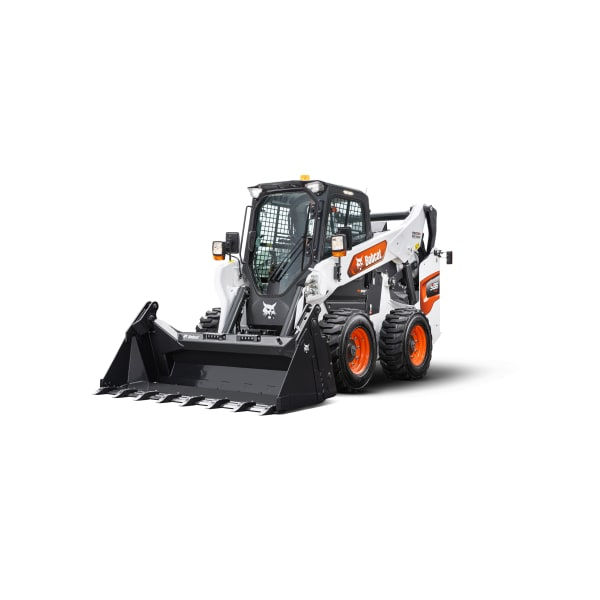
For excavation, demolition, and site-development contractors who've been renting through the last two years of tariff-driven price increases rather than buying, the June relief changes the calculus in a real way. Every month spent renting during a genuine, time-limited discount window is a month of rental payments that build no equity and don't lock in today's better tariff treatment on the machine you eventually buy anyway. If you know you need another excavator or skid steer for 2027 work regardless, buying into the relief window rather than waiting it out is the financially cleaner move, especially compared to buying after the window closes and the rate structure potentially reverts. That logic applies whether you're a general contractor scaling a fleet, a grading sub replacing an aging machine, or a demolition contractor adding a second unit to run two crews at once.
A Florida-Specific Wrinkle Worth Knowing
South Florida's ports handle a meaningful share of the equipment and parts flow into the state, which means Florida dealers and contractors are directly exposed to however this tariff and content-threshold structure gets applied at the point of import. Dealer networks serving Miami-Dade, Broward, and the wider Southeast have had two full years now of adjusting pricing and inventory strategy around tariff volatility, and the June relief has been a genuine, if partial, break for buyers working with those dealers. If your equipment sourcing runs through a South Florida dealer network, this is a good window to have a direct conversation about which specific units in their current inventory clear the 85% threshold, since that answer can vary dealer to dealer depending on what's actually on the lot.
The Bottom Line
The story on equipment tariffs in 2026 isn't just "prices are up." It's more specific than that: a real, dated relief window opened in June, it covers a meaningfully wider set of machines than the old rule did, and it's scheduled to close at the end of 2027 with no guarantee of renewal. For a contractor who's been sitting on a deferred equipment decision waiting for the tariff picture to calm down, this is close to as calm as it's likely to get for a while. Confirming which specific machine qualifies, and locking in equipment financing while the 15% rate is in effect, is a more defensible strategy than betting the relief either becomes permanent or that waiting longer will somehow produce a better number.
If tariff-driven cost pressure has you weighing new against used, our breakdown of new vs. used excavator financing in 2025 walks through how that math has been shifting. It's also worth checking where equipment loan rates actually stand in 2026 before you lock in financing on a tariff-qualifying machine, and if you're weighing a purchase against the calendar, our guide to timing an equipment purchase around rates, depreciation, and the year-end window covers the other half of that decision.
Ready to move forward? Visit our home page, apply for equipment financing, browse or list equipment for sale, or subscribe to the BFC blog for more coverage like this.
Comments