

Extended Service Plans vs. In-House Maintenance: What Actually Makes Sense for a Financed Machine
Updated: Oct 3
A machine that's financed instead of rented is a machine a contractor now owns the maintenance problem for, permanently. That's the trade every contractor makes when they stop renting and start building a fleet — and it's a trade worth making, because the equity and availability of owned equipment is worth far more than what gets spent keeping it running. But it does raise a real decision: does the maintenance get handled in-house, or does it make more sense to buy into a manufacturer or dealer extended service plan?
There isn't a universal right answer, but there is a clear way to think through it, and it starts with being honest about what in-house maintenance actually costs when it's done right.
What In-House Maintenance Really Requires
Doing maintenance in-house isn't just an oil change and a grease gun. It means a trained technician (or a trained owner-operator) who actually knows the service intervals for that specific machine, access to genuine or genuinely-compatible parts, a place to do the work, and the discipline to actually follow the schedule instead of deferring it when the crew is slammed. A preventive maintenance schedule that exists on paper but doesn't get followed in practice protects nothing.
For a contractor with one or two machines and no dedicated shop, this is genuinely hard to do consistently. For a contractor running a larger fleet with a shop and a technician on payroll already, in-house maintenance often makes complete financial sense — the fixed cost of the shop and the technician is already being absorbed across multiple machines, so each additional unit's maintenance cost drops.
There's also a licensing and liability angle worth knowing: some states require specific certifications for technicians performing certain repairs (refrigerant handling for cab HVAC systems is a common example), and a contractor doing fully in-house maintenance needs to confirm their technician actually holds whatever certifications the work legally requires, rather than assuming any experienced mechanic can perform every type of repair without one.
What an Extended Service Plan Actually Buys
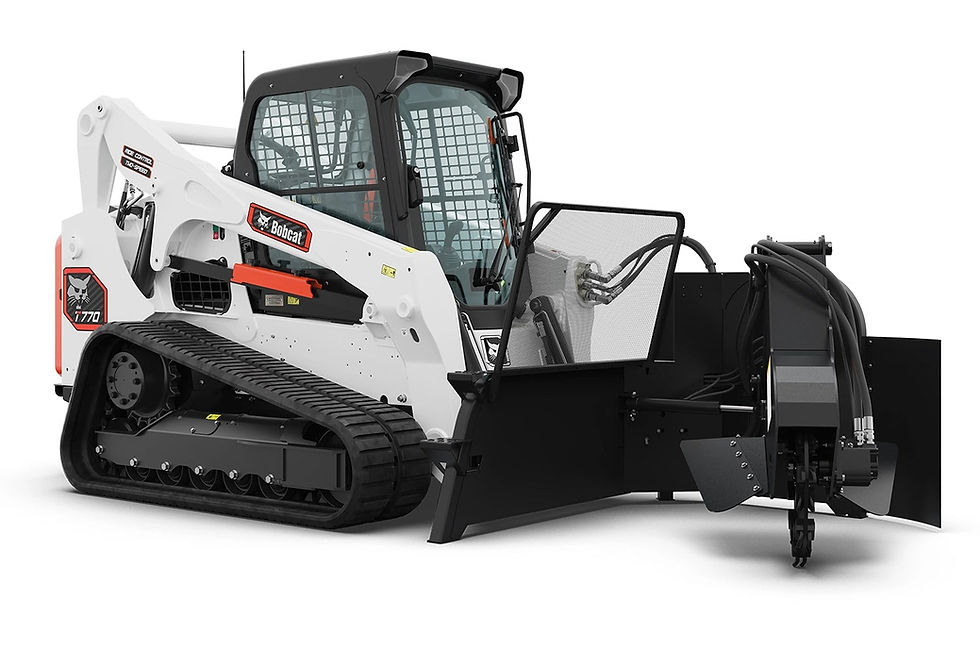
A manufacturer or dealer extended service plan is, in practice, a prepaid labor-and-parts contract tied to the machine's service schedule, often bundled with the kind of uptime guarantees — loaner equipment, priority scheduling, expedited parts — that an independent shop can't match. The real value isn't the maintenance itself; it's the predictability. A contractor who knows exactly what a compact track loader's maintenance will cost over three years can price that into a bid with confidence, instead of guessing and hoping the machine doesn't need an unplanned hydraulic repair mid-project.
The tradeoff is cost and flexibility. An extended plan is usually priced to cover the dealer's margin on top of the actual service cost, and it typically has to be used at that dealer's network rather than wherever is most convenient on a given day. For a contractor running one specific brand consistently and working near that brand's dealer network, that tradeoff is often worth it. For a contractor running a mixed fleet across several brands, juggling several separate service-plan relationships can get complicated fast.
How This Interacts With the Financing Decision
A lender evaluating a financing or leasing application is, among other things, evaluating how well the collateral will be maintained — a poorly maintained machine loses resale value faster and is a bigger risk if the loan ever needs to be worked out. Contractors who can point to a documented maintenance plan, whether that's an extended service contract or a credible in-house program with real records, are telling a stronger story to a lender than a contractor who can't say with confidence when the last service was done.
This matters even more on a leased machine with a residual value built into the structure. If the lease assumes the machine comes back in good condition at the end of the term, deferred maintenance isn't just an operating risk — it can directly affect the numbers at lease-end when the equipment gets inspected against the lease's return condition standards.
Technician Availability Is the Variable Nobody Budgets For
The construction and heavy-equipment industries have a well-documented shortage of qualified diesel and hydraulic technicians, and that shortage hits in-house maintenance programs harder than it hits dealer-backed service plans, because a dealer network spreads its technician capacity across many customers and has more scheduling flexibility to absorb demand spikes. A contractor planning to hire and train an in-house technician should factor in how genuinely difficult that hiring market is right now, not just the theoretical cost savings of doing maintenance internally.
This doesn't make in-house maintenance a bad choice — plenty of contractors have built strong internal programs — but it does mean the decision should account for actual local labor market conditions for qualified technicians, not just a spreadsheet comparison of hourly shop rates versus dealer rates.
Extended service plans trade cost predictability and dealer-backed uptime support for less flexibility and a higher per-hour service price.
In-house maintenance rewards contractors who already have shop infrastructure and a trained tech, and penalizes contractors who don't have the discipline to actually follow a schedule.
A documented maintenance history, either way, strengthens a contractor's position with a lender on future financing.
Mixed-brand fleets often find in-house maintenance more practical than juggling several separate dealer service-plan relationships.
Warranty Interactions Are Easy to Overlook
A manufacturer's original factory warranty and a dealer's extended service plan interact in ways that are worth understanding before assuming they overlap or conflict. Most extended plans are structured to pick up exactly where the factory warranty ends, extending coverage years rather than duplicating it, and most require the plan to be purchased within a specific window — often at the time of original sale or shortly after — rather than being available to add at any point later in the machine's life. A contractor who waits to decide can lose the option entirely, not just pay a higher price for it.
It's also worth confirming exactly what voids an extended plan before relying on it. Some plans require maintenance to be performed at an authorized dealer and documented, which circles back to the same documentation discipline in-house maintenance requires anyway — the records just end up filed with the dealer rather than internally. A contractor who assumes an extended plan covers them regardless of who does routine service can be unpleasantly surprised at claim time if the fine print says otherwise.
Reading the actual contract, not just the sales pitch, is worth the time here. The gap between what a service advisor describes verbally and what the written terms actually cover is where a lot of extended-plan disappointment comes from, and it's avoidable with a careful read before signing.
The Honest Answer: Match the Plan to the Fleet
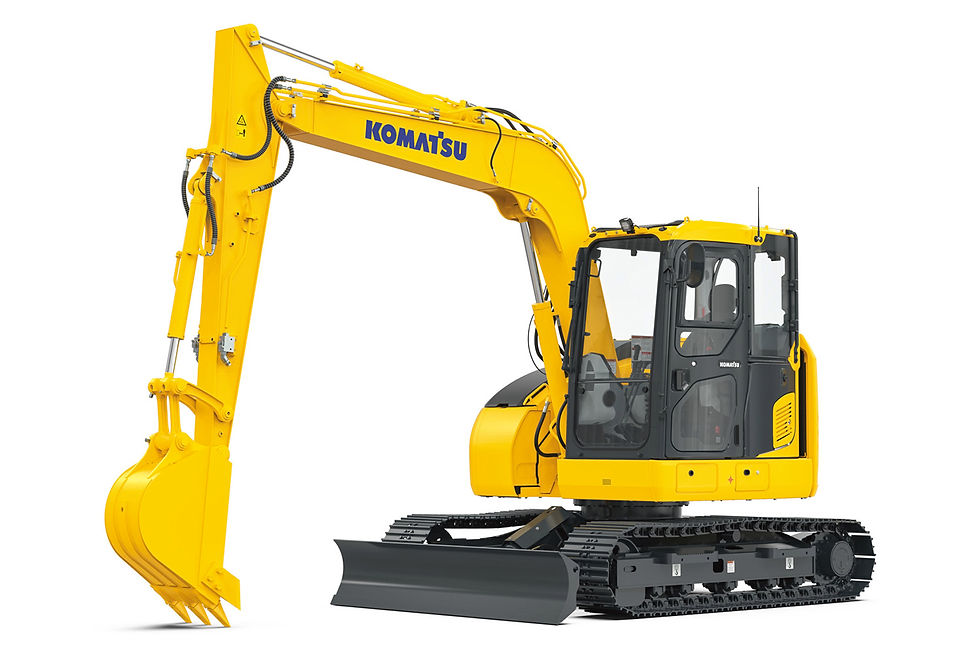
A contractor with a single financed excavator and no shop almost always comes out ahead with a dealer extended service plan — the predictability and uptime support is worth the premium at that scale. A contractor running eight machines with a shop and a technician already on staff is usually better served handling it in-house and putting the money that would have gone to a service contract toward the next machine instead.
A useful middle-ground option worth knowing about: some contractors split the difference by handling routine service in-house (oil, filters, basic inspections) while reserving a dealer extended plan specifically for major-component coverage — engine, hydraulics, drivetrain — where the cost of getting it wrong is highest. That hybrid approach captures a meaningful share of the cost savings from in-house routine work while still keeping dealer-backed protection on the expensive failure modes that would otherwise be the biggest risk.
Either way, maintenance planning belongs in the same conversation as the financing itself, not something figured out after the machine arrives. BFC structures equipment financing for startups and existing businesses nationwide, any credit profile — and a contractor who's thought through how a machine will actually be maintained is in a stronger position walking into that conversation.



Comments