

Financing a Skid Steer With a Full Attachment Package: Structuring the Machine and the Attachments as One Deal
Almost nobody buys a bare skid steer or compact track loader and stops there. A landscaping crew needs forks and a broom. A demolition sub needs a grapple. A snow removal contractor needs a pusher or a blower. A paving or utility sub might need a cold planer. The machine is the platform — the attachments are what actually make it earn money on a given job — and yet a lot of contractors still finance the machine on one note and figure out the attachments separately, on a credit card, a dealer floor-plan, or whatever cash is on hand that month. There is a better way to structure it, and it starts with treating the machine and the attachment package as one financing decision instead of two.
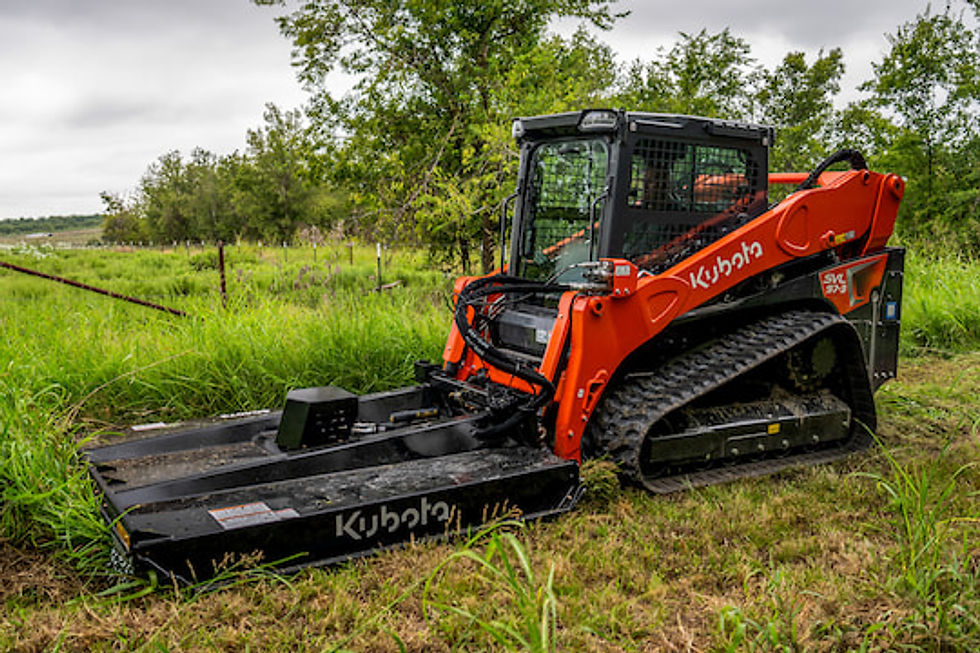
The machines built for heavy attachment use back that up with real hydraulic muscle. A Kubota SVL97-3 (96.5 horsepower, 3,459-lb rated operating capacity at 35% tipping load, 7,646 lbf breakout force) offers up to 41.2 gpm of high-flow hydraulics through a 14-pin connector. A Bobcat S76-2 (74 horsepower, base 2,900-lb rated operating capacity that steps up to 3,050 lbs with a 200-lb counterweight or 3,100 lbs with a 300-lb counterweight, and a 5,800-lb tipping load) runs up to 30.3 gpm on its high-flow auxiliary circuit. A New Holland C245 (90 horsepower, 4,500-lb rated operating capacity, 9,200-lb breakout force) delivers up to 39.9 gpm through its enhanced high-flow option. Those hydraulic numbers are not just specs — they are what determines which attachments a given machine can actually run at full performance.
Why Bundling the Attachments Into the Loan Makes Sense
One application, one approval, one closing, one payment schedule covering the machine and everything that bolts onto it — that is the practical case for bundling. It also simplifies the bookkeeping side of the business: instead of tracking a machine note, a credit card balance for the forks, and a separate dealer plan for the grapple, there is one loan and one depreciation schedule to manage. For a contractor buying a machine specifically to run a defined set of attachments from day one, structuring the whole package together as a single deal removes a lot of administrative friction that has nothing to do with the actual equipment.
The Useful-Life Mismatch Nobody Talks About
Here is the part that catches contractors off guard: a skid steer or track loader chassis can run eight to ten years or more with proper maintenance, but a cold planer, a mulching head, or a heavily used grapple often wears out or needs major rebuilding well before the machine does. If the entire package — machine plus every attachment — gets stretched across one long-term note sized to the chassis's life, you can end up still paying on a worn-out attachment years after it needed replacing. A smarter structure treats the durable, long-life items (buckets, forks, a broom) differently than the high-wear items (cold planers, mulching heads, heavily used grapples), rather than blending everything into a single one-size-fits-all term.
The Rent-vs-Own Case on the Attachment Itself
Plenty of contractors rent a specific attachment — a grapple for a one-off demo job, a cold planer for a short paving repair — rather than buying it outright. That works fine for a true one-off. It stops working once that "occasional" attachment is something you are renting every few weeks, because rental-yard availability for specialty attachments is inconsistent, especially during peak season when every contractor in the area wants the same grapple or planer at the same time. Financing that attachment alongside the machine means it is on the quick-attach plate every single morning, with no phone call to a rental counter and no waiting for the right unit to come back from another job.

High-Flow Hydraulics Change What Attachments You Can Even Run
Before you finance any attachment package, the machine's hydraulic capacity has to actually support it. A cold planer, a mulching head, or a trencher demands real auxiliary flow — the kind of numbers the SVL97-3's 41.2 gpm high-flow option, the S76-2's 30.3 gpm high-flow circuit, or the C245's 39.9 gpm enhanced high-flow package are built to deliver. Selecting an attachment package that outruns the base machine's standard-flow hydraulics is a common and expensive mistake — the attachment simply will not perform at its rated capacity, no matter how well the loan is structured. Confirming the hydraulic package matches the attachment lineup should happen before the financing conversation, not after the equipment shows up on the jobsite.
Matching the Machine to the Attachment Lineup You Actually Plan to Run
This works in both directions. If you already know your attachment lineup is going to include a cold planer or mulching head down the road, that should shape which base machine and which hydraulic package you finance from day one — not something you retrofit later. A counterweight option that bumps a S76-2's rated operating capacity from 2,900 to 3,100 lbs, for example, is a small spec-sheet line item that can matter a great deal once you are running a heavier attachment at the far end of the boom. Financing the right hydraulic and counterweight configuration up front avoids a second, unplanned upgrade conversation a year into the loan.
How Lenders Actually Treat a Bundled Machine-Plus-Attachment Deal
Structurally, a bundled deal can be secured with one blanket lien covering the machine and every attachment in the package, rather than separate UCC filings on each individual item. That simplifies the paperwork on day one, and it also matters later — having the attachments included in the same financed package can affect how the whole bundle is valued at trade-in or resale time, since a buyer looking at your used SVL97-3 is often also interested in the matched attachment set that came with it.
Why a Dealer Floor-Plan Isn't the Same as a Structured Attachment Loan
Dealer in-house attachment financing and promotional offers can look attractive at the point of sale, but they are usually built around a short promotional window tied to the dealer's own inventory turnover — not around how long a specific attachment will actually last on your jobsite. A financing partner structuring the machine and attachments as one deliberate deal can match the term to the attachment's real working life instead of a promotional calendar, which tends to hold up better once the introductory period on a dealer plan ends.
A Practical Example: Building Out a Package at Purchase
Consider a landscaping and hardscape contractor buying their first Bobcat S76-2 who also needed forks, a broom for cleanup work, and a set of pallet forks for delivering hardscape material — all durable, long-life attachments matched to the machine's working life. Rather than finance the loader alone and figure out three separate attachment purchases afterward, the whole package was structured as one deal with one term, since every item in it had a comparable useful life to the machine itself. A year later, when the same contractor added a cold planer for a paving side-job, that higher-wear attachment was financed on its own shorter note instead of being folded into the original loan — keeping the original package's term clean and avoiding stretching a wear item across years it would not survive.
What Attachments Make Sense to Bundle vs. Finance Separately
As a rule of thumb: buckets, forks, brooms, and other mechanically simple, long-life attachments bundle cleanly with the machine on a matched term. Cold planers, mulching heads, augers, and other high-wear or high-cycle attachments are often better financed on their own shorter note, or with a structure that accounts for a shorter useful life than the chassis. Getting this distinction right up front is what keeps a growing attachment lineup from turning into a single loan that outlives half of what it financed.
What to Have Ready Before You Apply for a Machine-Plus-Attachment Package
A full list of the attachments you want financed alongside the machine, with pricing from the dealer for each
Confirmation of the machine's hydraulic flow rating and whether it supports every attachment on your list
A sense of which attachments are long-life (buckets, forks) versus high-wear (planers, mulching heads, heavily used grapples)
Your intended use for each attachment, since a rarely-used specialty attachment may make more sense to finance on its own or rent case by case
Any counterweight or hydraulic upgrade options you may need for attachments you plan to add later, so the base machine can support them
Getting the Structure Right the First Time
We've broken down what a single skid steer attachment actually costs to own — and when it pays for itself — in more detail in what a skid steer attachment actually costs to own. If your attachment lineup leans toward seasonal winter equipment specifically, our piece on financing a snow removal attachment for your skid steer covers that angle directly, and our broader skid steer and track loader financing guide covers the machine side of the equation.
The goal is not just getting the machine and the attachments financed — it is getting them financed in a way that matches how long each piece will actually last, so a skid steer loan does not outlive the attachments it paid for.
Ready to Move Forward?
Visit our home page to see how we structure these deals, start an equipment financing application to bundle your machine and attachments in one deal, check our equipment for sale listings for used skid steers and attachments, or subscribe to the blog for more financing strategy content.


Comments