

Financing a Backhoe's Attachment Package After the Fact: Hammers, Thumbs, and Compaction Wheels on Their Own Note
A backhoe loader is really two machines in one, a loader bucket on the front and a digging arm on the back, which means its attachment wish list grows in two directions at once. A utility sub who financed a CAT 440 a year ago might now need a hydraulic hammer for rock on the back end and a set of forks for material handling on the front, neither of which was part of the original backhoe financing deal. Figuring out how to pay for both without reopening the original loan is a real, common question.
Financing a backhoe attachment after you already own the machine is its own kind of transaction, distinct from the loader you're attaching it to. The collateral is smaller, the underwriting is usually lighter, and your existing payment history on the backhoe itself often works in your favor, provided you understand how the pieces fit together before you call a lender.
A Backhoe's Two-Ended Attachment List
Because a backhoe loader runs attachments on both the digging arm and the front loader bucket, its attachment inventory tends to be broader than a straight excavator's or a skid steer's. On the arm end, a hydraulic hammer for breaking rock and old concrete, a thumb for grabbing and clearing debris, and a compaction wheel for trench backfill compliance are the three that come up most. On the loader end, forks, a broom, and a snow blade cover general material handling and site cleanup. Each one is its own purchase decision, and each one can be financed on its own note once the need is real.
That two-ended reality is exactly why backhoe attachment financing benefits from being handled attachment by attachment rather than guessed at wholesale when the machine is purchased. A subcontractor who buys every possible attachment up front is tying up capital in equipment that might sit unused for months; one who finances each attachment against a specific, already-won job keeps cash flow aligned with revenue.
New Backhoe vs. Attachment-Ready Used Backhoe
Some of this planning starts even before the backhoe purchase itself. A new CAT 440 or John Deere 310 P-Tier comes with a known, documented auxiliary hydraulic flow rating straight from the factory spec sheet, which makes matching a future hammer or compaction wheel to the machine a simple lookup. A used backhoe, especially an older one that's changed hands once or twice, sometimes has aftermarket modifications to its hydraulic circuit that aren't well documented, which can complicate an attachment purchase down the road if nobody traces the actual flow rate before buying.
That's not a reason to avoid used backhoes, which remain a genuinely strong value proposition for many startup and growing contractors; it's simply a reason to get the hydraulic specs confirmed in writing at the time of the backhoe financing itself, so that adding attachments later is a straightforward compatibility check rather than a guessing game.
What Secures a Standalone Backhoe Attachment Loan
The collateral on an after-the-fact attachment loan is the attachment itself; the lender files a UCC-1 against the hammer, thumb, or compaction wheel specifically, not against the backhoe that carries it or any blanket lien already in place from the original backhoe financing. Because the ticket size on most attachments is meaningfully smaller than the machine itself, the underwriting file tends to be lighter: a fair-market-value quote on the specific attachment, confirmation it's compatible with your machine's rear auxiliary hydraulic flow rating, and basic business documentation.
Hydraulic hammers in particular draw real scrutiny on the compatibility question, since a hammer sized for a larger backhoe class can overload a smaller machine's hydraulic system, and an undersized hammer won't deliver enough impact energy to be worth owning. Confirming the flow-rate match with your dealer before you apply saves everyone a round of back-and-forth once the loan file is open.
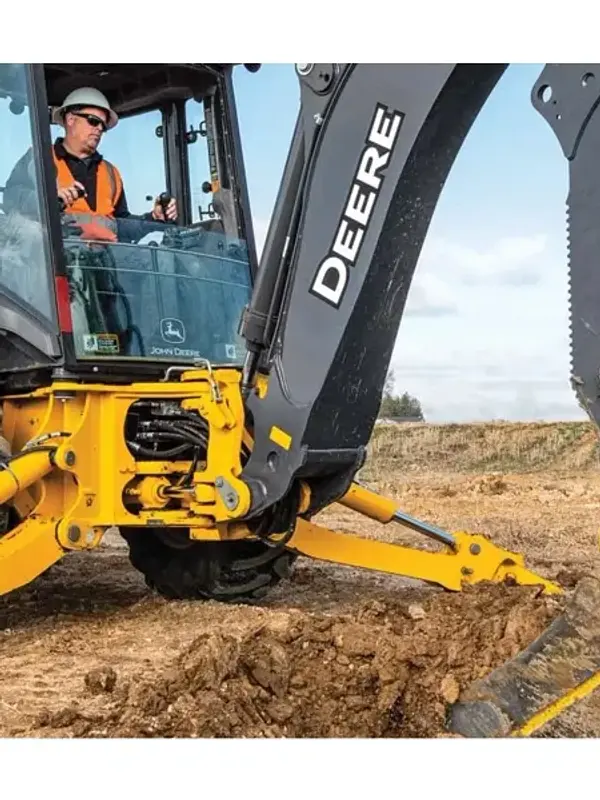
Who Actually Buys Backhoe Attachments This Way
Utility and plumbing subs are the most common buyers of a hydraulic hammer added after the fact, usually the moment a job turns up unexpected rock or old concrete footings that a bucket alone can't move through efficiently. General contractors and underground utility crews add compaction wheels specifically to meet trench backfill compaction specs on municipal and county jobs, where failing an inspection on backfill density can hold up final payment on an entire contract. Demolition-adjacent subs add a thumb once they land a contract that actually involves debris pickup rather than straight digging.
A smaller but steady group of buyers are agricultural-adjacent contractors who use the backhoe's loader end for general farm and property work during slower stretches, then add a set of forks or a bale spear once that side work becomes a reliable enough income stream to justify the attachment's own payment. The common thread across every one of these buyers is that the attachment purchase is reactive to real, contracted demand rather than speculative.
In each case, the attachment purchase follows the contract, not the other way around. That ordering, buy the machine first on solid backhoe financing, then add attachments as specific jobs demand them, keeps a contractor's capital working on equipment that's actually earning, rather than sitting idle in a yard waiting for a hypothetical use.
Credit History and Co-Signer Considerations on the Second Loan
A contractor with a clean payment record on their original backhoe financing walks into the attachment conversation from a stronger position than a first-time applicant, even though the attachment is its own separate collateral. Lenders read an established, on-time payment history as a real signal, and it commonly translates into faster underwriting and a lighter deposit ask on the smaller attachment ticket.
For a newer business whose backhoe loan hasn't built up much history yet, or whose credit file is still thin, the same logic that applies to the original machine purchase applies here: a co-signer can still open the door. Our breakdown of what a co-signer is actually liable for on a backhoe loan walks through the real obligation before anyone signs, whether it's for the machine itself or an attachment riding alongside it.

An Illustrative Look at Deposits and Depreciation
Purely as an illustration, the deposit conversation on a standalone attachment loan tends to start from a lighter position than it did on the backhoe itself, simply because the collateral value is smaller and the lender's exposure is smaller along with it. A hydraulic hammer or compaction wheel can also sometimes qualify for the same Section 179 expensing treatment the backhoe itself received in its first year of service, worth raising with your tax professional before you file since the specifics depend on your business structure and how the attachment is used.
None of these numbers are a substitute for your lender's actual quote on your specific attachment and credit profile; they're here to explain why the second conversation usually moves faster and costs less upfront than the first one did.
A Quick Gut-Check Before You Finance a New Attachment
Confirm the attachment's hydraulic flow and pressure requirements actually match your backhoe's rear auxiliary circuit
Get an independent fair-market-value quote on the attachment, not a package price bundled by the seller
Have your existing backhoe financing payment history ready to speed up underwriting on the new application
Ask whether the lender files a new UCC-1 on the attachment alone or wants to amend the existing filing
Weigh the smaller loan's deposit and term against paying cash outright if the ticket price is modest
Keep Growing the Fleet Instead of Renting Around the Gap
Renting a hammer or compaction wheel by the week to cover a single job can feel like the path of least resistance, but it stops making sense the moment that attachment shows up on a second or third job. Rental margins are built to favor the yard, not the contractor, and nothing about a rental builds equity or strengthens your financing track record the way ownership does. A contractor who rents the same hammer three separate times over a year has usually paid enough in cumulative rental fees to have financed and owned it outright, with nothing left to show for it once the last rental agreement ends.
If you're already planning to grow your fleet, or you're considering relocating work across state lines, our piece on refinancing backhoe loans across multiple states is worth reading alongside this one, since both reflect the same underlying idea: structure your backhoe financing to grow with your actual contract volume instead of guessing years ahead.
Ready to Move Forward?
BFC Equipment Loans finances yellow iron nationwide for startups and established contractors alike, good credit or bad. Visit our home page to learn more about how we work, or go straight to our equipment financing application to get real numbers for your deal today.
Already have equipment to sell, or looking for your next machine outright? Check our equipment for sale marketplace, where contractors list and browse used yellow iron directly. And if you want more articles like this one delivered as we publish them, subscribe to the BFC blog.



Comments