

Financing New Holland's D-Series Compact Wheel Loaders: What the W70D and W80D Change for Landscaping and Hardscape Contractors
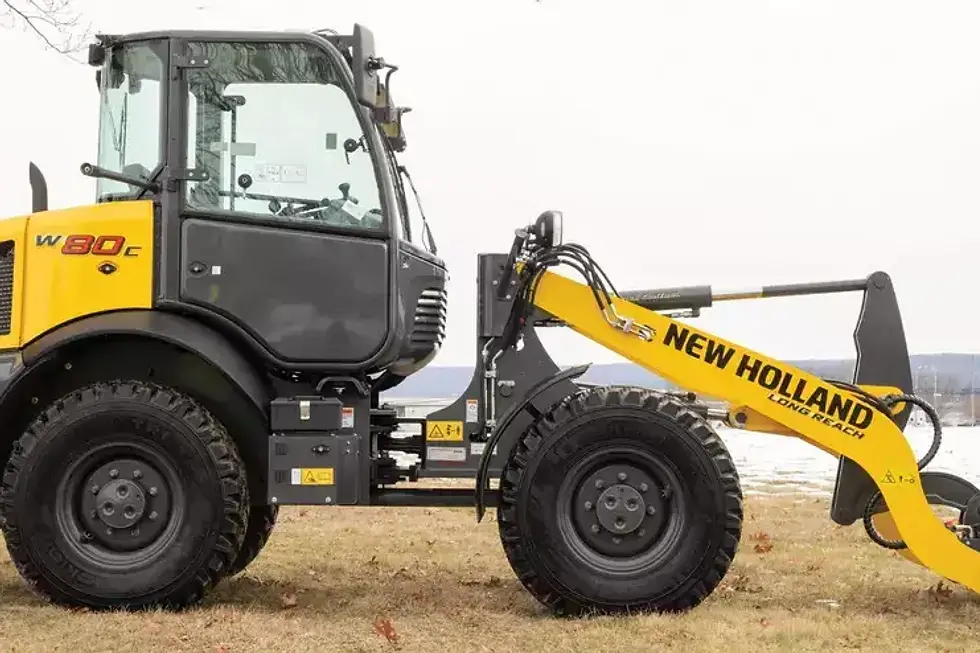
New Holland just retired its entire compact wheel loader class. The W60C, W70C, and W80C LR — the C-Series machines landscaping crews, hardscape installers, and small sitework contractors have leaned on for the past couple of seasons — are being replaced by three D-Series machines: the W70D, the W80D, and the W80D Long Reach. If you run a landscaping outfit stacking pallets of pavers, loading mulch and aggregate by the yard, or clearing snow once the leaves are down, this isn't a cosmetic refresh. It's the machine class most contractors actually buy, sitting in the gap between a skid steer that can't reach a dump truck bed and a full-size wheel loader that's overkill for a half-acre residential job. Here's what changed between the outgoing C-Series and the new D-Series, part of the broader wave of updates New Holland brought to ConExpo 2026, and why financing this machine now — instead of running to the rental yard every spring — is the better math for a growing crew.
The C-Series to D-Series Change, Machine by Machine
New Holland's outgoing W80C LR ran a 3.4-liter, 4-cylinder Tier 4 Final F5H engine rated at 74 horsepower (55 kW), with an operating weight of 13,432 lbs and a hinge pin height of 12'2" — enough to clear a standard dump truck sideboard when loading mulch or spoil. We covered the full spec breakdown of the D-Series compact wheel loaders when it launched, but the short version for a buyer deciding what to finance: the new lineup keeps that same 74-hp rating across all three models and redraws the rest of the machine around it.
W70D — 12,547 lbs operating weight, the entry point into the lineup
W80D — 13,633 lbs operating weight, 1.31 cu yd bucket capacity, 10,629 lbs breakout force, and a rated lift of up to 7,999 lbs at full height depending on configuration
W80D LR (Long Reach) — 13,900 lbs operating weight, a taller 12'1.9" hinge pin height, and 10,545 lbs breakout force, built for stacking pallets and reaching over truck sideboards
The bigger change is in the controls. All three D-Series models move to electro-hydraulic controls in place of the C-Series' more mechanical linkage, giving operators finer, more consistent metering on loader functions — something that matters when you're feathering a bucket of decorative stone into a customer's front yard instead of just digging and dumping all day. New Holland also added an available high-flow hydraulic system with creep-speed functionality for demanding attachments, and every D-Series machine ships with seven years of myNewHollandConstruction telematics included — fleet location, hour tracking, and maintenance alerts built into the purchase instead of sold as an add-on later. New Holland has the D-Series slated to reach dealers in Q3 2026.

Attachment Versatility Extends the Season
Beyond a standard bucket, the D-Series accepts pallet forks, a broom, a snow pusher, and — with the high-flow option — a cold planer or trencher, meaning the same 13,000-lb-class loader spreading topsoil for a hardscape crew in June can be pushing snow for a completely different revenue stream in December, or running a broom attachment for cleanup on a paver job in between. That flexibility matters more for a financed machine than a rented one: you can't experiment with a rental fleet's attachment compatibility on a day-rate budget, but you can spec a machine you own exactly how your business actually works across all twelve months.
Where This Machine Actually Earns Its Keep
Landscaping contractors and hardscape and paver installers are the obvious fit — loading and placing wall block, moving screened topsoil, backfilling retaining walls. Irrigation and drainage contractors use the long-reach W80D LR to load pipe and gravel over a truck's sideboards without repositioning twice. Small sitework and grading subs run one for material handling on residential lots where a full-size loader can't maneuver in a driveway or side yard. Many of these same crews are also running New Holland skid steers or compact track loaders for the finer grading work — we break down how contractors finance those machines in our guide to financing New Holland's C-Series compact track loaders. In northern markets, the same machine that's stacking pavers in July is pushing snow in January with a plow attached — the kind of shoulder-season revenue that makes the financing math work harder for you.
Why a Compact Wheel Loader Beats a Skid Steer for This Kind of Work
A lot of landscaping contractors default to a skid steer because that's what they already own, but a wheel loader like the W80D moves material faster over distance — its wheels roll rather than track, so it covers the length of a job site or a material yard aisle in less time and with less operator fatigue than tracking a skid steer back and forth all day. It also rides higher and dumps higher, which matters when you're loading a standard dump truck instead of a smaller trailer. That's not a knock on skid steers — most crews end up running both — but if your only tool right now is a track loader and you're spending half your day just moving material from point A to point B, a compact wheel loader is very likely the next machine that pays for itself.
Why Renting This Class of Machine Stops Making Sense
A compact wheel loader in this class isn't cheap to rent by the day, and demand for this exact machine class spikes hardest right when every landscaping and hardscape crew in your market needs one at the same time — the start of spring season. Rent one two or three days a week for a six-month season and the cumulative day rates add up to more than a meaningful down payment on a machine you don't own a single hour of at the end of it. Every one of those rental dollars is gone for good; it buys you nothing on your balance sheet and nothing toward your next project. A financed W70D or W80D, on the other hand, is building equity every month you make a payment, and it's sitting on your lot on a Tuesday morning instead of waiting on a rental company's delivery schedule.
Insurance and Resale Value: Ownership's Other Advantage
Owning a compact wheel loader, or building equity toward owning it through financing, also changes your position on insurance and resale compared to a machine you only ever rent. A well-maintained D-Series wheel loader tends to hold resale value well into a second owner's hands, especially early in a model's production run when parts and dealer support are freshest — meaning the loader you finance today isn't just a working asset, it's a machine you can trade or sell into a strong secondary market five or seven years from now if your business changes direction. None of that value exists for a rented machine, since you never owned a minute of it to begin with, and a growing fleet of owned equipment is also what most equipment insurers and bonding companies want to see on your books rather than a stack of old rental receipts.
Financing Terms That Actually Match a Seasonal Business
Many landscaping and hardscape businesses see the large majority of their annual revenue land between spring and fall, with a real slowdown once the ground freezes in northern markets. A loan or lease with equal monthly payments year-round ignores that reality and puts pressure on your cash position exactly when revenue is thinnest. Structuring payments around your actual revenue curve — smaller in the winter months, normal or slightly larger through your peak season — keeps the equipment payment from becoming the thing that strains cash flow in February, which is a completely avoidable problem with the right lender behind you.
What to Ask Your Dealer Before the D-Series Lands
Before you commit to a specific D-Series configuration, it's worth asking your New Holland dealer directly about expected allocation timing for your region, whether the high-flow hydraulic package will be available at launch or as a running change later in the model year, and what trade-in value looks like on your current C-Series machine if you're upgrading rather than adding a second loader. Contractors who ask these questions before signing tend to end up with a configuration that actually matches their work, instead of taking whatever configuration happens to be first off the truck.
Structuring Financing Around a Q3 2026 Delivery Window
Because the D-Series is landing on dealer lots in Q3, this is a rare case where you can get ahead of the buying decision instead of reacting to it. Contractors who get pre-approved for financing before delivery windows open typically get first pick of the configuration they actually want — bucket size, high-flow hydraulics, cab options — instead of taking whatever's left on the lot in October. If your business has seasonal cash flow, with heavy spring and summer landscaping revenue and lighter winter months, a properly structured lease or loan can be built around that curve, with a modest down payment and smaller payments in your slow months instead of a flat payment that doesn't care whether it's April or January.
This is exactly the kind of equipment decision BFC Equipment Loans exists for. We're not a bank that treats a compact wheel loader the same way it treats a $2 million crane; we structure financing around how landscaping and hardscape contractors actually make money over a season, and we can move fast enough to have you approved before your dealer's D-Series allocation shows up.
Ready to put a New Holland D-Series wheel loader to work? Visit our home page to learn more about BFC Equipment Loans, apply for financing today, browse our equipment for sale listings, or subscribe to our blog for more equipment spotlights and financing guides.



Comments