

Lien Waivers and Equipment Loan Timing: Why a Subcontractor's Paperwork Backlog Can Delay the Cash a Dump Truck Payment Depends On
Most subcontractors don't think about lien waivers until a pay application gets stuck behind one. But for a hauling or site-work sub whose dump truck financing payment is due whether or not the general contractor has released your draw, a backlog of lien waiver paperwork can turn a predictable cash flow week into a scramble. It's a paperwork problem on the surface, but underneath it, it's a timing problem that directly touches your equipment payment, and it's worth understanding well before it ever slows down a draw you were counting on.
What a Lien Waiver Actually Is, in Plain Terms
A lien waiver is a document a subcontractor signs giving up, or conditionally giving up, their right to file a mechanic's lien against a project in exchange for payment. General contractors and owners typically require one before releasing payment on a pay application, both to protect themselves from a sub later filing a lien after being paid, and to satisfy their own lender's or bonding company's documentation requirements further up the chain. There are generally four types: conditional partial, unconditional partial, conditional final, and unconditional final, and which one applies depends on whether the payment has actually cleared and whether it covers the whole contract or just a portion of it.
Why This Becomes a Cash Flow Problem, Not Just a Legal One
On paper, a lien waiver is a simple exchange: sign the waiver, get the check. In practice, the paperwork rarely moves that cleanly. A sub might submit a pay application, then wait on the GC's internal review, then get asked for a corrected waiver because a notary stamp was missing or the amount didn't match exactly, then resubmit, then wait again for the next payment run. Each of those steps adds days, sometimes weeks, and none of them pause your business's own fixed obligations, including a dump truck payment that's due on the same schedule whether your receivable has cleared or not.
Where the Backlog Actually Comes From
A lien waiver backlog usually isn't any single party being difficult, it's a chain of handoffs where any one weak link slows the whole thing down. A sub's own paperwork might be incomplete or inconsistent with the pay application amount. A GC's accounting department might batch waiver processing weekly or biweekly rather than as documents arrive. An owner's lender might require the GC to collect waivers from every tier of sub before releasing a draw to the GC at all, meaning your payment can be held up by someone else's paperwork on the same job, not just your own. Understanding which of these is typically the bottleneck on your specific jobs helps you plan around it instead of being surprised by it.
How This Connects Directly to Your Dump Truck Payment
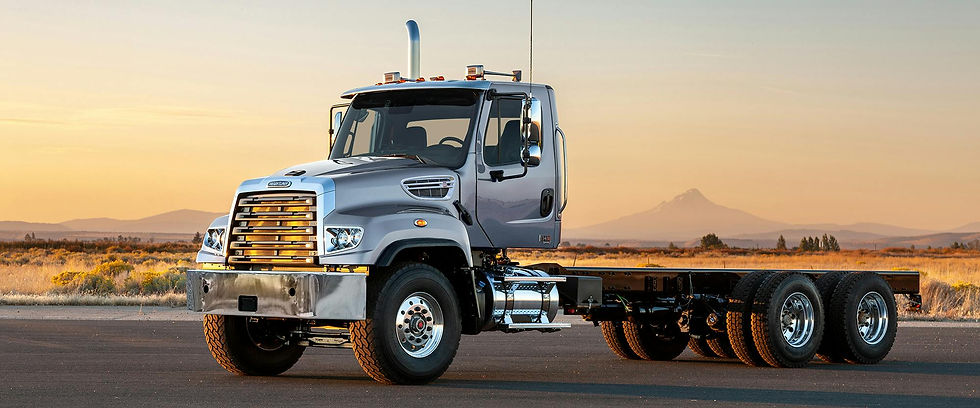
A dump truck loan or lease payment is a fixed monthly obligation, structured around your ability to generate and collect revenue on a reasonably predictable schedule. When a lien waiver backlog delays a draw by two or three weeks longer than you budgeted for, that delay doesn't show up as a line item anywhere, it shows up as a gap between when your truck payment is due and when the cash to cover it actually lands in your account. Subs who haul for a living and depend on a handful of large GC relationships are especially exposed to this, since one slow-paying GC's internal process can ripple across every job you're running for them at once.
Building a Buffer Before You Finance, Not After
If your business has experienced lien waiver delays before, factor that into how you plan your dump truck financing before you sign, not after you're already behind. A cash reserve sized to cover one full truck payment cycle beyond your typical collection timeline is a reasonable starting point for many hauling subs, and it's worth discussing openly with your lender during the application process rather than discovering the gap the hard way on your first slow-paying job. A lender who understands your typical collection cycle upfront is in a better position to structure a payment schedule, or point you toward a seasonal or step-structured option, that actually fits how your cash really moves.
Conditional vs. Unconditional Waivers and Why the Difference Matters for Timing
A conditional waiver only takes effect once payment has actually cleared, which protects you if a check bounces or a payment gets reversed, but it also means you're technically still owed the lien right until that clearing happens, and some GCs are slow to process the next payment cycle until they've confirmed the prior one cleared and the conditional waiver converted. An unconditional waiver takes effect immediately upon signing, which some GCs push for because it's cleaner on their end, but which puts you at risk if payment doesn't actually follow. Knowing which type a specific GC or project requires, and pushing back when you're asked to sign an unconditional waiver before payment has cleared, is a meaningful protection worth understanding, and it's a conversation worth having with a construction attorney if a GC's standard paperwork consistently asks for more than you're comfortable giving up before you've been paid.
Preliminary Notice and Your Underlying Lien Rights
None of this works in your favor if you haven't preserved your actual lien rights in the first place. We've covered this in detail in our article on mechanic's lien rights and preliminary notice requirements for contractors, which lays out why many states require a preliminary notice filed early in a project for a sub to retain lien rights at all. If you've never filed one, a lien waiver negotiation has very little leverage behind it, since you'd be waiving a right you may not have fully preserved to begin with. Reading that article alongside this one gives you the fuller picture of how your paperwork habits across a project protect both your legal position and, indirectly, your cash flow timing.
Retainage Adds a Second Layer to the Same Timing Problem
Lien waiver backlogs rarely travel alone. Many of the same jobs that slow-walk waiver processing also hold back five or ten percent retainage until substantial completion or final close-out, sometimes months after the work itself was done. We've written specifically about how retainage and pay-when-paid clauses squeeze a subcontractor's equipment cash flow in our article on retainage, pay-when-paid clauses, and subcontractor equipment cash flow, and the two issues compound each other on a difficult job: a delayed progress payment because of waiver paperwork, stacked on top of retainage you won't see until the project closes out entirely. A hauling sub juggling both on the same job needs a wider cash buffer than either issue alone would suggest.
What You Can Actually Control in This Process
You can't force a GC's accounting department to process faster, but you can eliminate your own contribution to the delay. Submit lien waivers with the exact amount matching your pay application, notarized correctly the first time, and submitted the same day as your pay app rather than days later. Keep a simple log of when each waiver was submitted and when payment actually cleared for each GC you work with regularly, since that history tells you, in concrete terms, which relationships need a bigger cash buffer built around them and which ones pay reliably enough that you can run tighter.
What to Discuss With Your Lender Before You Apply
What does my typical gap look like between submitting a pay application and actually receiving cleared funds, across my main GC relationships?
Does my payment history show any pattern of lien waiver or retainage-related delays that I should budget a larger cash buffer around?
Would a seasonal or step payment structure fit my actual collection cycle better than a flat monthly payment?
What documentation can I provide upfront that shows my collection cycle clearly, so the lender isn't guessing at my cash flow timing?
FAQ: Lien Waivers and Dump Truck Financing
Does a lien waiver delay actually affect my loan approval? Not typically at the application stage, but a pattern of late or inconsistent collections can affect how a lender structures your payment schedule and how much cash reserve they'd encourage you to carry.
Can I refuse to sign a lien waiver? You generally can't refuse and still get paid on that pay application, but you can negotiate the type of waiver, conditional versus unconditional, and you should never sign away rights for work you haven't actually been paid for.
Is this different for a mixer truck business than a dump truck business? The underlying mechanics are the same, since both typically work under subcontracts tied to pay applications, lien rights, and retainage on construction and site-work projects.
Treat Paperwork Timing as Part of Your Financing Plan
Lien waivers aren't just legal formalities, they're one of the clearest places where construction payment paperwork and your equipment payment schedule actually collide. A hauling subcontractor who understands the waiver process, tracks their own collection history by GC, and builds a realistic cash buffer around it is in a far stronger position than one who treats the paperwork as someone else's problem until a payment is already late.
Plan Your Dump Truck Financing Around How You Actually Get Paid
Visit our home page to see how BFC structures dump truck financing nationwide for subcontractors managing real-world payment timing, browse our equipment for sale and financing inventory to start shopping, or go straight to our equipment financing application and tell us how your collection cycle actually works. Our financing resource center has more on approvals and documentation, and you can subscribe to our blog for more articles like this one.



Comments