

Reading an Excavator's Lift Chart: What the Numbers on a Hyundai HX300A L Actually Mean
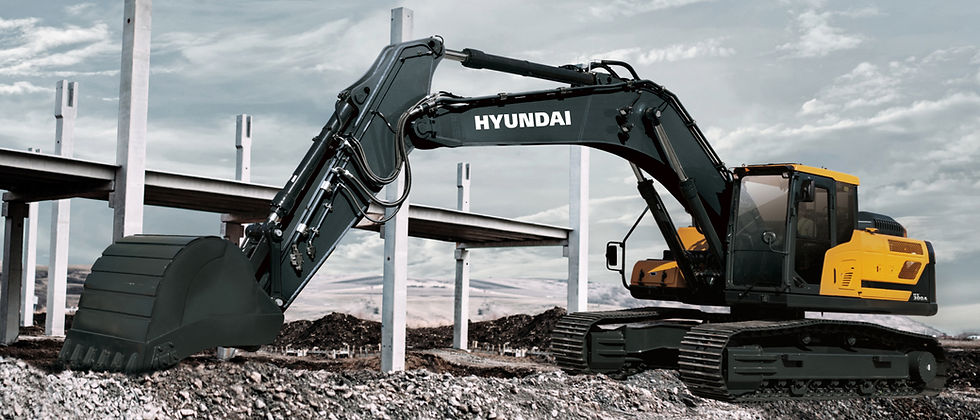
Most excavator operators have glanced at a lift chart without ever really reading one, and that gap matters the first time a job calls for setting a culvert pipe, placing a dry well, or picking a load that's heavier than it looks. A Hyundai HX300A L in the 30-ton class is plenty of machine for a lot of lifting work that general and utility contractors ask of it — but only within the limits the chart actually sets, and those limits are stricter than most operators assume.
Two Different Limits, and the Chart Uses Whichever Is Lower
An excavator's rated lift capacity isn't one number; it's the lower of two separate limits. The first is hydraulic capacity — the point where the machine simply runs out of hydraulic power to hold the load, which shows up on a chart as a value marked differently than the rest. The second is tipping capacity — the point where the load would physically tip the machine forward, which is a stability limit, not a power limit. Industry convention, reflected in how CAT, Hyundai, and every other major manufacturer build their charts, caps the published rated capacity at roughly 75% of true tipping load and roughly 87% of true hydraulic capacity, whichever number comes out lower for that specific radius and height. That built-in margin exists because a chart number any closer to the actual tipping point leaves no room for ground slope, wind, swing dynamics, or an operator's own margin for error.
How to Actually Read the Table
A lift chart is organized as a grid: one axis is the height of the load's lift point above the ground, the other is the radius — the horizontal distance from the machine's swing centerline out to that same lift point. Find your actual working height down the side, find your actual working radius across the top, and the number where that row and column meet is your rated capacity at that exact position, assuming the configuration (boom length, arm length, bucket or quick-coupler weight) printed at the top of that specific chart. If the cell you need is blank, the manufacturer is telling you directly: the machine cannot safely lift that load at that position, full stop — not a suggestion to proceed carefully, an explicit no.
Why Reach Costs You More Capacity Than Most Operators Expect
Capacity drops as radius increases, and it drops faster than intuition suggests, because leverage works against the machine the farther out the load sits. A load an HX300A L can lift comfortably at a 15-foot radius can fall well outside its rated capacity at 30 feet with the exact same bucket and boom configuration. Lifting over the side of the machine is also generally more restrictive than lifting over the front, since the undercarriage's stability footprint isn't symmetrical in every direction — a detail that catches operators who assume a rating that held true dead-ahead will hold the same at an angle.
Counterweight, Configuration, and Why the Chart on the Wall Might Not Apply
A lift chart is specific to one machine configuration — boom length, arm length, counterweight package, and bucket or coupler weight all change the numbers. Swapping to a longer reach boom, adding a heavier quick coupler, or running a different counterweight than the chart assumes invalidates the printed numbers entirely, even on the same physical machine. The only safe practice is confirming the chart matches the exact configuration in front of you, pulling an updated chart from Hyundai or your dealer when the configuration changes, rather than estimating from a chart built for a different setup.
The Financing Angle: A Machine Rated to Do the Job Pays for Itself Faster
A contractor who understands lift capacity buys the right machine the first time, instead of discovering mid-contract that a smaller excavator can't safely handle the pipe-setting or utility work a job actually requires. Equipment financing through BFC is structured around exactly that kind of right-sized purchase — financing a machine that can genuinely do the work in front of you is a better use of monthly cash flow than financing (or renting) something underpowered for the job and discovering it the hard way.
Utility contractors, pipe-laying crews, and site-development operators who set structures into excavations are the ones who live inside lift-chart math every week — a rated capacity that looks close enough on paper is a very different thing from a load that's actually inside the safe zone.

Rigging Matters as Much as the Chart Itself
A lift chart assumes a clean, vertical pull straight up from the lift point with a properly rated lifting device — a certified hook, shackle, or lifting eye rated for the load — attached correctly at the bucket or a dedicated lift point. Rigging a load at an angle, using an improvised attachment point, or lifting with a bucket not designed for below-the-hook work all introduce side loading and stress the chart's numbers were never calculated to account for. Side loading in particular reduces real stability well below what the chart implies, because the machine's stability math assumes the load's weight acts straight down through the boom and arm, not at an angle pulling the machine sideways.
On an HX300A L doing any below-the-hook lifting work, confirming the rigging hardware is rated for the load, attached at the correct point, and the pull is as close to vertical as the job allows isn't an extra precaution — it's the condition the entire published chart depends on holding true.
What Happens as the Machine Approaches Its Limit
Modern excavators including the HX300A L carry an onboard overload warning system that monitors hydraulic pressure and boom/arm geometry in real time, alerting the operator audibly and visually as a load approaches the machine's rated capacity at that specific position. That system is a safeguard, not a substitute for knowing the chart — it's designed to catch a miscalculation or an unexpectedly heavy load, not to be the primary method an operator relies on to decide whether a lift is safe before attempting it.
An operator who's already confirmed a lift is within chart limits before raising the load uses the warning system as a second confirmation; an operator relying on the alarm to tell them when to stop is already one step behind where the decision should have been made.
Why Lift Work Isn't a Solo Judgment Call on a Real Jobsite
Many states and a growing number of individual job specifications require documented training, and in some cases formal certification, before an operator performs below-the-hook lifting work with an excavator rather than a dedicated crane — a distinction worth confirming against local requirements before assuming any trained operator can simply start lifting with a loader or excavator bucket. A contractor financing a 30-ton-class machine for lift-capable work should budget for that training as part of putting the machine to its intended use, not treat it as optional after the fact.
Ground Conditions Change the Chart's Assumptions Too
A published lift chart assumes the machine is sitting level on firm, stable ground — an assumption that doesn't hold on every real jobsite. Working on a slope, soft or recently backfilled soil, or ground with any meaningful grade reduces the real stability margin below what the chart's numbers reflect, even when the load itself is well within the printed rated capacity for that radius and height. An experienced operator treats a chart's numbers as the ceiling under ideal conditions, and derates mentally from there when ground conditions are anything less than that ideal.
Setting outrigger-style stabilization where the machine allows it, or simply repositioning to firmer ground before attempting a marginal lift, costs a few extra minutes against a mistake that, on a tipped machine, costs considerably more than minutes.
Keeping a Copy of the Chart on the Machine, Not Just in a Filing Cabinet
A lift chart that lives in a dealer's filing system or a manager's laptop doesn't help an operator making a real-time decision on whether a specific load at a specific radius is safe. Keeping a laminated, configuration-matched copy of the HX300A L's actual lift chart in the cab, and confirming every operator knows how to read it before they're the one making the call alone on a jobsite, turns the chart from a document into an actual working safety tool.
If you're weighing a 30-ton-class excavator purchase, see our multi-state refinancing breakdown on a Hyundai HX300A L. For the full financing picture on this equipment type, see our excavator financing page.
Ready to Put This Machine to Work?
Renting by the day or the week adds up fast, and every dollar paid to a rental counter is a dollar that never builds equity in anything you own. BFC Equipment Loans finances and leases construction equipment, dump trucks, and semi trucks for startups and existing businesses nationwide, with good credit or bad credit. Start an application to see real terms on the machine you actually need, browse our equipment for sale if you're still shopping, or head back to our home page to see everything we finance. You can also subscribe to this blog for more equipment-aficionado breakdowns and financing strategy like this, delivered as soon as we publish.


Comments