

Seasonal Cash Flow Structuring for Skid Steer and Track Loader Fleets: Matching Payments to Your Busy Season
A landscaping crew running a skid steer for eight straight months of mowing, mulch delivery, and hardscape prep does not have the same cash flow in January that it has in June. A snow removal contractor running a compact track loader with a pusher attachment has the exact opposite calendar. Yet a huge share of equipment loans are still written as a flat, identical payment every single month, regardless of what the business actually earns that month. That mismatch is one of the most avoidable financing mistakes a seasonal contractor can make — and it is entirely fixable before the loan is ever signed.
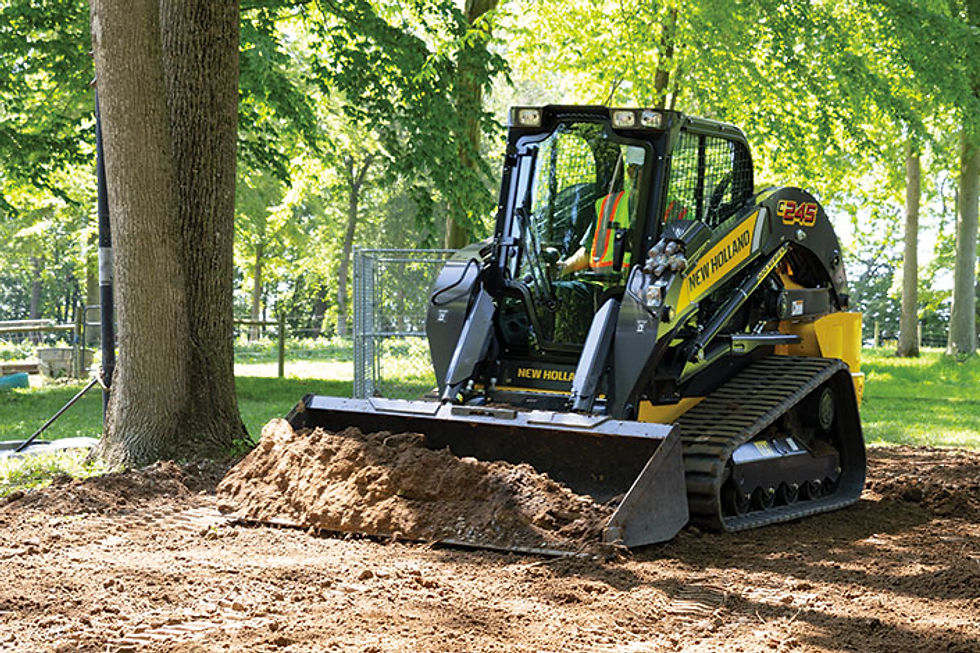
The machines themselves are built for hard seasonal use. A Bobcat S76-2 (74 horsepower, 2,900-lb rated operating capacity, 5,800-lb tipping load) is a common choice for landscaping and hardscape crews. A Kubota SVL97-3 (96.5 horsepower, 3,459-lb rated operating capacity at 35% tipping load, 7,646 lbf breakout force) shows up on demolition and site-prep crews needing more muscle. A New Holland C245 (90 horsepower, 4,500-lb rated operating capacity, 9,200-lb breakout force, and up to 39.9 gpm of enhanced high-flow hydraulics) is a favorite for contractors running snow pushers and blowers in the winter months. Three different machines, three very different seasonal earning patterns.
The Problem With a Flat, Year-Round Payment on Seasonal Equipment
A standard amortized note assumes the borrower earns roughly the same amount every month. Seasonal contractors do not. A landscaping company might do 70% of its annual revenue between April and October. A snow removal contractor might do the mirror image of that, earning most of its money between November and March and very little the rest of the year. Force either one into a flat monthly note and you get the same result: comfortable payments during the busy months and a cash crunch during the slow ones, every single year, on a predictable schedule the lender could have planned around from day one.
What Seasonal, Step, and Skip-Payment Structuring Actually Means
Seasonal payment structuring is not a discount — it is a schedule that matches the calendar of the business. A few common shapes: a skip-payment structure that reduces or pauses payments during a contractor's known slow months and picks back up when the season starts; a step structure that starts lower in year one while a newer seasonal business builds its client base, then steps up as revenue grows; and a schedule matched to specific contract cycles, such as a mowing and hardscape season running April through October, or a snow removal season running November through March. None of these change what the machine ultimately costs — they change when the payments land relative to when the money actually comes in.
The Rent-vs-Own Case for a Seasonal Contractor
Plenty of seasonal contractors solve the calendar problem by renting instead of owning — bringing in a track loader for the five months a year they actually need it and handing it back when the season ends. That avoids an off-season payment, but it comes with real costs of its own. Rental rates climb every year, and there is no guarantee the exact machine you need is sitting on the rental yard's lot the week your season starts — peak season is exactly when every other contractor in the area is trying to rent the same class of machine. A seasonally-structured loan gives you the machine on day one of the season, every season, with no rental-yard dependency, and every payment you make is building equity in a machine you will still own long after a rented one goes back on the truck.

A Practical Example: A Landscaping Company's First Seasonal Note
Consider a hardscape and landscaping company that historically rented a skid steer every March and returned it every November. The owner ran the numbers and realized the machine was working essentially every week it was rented, which meant ownership economics had already tipped in favor of financing — the only problem was structuring a note that would not demand full payments through a Florida winter when installation work slows way down. Rather than force a flat 12-month schedule onto an 8-month earning pattern, the note was structured to reduce payments during the slower winter months and return to full payments once spring hardscape and mulch season ramped back up. The company got the machine on the lot in time for its first full season, instead of waiting on rental availability the way it had every prior spring.
Why a Generic Small-Business Loan Doesn't Flex Like This
A general small-business term loan from a bank is built around the same assumption every conventional loan makes: even monthly cash flow, even monthly payments. That works fine for a business with steady year-round revenue. It works poorly for a seasonal contractor, because the bank's underwriting model was never designed around a landscaping calendar or a snow removal contract cycle in the first place. Equipment-focused financing built specifically around construction and landscaping trades can structure around the contract calendar directly, because the underwriting is built to look at seasonal work as normal, not as an exception that needs a special waiver.
What to Bring to the Conversation Before You Apply
A month-by-month breakdown of your last 12 to 24 months of revenue, so the seasonal pattern is documented, not just described
Copies of any recurring seasonal contracts (snow removal, mowing, hardscape) showing the months they actually run
Accounts receivable aging, especially if invoices lag the actual work by 30 to 60 days
Your target season start date, so the financing is in place before the busy months begin — not scrambled together after the first job is already booked
Matching the Structure to the Trade, Not Just the Machine
The right seasonal structure depends on what the crew actually does with the machine. A landscaping or hardscape contractor running an S76-2 through spring and summer patio, retaining wall, and mulch season needs a structure that eases off in the winter months when outdoor installation work slows down. A snow removal contractor running a New Holland C245 with a pusher or blower attachment needs the opposite calendar entirely — heavier payments in the winter contract months, lighter or skipped payments once spring arrives and the snow contracts end. A demolition or site-prep sub running a Kubota SVL97-3 often has a lumpier, bid-driven cash flow rather than a strict seasonal one, which calls for a structure built around contract award dates rather than the calendar months themselves.
Off-Season Storage and Maintenance Still Need a Place in the Plan
A seasonally-idle machine still needs winterizing, storage, and off-season maintenance regardless of whether payments are reduced that month. Building that reality into the plan up front — rather than treating the off-season as a total blank — keeps the machine ready to go the day the season starts back up, instead of needing repairs before it can get to its first job.
Why Lenders Need to See the Pattern, Not Guess at It
A generic amortization calculator has no idea your business does most of its work in six months out of twelve. It takes an actual conversation — and documentation like a contract calendar or AR aging — for a lender to build a schedule around your real cash flow instead of assuming every borrower earns evenly all year. That is the difference between a financing company that processes applications and one that structures deals. We've covered the underlying rent-vs-own math for this equipment class in detail in the real breakeven math on a skid steer or compact track loader, and the broader financing options in our skid steer and track loader financing guide. If your seasonal work leans toward winter attachments specifically, our piece on financing a snow removal attachment for your skid steer walks through that angle in more depth.
None of this replaces a real conversation about your specific season, your specific contracts, and your specific cash flow gaps. But going in with the pattern documented — instead of hoping the lender figures it out from a generic application — is what turns a flat, mismatched note into a schedule that actually fits how your skid steer or track loader business makes money.
Ready to Move Forward?
Visit our home page to see how we work, start an equipment financing application to get your next skid steer or track loader moving, check our equipment for sale listings if you are buying or selling used iron, or subscribe to the blog for more financing strategy content.


Comments