

Why the Contractors Who Grow Fastest Treat Their Equipment Financing Company Like a Business Partner, Not a Bank
Talk to enough contractors who've built real fleets — five, ten, twenty machines — and a pattern shows up almost every time: somewhere early on, they stopped treating their equipment financing company like a bank and started treating it like a business partner. Not a slogan, an actual operating decision, and it's one of the clearest differences between a contracting business that plateaus at one or two machines and one that keeps adding capability year after year.
An Illustrative Growth Path: One Skid Steer to a Small Fleet
The following is an illustrative, representative example built from patterns we see regularly — not a specific customer's file, but a realistic picture of how this plays out.
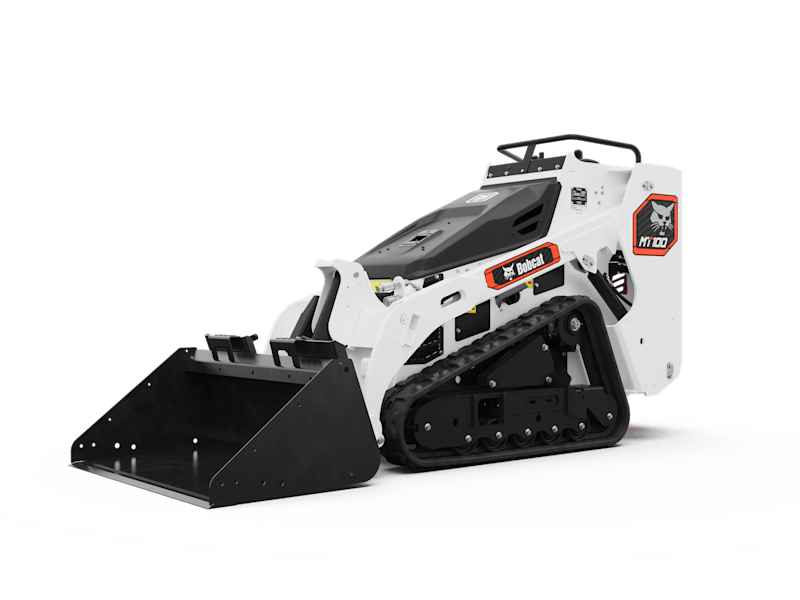
A general contractor starts with one financed skid steer, using it for site cleanup and small grading jobs alongside a couple of subcontracted crews. Eighteen months in, the work has grown enough to justify a compact track loader — better flotation for wet-site conditions, more attachment versatility. A transactional lender's answer at that point is usually to wait until the skid steer is paid off, which is still years away on a typical term. A financing partner, tracking how that first loan has actually performed, can move on the CTL well before that, because the relationship — not just the collateral on one machine — is what's being evaluated.
Adding Specialized Equipment Without Starting Over
Two or three years further along, that same contractor is bidding bigger commercial site-work packages — projects that call for a rough-terrain crane to set precast, steel, or HVAC units, something entirely outside the scope of the equipment they started with. A rough-terrain crane like Grove's GRT765 is a different category of investment: a 65 US-ton maximum capacity, a four-section MEGAFORM boom reaching 126.2 feet, a 192-foot max tip height, and a chassis under 10 feet wide so it can still move between jobsites without a specialized transport permit for every move. That's a serious step up in both capability and cost from a skid steer — and it's exactly the kind of move a business only makes confidently when its financing partner already knows its payment history, its cash flow patterns, and its trajectory. We've written about right-sizing this kind of growth in our guide to how many machines your fleet should have, because adding capability too fast without the financing relationship to support it is its own kind of risk.
Why This Compounds Faster Than Contractors Expect
The compounding effect is the part that surprises people. Each piece of equipment financed and paid on time with the same partner builds toward the next approval instead of resetting to zero, the same way a strengthening business credit profile and a stronger credit score should work in your favor over years of borrowing, not get re-litigated every single time. Contractors who stay with a transactional lender re-prove themselves from scratch on every new machine. Contractors who work with a partner are building something that gets easier, not harder, as the fleet grows — which is also exactly why we mapped this exact trajectory in our full piece on going from one machine to a fleet.
The Rent-vs-Own Case at Fleet Scale
The rent-vs-own math we cover in our detailed comparison gets more consequential, not less, as a fleet grows. As an illustrative example, not a quote: renting a rough-terrain crane in the GRT765's class for a single project can easily run into the tens of thousands of dollars for just a few weeks of use once mobilization, operator, and standby charges are factored in — money that builds no equity and creates no relationship for the next piece of equipment. Financing a crane like this, by contrast, adds a capital asset to the balance sheet and, with the right financing partner, adds another data point in a growing track record that makes the next approval — a dump truck to haul material for that same crane's projects, for instance — faster and easier. We cover that specific pairing in our guide to building a dump truck fleet.
What the Fastest-Growing Contractors Actually Do Differently
Across the pattern we see repeatedly, a few things separate the contractors who scale a fleet fastest from those who stay stuck at one or two machines:
They finance the next machine while the last one is still being paid off, rather than treating each purchase as a fully separate transaction requiring a payoff first.
They pick a financing company they can actually call — and one that picks up — when a project timeline shifts or a season slows down.
They think of every on-time payment as building something, not just satisfying an obligation — which is also good preparation before your very first approval, covered in our first-time buyer's guide to the application process.
None of this requires a bigger risk appetite than a transactional lender offers. It requires a financing company willing to underwrite a relationship instead of a single asset — and contractors who understand that difference tend to be the ones running five machines while their peers are still negotiating to add a second.
The Application Experience Sets the Tone Early
Contractors who end up building real fleets usually notice something on the very first application: a partner asks different questions than a transactional lender does. Instead of just verifying collateral value and a credit score, they ask about the business itself — what jobs are coming, what the growth plan looks like, whether this first machine is the start of a bigger buildout. That's covered in more detail in our first-time buyer's guide, and it matters because a lender who understands the trajectory from day one is a lender who can move fast when it's time for machine number two, three, or four — instead of treating each one as a surprise.
Right-Sizing Growth Instead of Guessing
None of this means financing every machine a contractor can dream up. The fastest-growing fleets we see are disciplined about right-sizing equipment to the work on the books, not chasing growth for its own sake. The advantage of a real partner isn't that it removes that discipline — it's that when the discipline says "yes, this next machine makes sense," the financing can actually keep pace with the decision instead of forcing a business to wait out an arbitrary payoff clock on equipment that's already performing well.
Not Every Financing Company Can Grow With You
It's worth being honest that not every lender is built to scale with a contractor, and that's not necessarily a flaw in their business model — some are structured purely around volume, low rates, and fast, impersonal turnaround, and for a one-time equipment purchase with no plans to ever add another machine, that can work fine. The mismatch happens when a genuinely growing contracting business ends up with that kind of lender by accident, discovers the ceiling only once they've hit it, and then has to rebuild a financing relationship from zero with a new company right in the middle of a growth push. Choosing a partner from the very first machine avoids that reset entirely, and it's one of the more overlooked reasons the fastest-growing fleets rarely switch financing companies once they've found the right one.
Ready to Talk to a Partner, Not a Call Center?
If you're tired of a financing relationship that ends the moment the funds hit your account, that's exactly the gap BFC Equipment Loans was built to close. Browse our home page to see how we work with contractors long-term, check our current buy and sell equipment inventory if you're shopping or looking to move a machine you no longer need, or go straight to the equipment financing application to start the conversation on your next machine.

Comments