

WOSB Certification and Excavator Financing: What Actually Changes When You're Women-Owned Certified
A woman who owns a site-development or utility contracting business and goes through the work of getting certified as a Woman-Owned Small Business, or earns the more rigorous WBENC or WOSB federal certification, is usually chasing one specific prize: access to set-aside contracts that are otherwise closed to her. What that certification does not automatically do is change the terms of her excavator financing, and the gap between those two facts trips up a lot of newly certified owners who assume the two are more connected than they actually are.
This matters because the certification paperwork and the loan application are genuinely separate processes, run by different institutions for different reasons, and treating them as one conversation can cost a contractor real leverage on both sides. Here's what WOSB and WBE certification actually change about financing a CAT 320 or similar excavator, and what they don't.
What WOSB Certification Actually Verifies
WOSB certification, whether through the SBA's self-certify or third-party-certifier pathway, or the private WBENC certification many primes and large GCs require for their own supplier-diversity programs, verifies ownership and control: that a woman or women own at least 51 percent of the business and control its day-to-day and long-term decisions. It says nothing about the business's credit history, its cash flow, or its ability to service a new equipment loan, because that was never the question the certification was built to answer.
That distinction is the whole reason this article exists. A certification answers a contracting-eligibility question for agencies and primes running set-aside programs. A lender asks a completely different question: can this specific business make this specific payment for the next four to six years. The two questions can have different answers for the exact same company.
Why Lenders Don't Underwrite Around Certification Status
A conventional equipment lender, including most that specialize in construction equipment financing, evaluates excavator financing applications on the same core factors regardless of ownership demographics: time in business, personal and business credit history, revenue and cash flow documentation, and the value of the machine itself as collateral. WOSB status doesn't appear as a line item on that underwriting checklist, because it isn't a proxy for any of those factors.
That can feel discouraging to a newly certified owner who expected the certification to open financing doors the way it opens contracting doors. It's a reasonable expectation, just not one that matches how equipment lending actually works. The upside is that it also means certification status can't count against an application either; a lender isn't weighing it one way or the other.
It helps to think of the two systems as running on parallel tracks that occasionally intersect. The certification track exists to open contract opportunities that would otherwise require a track record or bonding capacity the business doesn't yet have. The financing track exists to evaluate repayment risk on a specific piece of collateral. A contractor who understands that distinction going in asks better questions of both the certifying body and the lender, instead of expecting one to answer for the other.

Where Certification Does Help, Indirectly
The real connection between WOSB certification and excavator financing runs through revenue, not through the loan application itself. A certified business that wins its first set-aside contract, or that starts qualifying for a prime's supplier-diversity subcontracting requirement, often sees a genuine jump in contracted revenue and backlog. That revenue and backlog are exactly what strengthens a financing application on their own merits, independent of the certification that helped generate them.
Some Community Development Financial Institutions and mission-driven lenders do factor WOSB or other diversity certifications into their own lending criteria, sometimes with dedicated loan products or slightly more flexible underwriting for certified women-owned businesses. Those programs exist and are worth researching directly, but they are the exception within a specific lending niche, not the rule across the broader equipment financing market a contractor is likely shopping in.
It's also worth asking a prime contractor or agency program office directly whether they maintain relationships with any lenders who specifically serve their certified subcontractor pool. Large primes with mature supplier-diversity programs sometimes do, precisely because they have an interest in their certified subs having the equipment capacity to perform on the work being set aside for them.
The Businesses Actually Making This Work
Site-development and utility contracting businesses pursuing municipal and state set-aside work are the most common WOSB-certified operations we see financing an excavator like a CAT 320 or John Deere 210 P-Tier specifically to clear a bonding or equipment-capacity requirement attached to a contract they've already won or are actively bidding. Demolition and grading subcontractors working under a certified prime's own diversity-subcontracting goals follow a similar pattern, financing equipment to scale up once the subcontract is real rather than speculatively ahead of it.
In both cases, the financing conversation goes better when it's sequenced correctly: certification first, a real contract or subcontract commitment second, and the equipment financing application third, backed by that contract as evidence of revenue rather than a projection of what the certification might someday produce.
Trucking, hauling, and material-supply businesses certified as WOSBs follow the same sequencing logic even though their equipment needs differ from a site contractor's. The underlying lesson holds across every trade: the certification opens the door to the work, the work generates the revenue, and the revenue is what a lender actually underwrites against.
What Actually Strengthens the Application
If certification itself doesn't move the underwriting needle, the practical question becomes what does. A signed contract or purchase order, even a conditional one tied to winning a bid, carries real weight because it's evidence of near-term revenue rather than a projection. A clean personal and business credit history matters just as much here as on any other excavator financing application, certified or not.
A co-signer or co-borrower can still help a thinner credit file clear the bar, the same as it would for any first-time equipment buyer. Our breakdown of what a co-signer on excavator financing is actually exposed to covers that real obligation before anyone signs, certification or no certification.
Time in business matters too, though less rigidly than many newly certified owners assume. A business that's only a year or two old but has a strong contract in hand and a clean personal credit history can still get a fair hearing from most equipment lenders; it's the combination of factors, not any single one, that a lender is actually weighing.
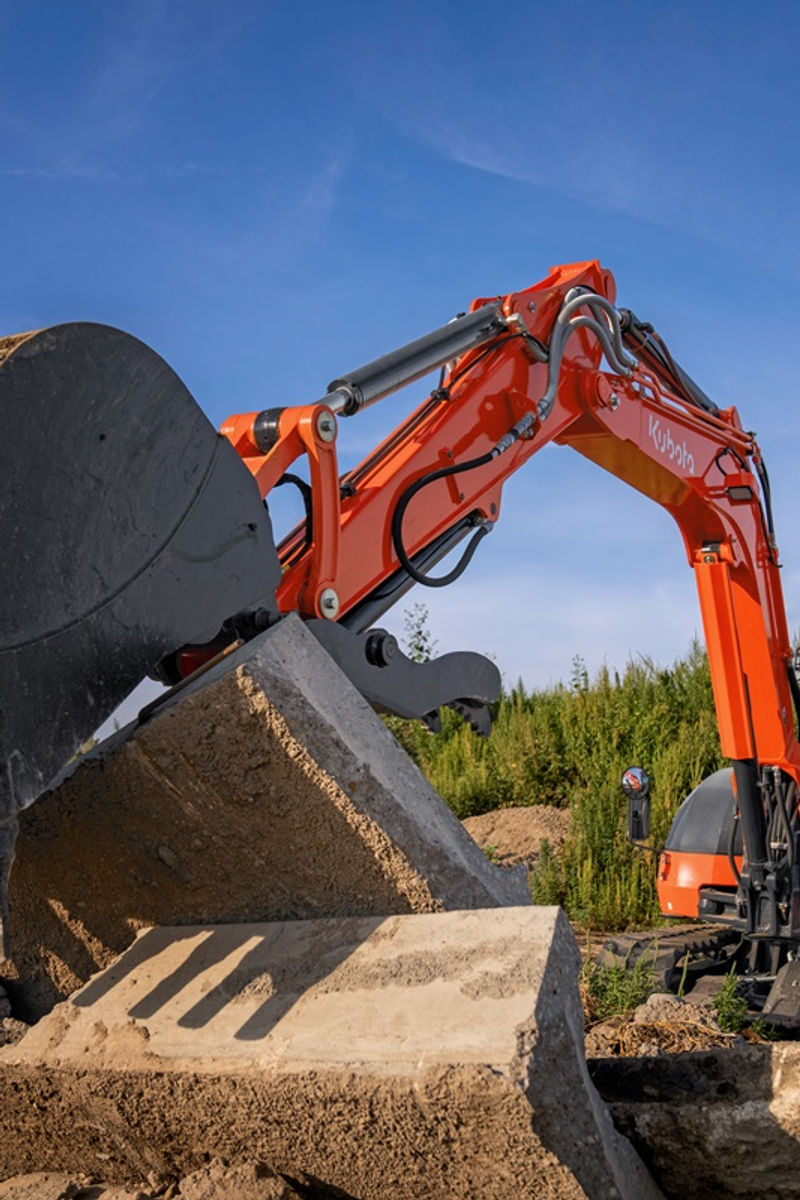
An Illustrative Look at Financing a First Excavator Post-Certification
Purely as an illustration, a newly certified contractor financing their first excavator against a real municipal subcontract is typically underwritten the same way any first-time equipment buyer with a signed contract would be: based on the contract's value and term, the buyer's credit profile, and the machine's resale value as collateral, not on certification status. Section 179 expensing may still apply to the purchase in the year it's placed in service, which is worth raising directly with a tax professional since eligibility depends on the specific business structure and how the machine is used.
None of this is a substitute for your lender's actual quote on your specific business and credit profile. It's here to set realistic expectations before you walk into that conversation assuming certification alone will carry the application.
Deposit expectations on that first machine also tend to track ordinary first-time-buyer terms rather than anything certification-specific: lighter for an applicant with strong credit and a real contract in hand, higher for a thinner file, regardless of WOSB status. Knowing that ahead of time helps a newly certified owner budget realistically instead of being surprised by a down-payment request that has nothing to do with their certification.
A Quick Gut-Check for Newly Certified Owners
Treat WOSB/WBE certification and excavator financing as two separate processes with two separate decision-makers
Line up a signed contract or conditional purchase order before applying; it carries more underwriting weight than the certification itself
Research CDFI and mission-driven lenders directly if you want a program that does factor certification into its own criteria
Keep personal and business credit clean well ahead of the application; certification doesn't offset credit history
Sequence it correctly: certification, then a real contract commitment, then the equipment financing application
Why Owning the Machine Still Beats Renting Into the Contract
A newly certified business that wins its first set-aside job sometimes defaults to renting an excavator to fulfill it, treating the contract as a one-off rather than the start of a real equipment-owning business. That approach gives up the chance to build the payment history and equity that make the second and third contracts easier to finance, and it hands the rental yard's margin to a business that needed that margin for itself.
Financing the excavator outright against that first real contract starts building exactly the track record a growing, certified contracting business needs for its next piece of iron, whether that's a second excavator or a different machine class entirely. Our full excavator financing coverage walks through the rest of that decision in detail.
Ready to Move Forward?
BFC Equipment Loans finances yellow iron nationwide for startups and established contractors alike, good credit or bad. Visit our home page to learn more about how we work, or go straight to our equipment financing application to get real numbers for your deal today.
Already have equipment to sell, or looking for your next machine outright? Check our equipment for sale marketplace, where contractors list and browse used yellow iron directly. And if you want more articles like this one delivered as we publish them, subscribe to the BFC blog.


Comments