

Hyundai Excavator Financing: What the Next-Gen HX360L Means for Utility and Foundation Contractors
We already walked through what's actually new on the HX360L — the DX08 engine, the FEH hydraulic system, the jump in bucket capacity and dig depth over the outgoing A-Series. This piece is about the other half of that decision: how a utility contractor or a foundation and site development sub actually finances a machine like this, and why the timing around a next-gen release changes the math in your favor if you move on it early.
Why This Specific Machine Is Worth Financing Now, Not Waiting
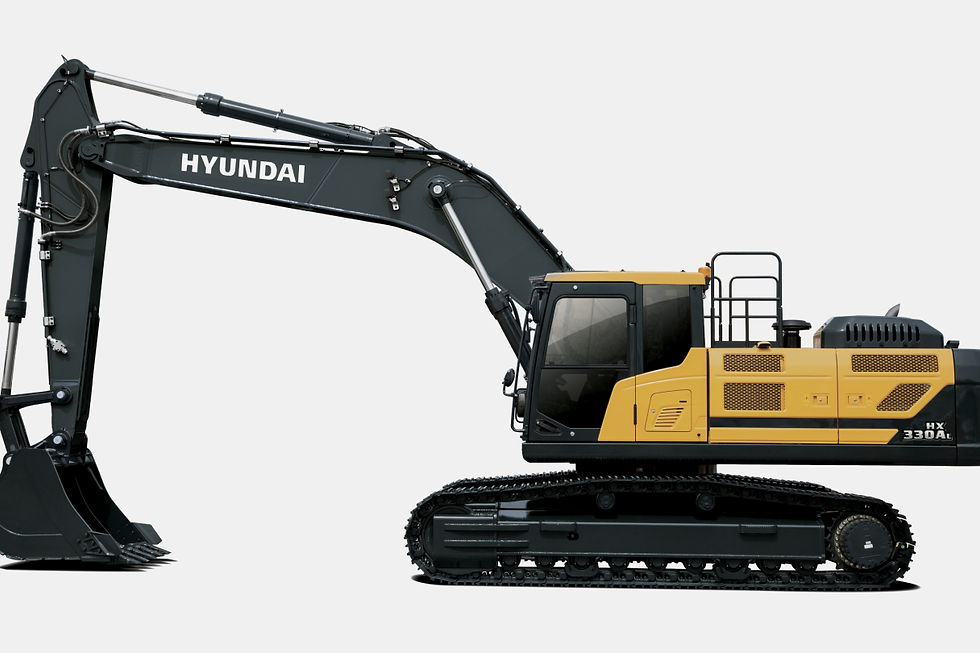
The HX360L is a 36.39-ton excavator running Hyundai's new DX08 diesel at 303 hp, and it's landing at the same time as its bigger sibling, the HX400L. Both machines are the first wave of a genuine platform change for Hyundai — not a trim update — which historically means dealer allocations are tighter in the first year than they are once the model has been on lots for a while. Utility and foundation contractors who get financing pre-approved now are the ones who actually get a machine off the first production runs, instead of waiting a year for supply to catch up to demand.

What Utility and Foundation Contractors Actually Lose to Renting
If water and sewer installation, storm drainage, or foundation excavation is a recurring part of your contract pipeline rather than a once-a-year job, you're renting a mid-size excavator often enough that the day rates add up to real money over a year — and none of that money comes back to you. It doesn't build equity, it doesn't show up as an asset when a bonding company reviews your financials, and it doesn't guarantee the machine is available the week you actually need it, since rental yards run tightest exactly when every other contractor in your market is also digging. A financed HX360L is sitting on your lot the morning a utility bid comes in, not on a waitlist behind three other contractors' rental requests.
The Freeze-Thaw Season and Why Financing Timing Matters
In northern and mid-Atlantic markets, utility and foundation excavation slows dramatically once the ground freezes, then picks back up hard in early spring when every GC on your bid list needs the same subcontractors and the same rental equipment at once. That's exactly the season where owning your own HX360L instead of chasing rental availability pays off the most: you're digging the first thawed-ground job of the season while competitors are still waiting on a rental company's spring backlog. A financing structure that anticipates this seasonal curve — lower payments through the frozen months, normal payments once digging season resumes — keeps your cash flow aligned with when the machine is actually earning, instead of forcing a flat payment through your slowest quarter.
What Ownership Does for Your Bonding Capacity
Utility and foundation contractors bidding public infrastructure work know that bonding capacity, not manpower or even cash on hand, is often the real limit on how much work they can take on. A bonding company looking at your financial statements sees owned equipment as a hard asset, which strengthens your balance sheet in a way a rental history simply doesn't. Contractors who finance rather than rent their core excavator fleet are, over time, building the kind of balance sheet that supports a higher bonding capacity — which means access to bigger contracts, not just a bigger fleet.
Sizing the Purchase to Your Actual Backlog
One mistake we see often: a contractor finances the biggest machine they can qualify for instead of the one that actually matches their backlog. If your typical job is a residential foundation dig or a short utility lateral, a 36-ton HX360L might be more machine than you need every single day, even if it's the right size for your larger jobs. The better approach — and the one we walk contractors through directly — is matching the financed machine to your average job size and renting up for the occasional larger one, rather than the reverse, where you're financing for the exception and running an oversized, harder-to-maneuver machine on every routine job.
A Bigger Dealer Network Backs This Investment
Financing a machine only makes sense if you can actually keep it running, and Hyundai's dealer and parts network has been expanding right alongside its product lineup. We covered what the 2026 HD merger means for parts, service, and financing in detail elsewhere, but the short version relevant here: a next-gen machine like the HX360L is backed by a growing, not shrinking, parts and service footprint, which matters more on a brand-new platform than it does on a machine that's been in dealer inventories for a decade.
Where the HX360L Sits Next to Hyundai's Other Large-Frame Machines
If you're sizing your fleet rather than replacing a single machine one-for-one, it helps to see the HX360L next to the rest of Hyundai's large-frame lineup. We've written separately about stepping up into Hyundai's large-frame class with the HX300A L, which sits a notch below the HX360L in Hyundai's range. A contractor running mixed job sizes — some smaller residential foundation digs, some larger commercial utility mains — often ends up financing more than one size class rather than trying to make a single excavator handle everything, and understanding where each model actually sits in the lineup keeps you from over-buying or under-buying for the work you have on the books.
What to Ask Before You Sign With Any Lender
Not every equipment lender understands the difference between a contractor waiting on a certificate of occupancy for a residential job and one waiting on a municipal payment cycle that runs on a completely different clock. Before financing an HX360L or any excavator at this price point, it's worth asking a potential lender directly whether they've financed utility and foundation contractors before, whether their payment structures can flex around milestone billing, and how quickly they can actually close relative to your dealer's allocation window. The answers to those three questions tell you more about whether a lender is the right fit than the headline terms do.
How BFC Structures This Kind of Financing
BFC Equipment Loans works with utility, foundation, and site development contractors every day, and we understand that a bonding requirement or a 60-day municipal payment cycle isn't a red flag — it's just how this end of the industry runs. We structure financing around that reality instead of asking you to force your business into a generic equipment loan template, and because we specialize in construction equipment rather than general commercial lending, we can typically move faster than a traditional bank once you're ready to move on a next-gen HX360L.
Ready to finance a Hyundai HX360L for your crew? Visit our home page to learn more about BFC Equipment Loans, apply for financing today, browse our equipment for sale listings, or subscribe to our blog for more equipment spotlights and financing guides.


Comments