

Hyundai's HX360L: The Next-Gen 36-Ton Excavator Arrives Alongside the HX400L
When Hyundai pulled the cover off its next-generation HX excavators at CONEXPO 2026, most of the attention went to the HX400L and its DX08 engine swap. But the machine that showed up right alongside it, the HX360L, is arguably the more important release for the average excavation contractor. The 40-ton HX400L is built for mass excavation and quarry-adjacent work; the 36-ton HX360L is the size class that utility contractors, foundation crews, and site development subs actually run every single day. Here's what's real about it, what changed from the outgoing A-Series, and why the engineering story here is more interesting than a simple horsepower bump.
What the HX360L Actually Is
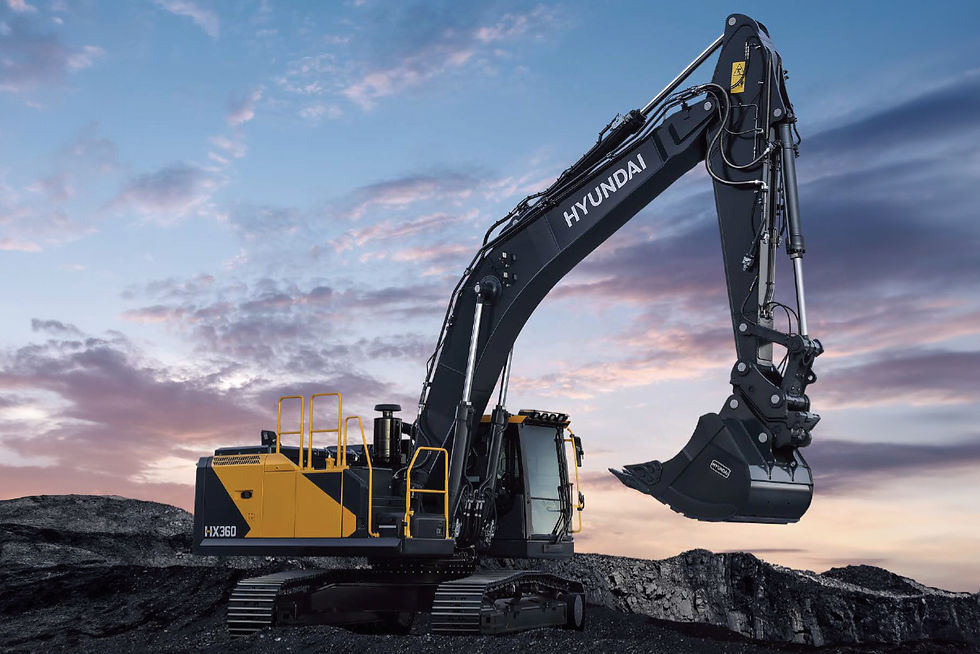
Per Hyundai's own published spec sheet, the HX360L runs a 36.39-ton operating weight, powered by Hyundai's in-house DX08 diesel rated at 303 hp at 1,800 rpm and certified to Stage V emissions. Standard bucket capacity is 1.81 m³ (2.37 yd³), main pump flow is rated at 2×360 L/min, and the machine reaches a maximum digging depth of 24'8" (7,510 mm) and a maximum digging reach of 36'6" (11,115 mm). Those last two numbers matter more than they sound: that's deep enough for the vast majority of utility trenching and foundation excavation work without stepping up to a larger, harder-to-transport machine.
The Predecessor Comparison: What Actually Changed From the Outgoing A-Series
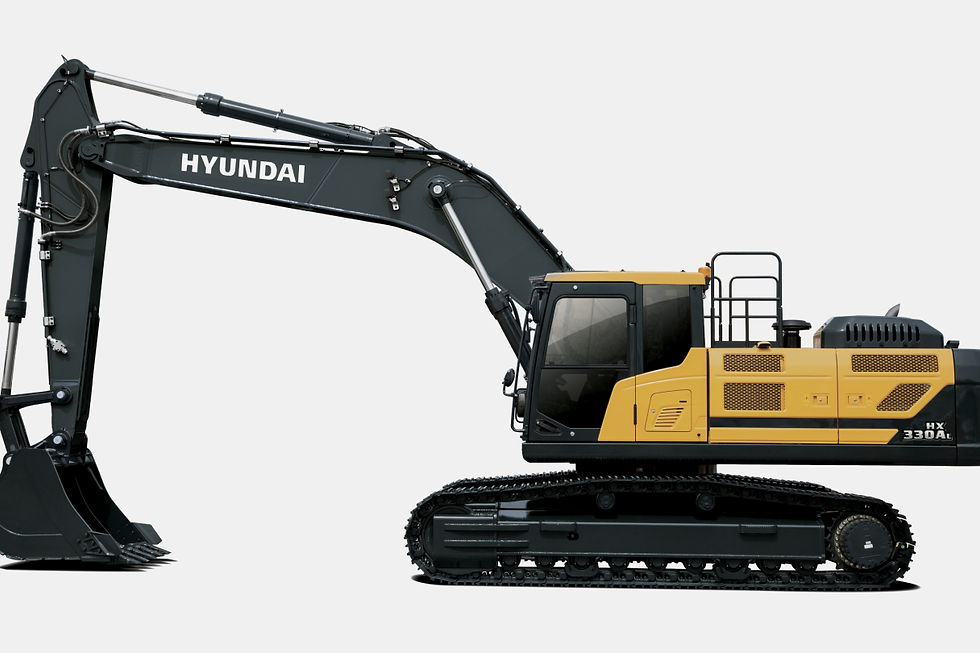
The closest currently-shipping machine in this weight class is Hyundai's HX330AL, which runs a Cummins L9 engine rated at 309 hp at 2,100 rpm on a 33.75-ton chassis with a 1.44 m³ bucket, also certified to Stage V. Put those two spec sheets side by side and something counterintuitive jumps out: the new HX360L is a heavier machine with a larger bucket, yet its rated engine output (303 hp) is actually a touch lower than the Cummins it's succeeding. That's not a step backward — it's the more interesting engineering story here. Hyundai isn't chasing this generation's gains with a bigger engine; it's chasing them with smarter hydraulics.
The DX08 pairs with Hyundai's new FEH (Full Electric Hydraulic) system, which gives the pumps and valves precise, independently controlled flow rates instead of relying on a mechanically-linked hydraulic servo system. In practice, that means less hydraulic energy wasted on functions the operator isn't actively using at that instant, which is how Hyundai gets to its published claims of up to 25% higher productivity and roughly 8-10% better fuel efficiency over the previous-generation engine architecture, according to Hyundai's own release materials and independent trade coverage of the launch. Maintenance intervals stretched too: oil and filter change intervals moved from 500 hours to 1,000 hours, and DPF cleaning intervals extend out to 8,000 hours — real uptime that doesn't show up on a spec sheet but shows up on your shop's calendar.
Why the 36-Ton Class Is the One Most Excavation Contractors Actually Buy
Water and sewer utility contractors, foundation and basement excavation crews, and general site development subs live in this weight class because it's the sweet spot between reach and mobility — big enough to dig a deep basement or a main-line trench in one pass, small enough to move between residential and commercial sites without a full pilot-car escort. That's a different buyer than the HX400L's typical customer, who's usually loading trucks in a quarry, pit, or large-scale mass grading job all day. If you're deciding between the two, our breakdown of Hyundai's HX210L against the CAT 320 is a useful reference point for how Hyundai sizes its excavator classes against the more familiar CAT lineup — the HX360L sits a full class above that 21-ton machine.
New Tech That Actually Matters on the Jobsite
Two features on the next-gen HX line are worth calling out beyond the engine. The Rheon Load System weighs your bucket load in real time as you swing, which means fewer overloaded trucks getting flagged at the scale house and fewer wasted passes underloading a truck out of caution. And the SAVM surround-view system — six AI-assisted cameras plus radar-based object detection — gives the operator a genuinely useful blind-spot picture on tight urban utility cuts where a ground worker or a passing vehicle can be closer to the counterweight than the mirrors show. Add two 12.8-inch cab monitors, optional heated and cooled leather seating, and keyless entry, and this is a materially different operator experience than the A-Series cab, not just a badge change.
Why Stage V Emissions Matters Even Outside Europe
The HX360L's published spec sheet carries a Stage V emissions certification, which is the European Union's standard rather than the US EPA's Tier 4 Final rating, and the two aren't identical on paper. But the practical point for a US contractor is this: Stage V is currently the strictest large-scale emissions bar in the world for off-road diesel equipment, and the DX08 platform underneath the HX360L is built to hit it. A US-market machine running the Tier 4 Final version of the same core engine architecture inherits that same clean-burn engineering, which matters increasingly often on public jobs where municipalities and state DOTs are starting to favor or require lower-emissions equipment on bid specifications, and it's one more reason a next-gen machine like this tends to age better on your equipment list than a machine built to an older emissions standard.
Fitting Into a Mixed-Brand Fleet
Most excavation contractors we work with don't run a single-brand fleet — they run whatever machine made sense at the time they bought it, which often means a CAT excavator next to a Hyundai wheel loader next to a Komatsu dozer. If you're weighing where a Hyundai fits alongside brands you already run, our look at Hyundai's current excavator and wheel loader lineup is a good starting point for seeing how the HX360L relates to the rest of what Hyundai builds, and whether it's a strong standalone purchase or the first Hyundai machine in what could become a bigger relationship with the brand's dealer network.
The Trade-In Conversation if You're Running an Outgoing A-Series Machine
If your fleet already includes a Cummins-powered HX330AL or a similar A-Series machine, moving to a next-gen HX360L doesn't have to mean financing the full purchase price. A well-maintained mid-size excavator in decent hours holds real trade-in value, and rolling that value into the new machine's financing lowers what you actually need to borrow. It's worth having that conversation with your dealer and your lender at the same time, rather than treating the trade-in and the financing as two separate transactions — the numbers usually work out better when they're structured together from the start.
The Rent-vs-Own Math on a 36-Ton Excavator
A machine in this class isn't cheap to rent by the week, and if you're running utility or foundation work as a core part of your business rather than a once-a-year need, the math almost never favors renting. Every dollar spent on a rental invoice buys you nothing once the job's done — no equity, no resale value, no asset on your balance sheet when a bank or bonding company looks at your business. Financing a next-gen HX360L instead means that machine is working for you on every job after this one, too, while a rented one goes back on a truck the moment the current job wraps.
Getting Ahead of the Launch Curve
Next-gen machines like this tend to be in tight supply in their first year on dealer lots, and contractors who line up financing before the excavator arrives are the ones who actually get one when it does. Our 2026 excavator buyer's guide covers how the HX360L stacks up against competing 35-40 ton machines from CAT, Komatsu, and John Deere if you're still weighing brands. Whichever you land on, BFC Equipment Loans structures financing around excavation businesses specifically — seasonal cash flow, bonding requirements, and the reality that your next contract depends on having equipment available, not on a rental yard's schedule. If you want the deeper financing breakdown specific to this machine, we've also written a companion piece on financing the HX360L for utility and foundation contractors.
Interested in financing a Hyundai HX360L? Visit our home page to learn more about BFC Equipment Loans, apply for financing today, browse our equipment for sale listings, or subscribe to our blog for more equipment spotlights and financing guides.



Comments