

Kubota's Diesel RTV-X1140 vs. John Deere's Diesel Gator XUV865M: The UTV Matchup Nobody's Actually Making
Every utility vehicle comparison on the internet, including our own side-by-side of the Kubota RTV-X1140 against the gas-powered John Deere Gator XUV835M, ends up stacking a diesel Kubota against a gasoline Deere. That's not laziness, it's just what most dealers stock. But Kubota and Deere both build a genuine diesel crossover utility vehicle, and nobody seems to be putting those two side by side on their own terms. The RTV-X1140 and the Gator XUV865M are the actual apples-to-apples matchup: same fuel type, same basic mission, same general size class. The differences between them are real engineering choices, not just a fuel-type trade-off, and they matter a lot more once you're the one signing for the machine.
Two Diesel Philosophies, Same Fuel Pump
Kubota's RTV-X1140 runs a 1,123 cc three-cylinder, liquid-cooled diesel rated at 24.8 horsepower at 3,000 RPM. John Deere's XUV865M runs a smaller 854 cc four-cycle diesel rated at 22.8 horsepower (17.0 kW). On paper that's a 2-horsepower gap in Kubota's favor, but the more telling number is displacement: Kubota is pulling that horsepower out of roughly 30% more engine, which is the signature of a low-revving, torque-first diesel built the way Kubota builds its agricultural engines. Deere's smaller-displacement diesel is doing more work per cubic centimeter, which usually means a lighter, more compact powerplant under the hood at the cost of some of that low-end grunt a Kubota diesel is known for.
Neither manufacturer publishes a torque figure for these specific utility vehicle engines the way they do for their tractor and compact-equipment lines, so we won't invent one. What we can tell you, because both companies do publish it, is how that power actually translates into payload and towing, which is where this comparison gets interesting.
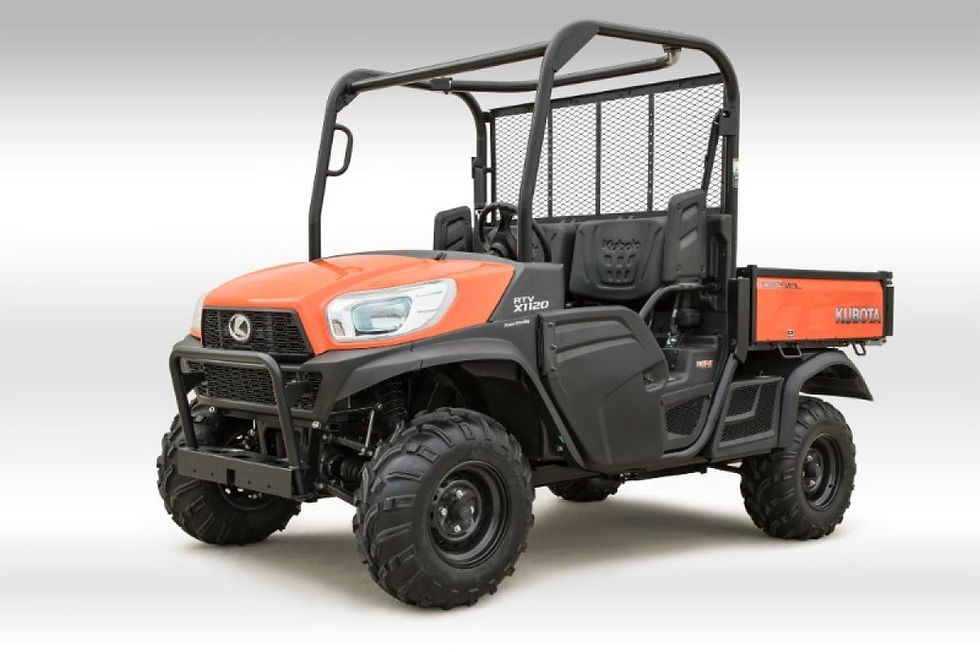
Cargo, Payload, and Towing: The Numbers That Actually Move a Jobsite
The RTV-X1140's cargo bed measures 51.1 inches long by 57.7 inches wide by 11.2 inches high, for 19.1 cubic feet of bed volume, and it's rated to carry 1,102 pounds. That bed is also available with Kubota's hydraulic dump feature, which we've covered in detail on the Worksite trim, and it ties directly into why contractors buy this machine over a pickup for short-haul site work: you don't have to shovel it back out. Towing capacity on the X1140 is rated at 1,300 pounds.
The Gator XUV865M's cargo bed is rated for 1,000 pounds, slightly under the Kubota, but Deere publishes a separate overall payload capacity of 1,474 pounds, meaning more of the machine's total carrying capacity is split between the bed and the operator station rather than concentrated entirely in the dump box. Where the XUV865M pulls decisively ahead is towing: 4,000 pounds, more than three times what the Kubota is rated for. That's the same gap we found in the gas-engine comparison between the RTV-X1140 and the XUV835M, and it holds true in the diesel lineup too. This isn't a fluke of one engine pairing, it's a consistent design decision both brands have made across their entire crossover UTV range.
What that means in practice: if your UTV's job is hauling tools, fence posts, fasteners, and a couple hundred pounds of gear from the gate to the work area, the Kubota's bigger, deeper, optionally hydraulic bed is going to feel like the right tool every single day. If your UTV's job includes pulling a tilt trailer with a mower, a small equipment trailer, or a water tank behind it on a regular basis, the Deere's towing number isn't just bigger on paper, it's the difference between towing comfortably within the rated limit and towing right at the edge of it.
Fuel Capacity, Range, and the Case for a Bigger Tank
The XUV865M carries an 11.2-gallon (42.4-liter) fuel tank. The RTV-X1140 carries 7.9 gallons (30 liters). On a diesel engine sipping fuel at idle-heavy utility speeds, that difference translates into real extra hours between fill-ups, which matters more than it sounds like on a large property, a sprawling horizontal site, or a job where the nearest fuel can is a 15-minute round trip away. If your crew runs the UTV hard, all day, moving between widely spaced work zones, the Deere's tank size is a genuine operational advantage, not a spec-sheet footnote.
Top Speed and Where Each One Is Actually Built to Work
Kubota publishes a governed top speed of 25 mph on the X1140, which lines up with its identity as a work-site machine first and a transportation tool second. Deere doesn't publish a top speed figure on its official XUV865M spec sheet the way Kubota does for the X1140, and that absence is itself informative: Deere isn't selling the 865M on speed. Both machines are built around the same basic idea, a diesel crossover UTV that prioritizes torque, payload, and all-day duty cycle over highway-adjacent speed, which is worth knowing if you've been assuming the diesel trims exist purely to be the fast option. They don't. The gas-engine XG850 Sidekick and XUV835M variants are where both brands chase top speed instead.
If road use, or semi-legal road use, factors into your buying decision at all, that's a state-by-state legal question before it's a spec-sheet question, and we've laid out exactly how that works, dealer by dealer requirement, in our guide to UTV road-legality for Kubota RTV and John Deere Gator owners.

Service Rhythms and Resale: The Diesel Trade-Off Nobody Mentions Upfront
A diesel engine in either of these machines asks for more deliberate upkeep than the gas alternative: more attention to fuel filtration, more sensitivity to fuel quality in cold weather, and a maintenance schedule built around hour intervals the way a tractor's is, not a lawnmower's. That's the trade you're making for the torque and the fuel-system commonality with the rest of a diesel fleet, and it's worth budgeting the service time for rather than treating the UTV as a set-it-and-forget-it machine the way crews sometimes treat a gas-powered golf-cart-style unit.
The upside shows up later, at trade-in or resale. Diesel utility vehicles in both the Kubota RTV line and the Deere Gator XUV crossover line have historically held value better in the used market than their gas-engine siblings, largely because the buyer pool for a used diesel UTV skews toward exactly the commercial and agricultural operations we're describing here, operations that specifically want a diesel unit and are willing to pay for one. If you're financing this machine with an eye toward trading it in on the next diesel unit in three or four years, that resale dynamic is part of the real cost of ownership, not just a nice-to-have.
Who Actually Buys the Diesel Version, and Why
Diesel UTVs cost more upfront than their gas counterparts in both lineups, so the trades that gravitate toward them tend to share one thing: fuel commonality. A general contractor already running diesel skid steers, diesel excavators, and diesel trucks on site doesn't want to stock a separate can of gasoline just for the UTV. Land-clearing and forestry crews, utility right-of-way contractors, solar and large-scale land-development outfits, and horizontal civil contractors covering big, spread-out sites are the classic diesel-UTV buyers, precisely because those are the operations where a single fuel source across the whole fleet actually saves time and reduces the chance of someone running the wrong fuel through the wrong tank.
Landscaping and hardscape subs, roofers, and smaller GC crews working tighter, single-structure sites tend to lean gas, both because the upfront cost is lower and because they're less likely to already be running diesel equipment elsewhere on the lot. If that's closer to your operation, our breakdown of the gas-powered RTV-X1140 vs. XUV835M comparison and our dedicated XUV835M spotlight are the better starting points.
Specific trades where we see the diesel RTV-X1140 win the argument: underground utility and pipeline crews hauling fittings and tools between widely spaced excavation points, demolition contractors moving debris-handling tools around a site in short, repeated trips, and agricultural-adjacent site-prep outfits who already run Kubota diesel tractors and want a single fuel pump on the trailer. Specific trades where the diesel XUV865M tends to win: large-acreage land development and grading operations that tow a compact mower or drag harrow between zones, solar-field construction crews towing material carts across spread-out arrays, and utility right-of-way contractors who need the full 4,000-pound rating to pull equipment trailers behind the UTV instead of sending a full-size truck down an access road that wasn't built for one.
The Rent vs. Own Math on a Diesel Utility Vehicle
A UTV rental runs for a day rate or a monthly rate depending on the yard, and either way, it adds up fast on a project that runs months, not days. The machines we're discussing here aren't idle equipment sitting in reserve, they're the vehicle your foreman, your superintendent, and half your crew touch multiple times a day, every day the job is open. That kind of daily-use pattern is exactly the case where renting stops making sense and owning starts paying for itself, because you're not paying a rental markup on a machine that never actually sits parked.
We're not going to tell you a monthly payment number here, because it depends on your credit profile, your down payment, your term, and the dealer's out-the-door price on the specific unit you're buying, and anyone who tells you a number without knowing those things is guessing. What we can tell you is that a UTV purchase typically asks for a modest down payment relative to heavier equipment like an excavator or a track loader, not the kind of large deposit that keeps a diesel crossover utility vehicle purchase out of reach for most contractors who are already financing other iron.
Diesel UTV Equipment Financing: What to Actually Compare
If you're cross-shopping a diesel Kubota RTV-X1140 against a diesel John Deere Gator for your fleet, run the comparison on the job you actually do, not on the spec sheet in isolation. Hauling-heavy, short-run sites favor the Kubota's bed capacity and hydraulic dump option. Towing-heavy, spread-out sites favor the Deere's 4,000-pound rating and bigger fuel tank. Either way, this is equipment financing territory just like the excavator or the track loader on your trailer, and it deserves the same structured approach, not an afterthought cash purchase at the parts counter.
Review the full Kubota equipment financing and John Deere equipment financing options we offer, and if you're also weighing whether a used unit carries any open recall concerns before you buy, our coverage of the 2025 Kubota RTV-Series ball joint recall is worth a read first.
Whichever side of this you land on, BFC Equipment Loans structures financing for both the Kubota RTV line and the John Deere Gator lineup, nationwide, not just for the excavator or the track loader sitting next to it on the invoice. Head back to our home page to see the full scope of what we finance, browse our current equipment for sale and financing inventory, or go straight to the equipment financing application if you already know which machine you want. And if you want more honest, spec-driven breakdowns like this one in your inbox, subscribe to the BFC blog.



Comments