

Stump Grinder Attachments: Why Grinding Beats Digging Every Stump Out of the Ground
Removing a tree is the easy part. What's left behind — a stump and a root ball anchored deep into the ground — is where a lot of tree removal and land-clearing jobs actually lose time and money. Dig it out with a bucket or root grapple and you're left with a crater, a root mass to haul off site, and a hole that needs backfill and compaction before anyone can grade, seed, or pave over it. Grind it, and the stump disappears into wood chips below grade in a fraction of the time, with no hole to fill and no root ball taking up space on a dump trailer.
What Actually Changes When You Grind Instead of Excavate
A stump grinder attachment mounts to a skid steer, compact track loader, mini track loader, small articulated loader, or a Toolcat, and runs entirely off the carrier's auxiliary hydraulics — there's no separate engine to maintain, no extra fuel source, and no additional machine to buy. A cutting wheel fitted with carbide-tipped teeth spins into the stump and grinds the wood and upper root mass into loose mulch that stays on site, typically down to a few inches below grade — enough to grade, seed, or pave over without the stump interfering. Compare that to physically pulling a stump: excavating a mature stump's root ball can mean a hole several feet across and deep, a root mass that has to be loaded and hauled, and backfill material and compaction time before the area is usable again. For a crew doing volume tree and stump work, that difference compounds fast across a job list.
Real Sizing: Bobcat's Stump Grinder Lineup
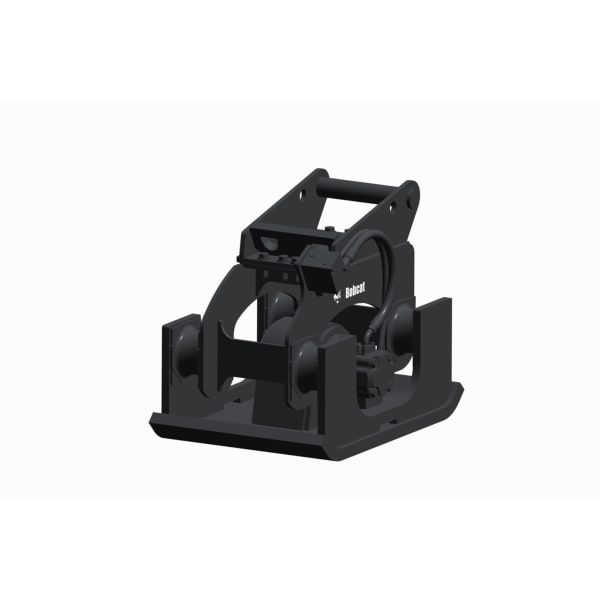
Bobcat's stump grinder attachment comes in three sizes built around the same core design: a front-mount attachment set at a 90-degree angle to the operator for increased visibility into the cutting area, rather than an in-line mount that would block the view of the cutting wheel.
Stump Grinder – SG, 30" — the compact end of the lineup, sized for tighter residential and landscape work where maneuvering into backyards and through gates matters as much as raw cutting capacity.
Stump Grinder – SG, 60" — a larger-capacity version for bigger stumps and higher-volume commercial or municipal work.
Stump Grinder – SGX, 60" — the upgraded 60-inch configuration in the current lineup, offering the widest cutting capability of the three.
Across all three sizes, the design features that matter on a real jobsite are consistent: carbide-tipped teeth built to rip through hard wood and hold an edge longer than standard steel teeth, a valve design engineered to minimize the cutting wheel stalling mid-cut, and rubber deflecting shields that keep wood chips from becoming a hazard to the operator and bystanders. The front-mount system is also what makes the attachment practical in tight residential yards — the same 90-degree mounting angle that improves visibility also lets the operator maneuver into confined spaces a rear- or center-mounted grinder couldn't reach.
Carrier Compatibility Across a Fleet
One reason the stump grinder attachment fits so well into an existing landscape or tree service fleet is how broadly it's rated across carrier classes. Bobcat's stump grinder attachments mount to compact track loaders from the T595 up through the T86-2, skid-steer loaders from the S590 through the S86-2, mini track loaders (MT100, MT120), small articulated loaders (L23, L28, L35), and Toolcat utility work machines (UW53, UW56). That range means a crew running almost any Bobcat loader already in the fleet can add stump grinding capability without a dedicated, single-purpose stump grinder machine sitting idle between jobs — the same carrier handling grading, material handling, and site cleanup during the week can pick up stump work the same day.
Depth, Debris, and the Details That Decide a Clean Job
How deep a stump gets ground matters more than most homeowners or property managers realize when they're specifying the work, and it's worth setting expectations before the grinder ever starts spinning. Grinding a few inches below grade is standard for turf and general landscape restoration, but a stump sitting where a new structure, driveway, or hardscape feature is planned may need a deeper grind to clear root mass that would otherwise interfere with excavation or compaction later. The wood chip debris left behind is a feature, not a byproduct to apologize for — it breaks down in place, can be spread as mulch elsewhere on the property, or hauled off in far less volume than an excavated root ball would require. Rubber deflecting shields on the attachment keep that debris field contained during the grind, which matters as much for keeping a residential customer's property clean as it does for operator safety.
Who's Losing Money Subbing This Out
Landscaping contractors who remove trees as part of a broader job scope but currently call in a specialty stump-grinding sub for the last step — a step that could stay in-house and on the invoice.
Tree service companies that already own the chainsaws and chippers for removal but treat stump grinding as a separate, occasionally-subbed task rather than a standard part of the service.
Municipalities and campus facilities crews handling routine tree removal on public property, where stump grinding volume is steady enough to justify an owned attachment over repeated rental or contractor calls.
Land-clearing and site-prep contractors grubbing a lot ahead of grading, where grinding stumps flush to grade is faster than excavating them and avoids leaving holes that complicate compaction — a growing category as vegetation management and land-clearing work expands nationally and as solar site prep adds a fast-growing new source of clearing volume.
Rental contractors and equipment yards that stock stump grinder attachments specifically because so many landscape and tree crews need one only occasionally — a signal of how common the rent-first habit still is in this category.
Cutting Wheel Maintenance Determines How Long the Investment Lasts
Carbide teeth on a stump grinder wheel are built to hold an edge through repeated contact with hardwood, dirt, and the occasional buried rock a stump has grown around, but they're a wear item like any cutting tool and checking them regularly is what keeps grinding time from creeping upward job after job. A wheel running dull or damaged teeth doesn't stop working outright — it just takes noticeably longer per stump and puts more strain on the carrier's hydraulic system to push through material that sharper teeth would clear faster. Bobcat's valve design on the stump grinder is specifically engineered to minimize the cutting wheel stalling mid-cut, but that engineering assumes a wheel in reasonable condition; a heavily worn cutting wheel can still stall more often regardless of how well the hydraulics are tuned. Keeping a spare set of carbide teeth on hand and inspecting the wheel between jobs is a small habit that keeps a stump grinder performing at the production rate it was bought for.
Grinding vs. the Other Land-Clearing Attachments
A stump grinder isn't a substitute for every land-clearing tool — it's a specialist. Where a forestry mulcher clears standing brush and small trees in place, and a root grapple physically pulls stumps and root balls out of the ground for hauling, a stump grinder handles the specific case where the tree is already down and the remaining stump needs to disappear without excavation. Crews doing full-service tree removal often end up wanting all three tools in rotation depending on the job: mulcher for standing vegetation, grapple for material that needs to be hauled off, and grinder for stumps that just need to go away in place.
Seasonal Demand and Why Owning Beats Waiting on a Rental Yard
Stump grinding demand doesn't spread evenly across the year. Storm season brings a spike of downed and damaged trees that need full removal including the stump, and spring and fall landscape installation seasons bring their own surge as property owners clear old stumps ahead of new plantings or hardscape work. That seasonality is exactly when a rental yard's stump grinder inventory is hardest to get — everyone in the region wants the same attachment during the same few weeks, and a rental house with three units to lend out can't cover a whole market's storm-season demand. A contractor who owns the attachment outright isn't competing with every other landscaper and tree service in the area for the same limited rental fleet during the exact weeks when stump work volume is highest.
The Rent-vs-Own Case
The logic here mirrors what any skid steer attachment actually costs to own: if stump removal shows up on more than a handful of jobs a season, the rental fees or subcontractor invoices for that single step add up against a financed attachment fast, especially since the grinder runs off equipment you're already operating rather than requiring a new machine. Confirming your carrier's mounting standard against Bob-Tach, Pin Grabber, or Quik-Tatch before you buy keeps the attachment usable across your whole fleet rather than tied to a single machine. Financing a correctly sized stump grinder alongside a loader you already run means the last step of every tree removal job stays on your invoice instead of someone else's.
Ready to Move on This?
Whether you're financing your first attachment or adding heavy iron to a growing fleet, BFC Equipment Loans structures financing around your cash flow, not just your credit score.


Comments