

The Bobcat Planer Attachment: Turning Your Skid Steer Into a Milling Machine Without the Dedicated-Equipment Price Tag
Most contractors who need to mill asphalt or concrete do it the expensive way: they rent a dedicated planer or milling machine for the one week a year they actually need it, pay a premium for last-minute availability, and send it back. Bobcat makes a case for skipping that cycle entirely with its Planer attachment, a piece of gear that turns a skid steer or compact track loader you already own into a genuine milling machine for the smaller jobs that come up constantly, without the standalone equipment price tag.
How It Actually Works
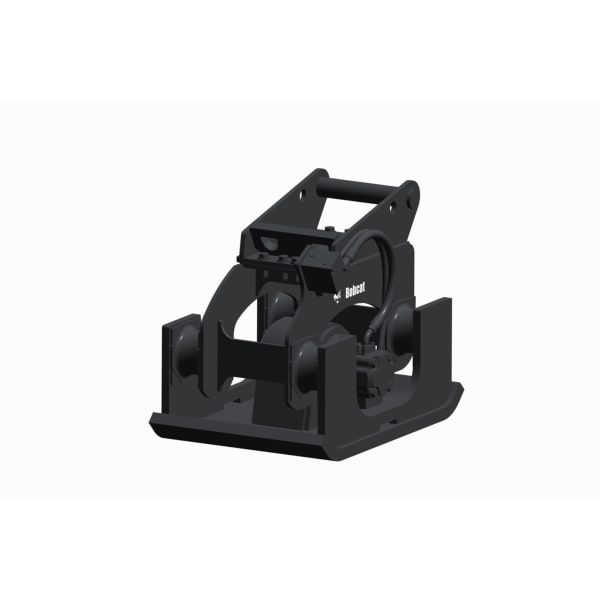
The Bobcat Planer uses carbide-tipped bits mounted on a revolving drum to cut and pulverize pavement material, which then exits the housing through a rear opening as the machine moves forward. Depth and angle are controlled through planer skis on the left and right side of the housing, adjustable independently, with in-cab depth gauges giving the operator a real-time reference for each ski. Bobcat specifically calls out visibility of the skis as a design priority, since an operator who can actually see what the skis are doing can hold a consistent cut even on uneven terrain, where the skis keep surface contact and maintain depth regardless of what the ground underneath is doing.

The current 48-inch Super Flow model runs a 2,204-pound operating weight, measures 49 inches long by 68 inches wide by 37 inches tall, and mills to a maximum depth of 5 inches at up to an 8-degree cutting angle. That Super Flow designation matters mechanically: the attachment needs a high-flow hydraulic system, roughly 42 gallons per minute at 4,061 psi, which means it's built specifically for Super Flow-equipped machines like the S86 skid-steer and T86 compact track loader rather than a base-spec machine's standard hydraulics.
What It's Actually Good For — and What It Isn't
Bobcat's own list of top tasks for the Planer is a useful reality check on what this attachment is built to do: mating uneven pavement surfaces, cleaning up around larger milling machines on a bigger job, cutting drainage channels in a parking lot, milling around manholes and other fixed obstacles, and tapering edges on a roadway tie-in. Every one of those is a precision, small-footprint job — not a full-lane highway resurfacing project. A dedicated walk-behind or self-propelled cold planer is still the right tool for milling an entire parking lot or a long stretch of roadway in a single pass; the Bobcat attachment isn't trying to replace that category, and a contractor who actually needs that scale of milling work should keep renting or financing a true planer for it.
Where the attachment earns its keep is in the much more common scenario: a utility contractor who needs to mill a trench patch flush with existing pavement, a paving crew tapering an edge so a new overlay doesn't leave a lip, or a site contractor cleaning up transitions around manholes and drainage structures. Those are jobs that come up regularly enough to justify owning the attachment outright, but rarely at a scale that justifies owning a dedicated milling machine.
The Financing Angle
Attachment economics are different from machine economics, and that's worth being deliberate about. The real question isn't whether the Bobcat Planer is a good attachment — it clearly is, for the work it's built for — it's whether your actual job mix generates enough of that small-footprint milling work to make owning it cheaper than renting a planer the few times a year you'd need one otherwise. A contractor who's regularly tying new pavement into old, patching utility cuts, or cleaning up around manholes on municipal work will burn through rental fees fast enough that financing the attachment alongside the skid steer or CTL that already carries it pays for itself quickly. A contractor who mills pavement once or twice a year is usually better off renting.
The Bottom Line for Contractors
The Bobcat Planer is a Super Flow-only attachment, requiring roughly 42 gpm / 4,061 psi hydraulics found on machines like the S86 skid-steer and T86 compact track loader.
It mills to a maximum 5-inch depth at up to 8 degrees of cutting angle — built for precision tie-ins, trench patches, and manhole transitions, not full-lane resurfacing.
It pays for itself fastest on jobs with recurring small-footprint milling needs; occasional, large-scale milling work is still better served by a dedicated planer.
Already run a Super Flow-equipped Bobcat skid steer or track loader? Apply for equipment financing to add a Planer attachment or any other piece of equipment, browse current inventory on our equipment marketplace, or visit our homepage to see how BFC helps contractors grow their fleets.


Comments