

Bobcat Bob-Dock: Hands-Free Hydraulic Attachment Swaps Explained
Updated: Oct 3
There's a specific operator error that's quietly cost contractors more hydraulic hoses and attachment downtime than almost anything else on a skid steer or compact track loader: backing away from an attachment without fully disconnecting the hydraulic lines first. Bobcat built an entire system, Bob-Dock, specifically to engineer that mistake out of the equation, and it's worth understanding how it actually works and what it replaced to get there.
Three Generations of the Same Basic Problem
Bobcat's original Bob-Tach system solved the mechanical half of attachment swapping decades ago: instead of bolting an attachment on by hand, a wedge-and-lever mechanism locks it to the loader arms, and an operator could swap buckets without needing a second set of hands or a wrench. That system still exists and still works, but it requires the operator to physically operate levers at the attachment mount, meaning someone has to get out of the cab for every single swap.
Power Bob-Tach was the next step: a hydraulically actuated version of the same wedge-and-lever mechanism, controlled by a switch inside the cab instead of a lever outside it. That let an operator lock or release the mechanical connection without leaving the seat, a real time and safety improvement over the manual version. But Power Bob-Tach only automated the mechanical lock. Any attachment using hydraulics, a grapple, a breaker, an auger, still needed the operator to get out and manually connect or disconnect the hydraulic hoses by hand, which is exactly where the dropped-hose and damaged-coupler problem lived.

What Bob-Dock Actually Changes
Bob-Dock is the system that finally closes that gap. An operator lines the loader up with an attachment's adapter plate, presses the same Power Bob-Tach switch from inside the cab, and the system simultaneously secures the mechanical connection and connects the hydraulics, both steps, no exit from the cab required. When the job's done, retracting the wedges and pulling away releases both connections together, instantly. Bobcat built it specifically to prevent the common operator error of forgetting to disconnect hydraulic hoses before backing away, which is how hoses get ripped, couplers get bent, and a quick attachment swap turns into an expensive repair.
Bob-Dock is available on Bobcat's M2-Series compact track loaders, including the T630, T650, T740, and T770, the same large-frame machine BFC has covered in its own spotlight, along with the S630, S650, S740, and S770 skid steers and the A770 all-wheel steer loader. It requires a Bob-Dock adapter plate on the attachment side, and standard couplers remain available on machines or attachments that don't have the adapter, so a fleet transitioning to the system isn't forced to replace every attachment at once.
Why This Matters More Than It Sounds Like It Should
A hydraulic hose that gets ripped off mid-cycle isn't just an inconvenience. It's a safety hazard from pressurized fluid escaping, a repair bill for the hose and the coupler it damaged on the way out, and downtime while the machine sits waiting on parts instead of working. Multiply that across a fleet running several loaders and several operators with different experience levels, and the aggregate cost of hydraulic mishaps from manual hose connections becomes a real, if under-discussed, line item in equipment operating costs. A system that mechanically prevents the mistake, rather than relying on every operator remembering every time, is the kind of engineering that pays for itself quietly over a machine's service life.
Named Trades Running Mixed Attachment Fleets All Day
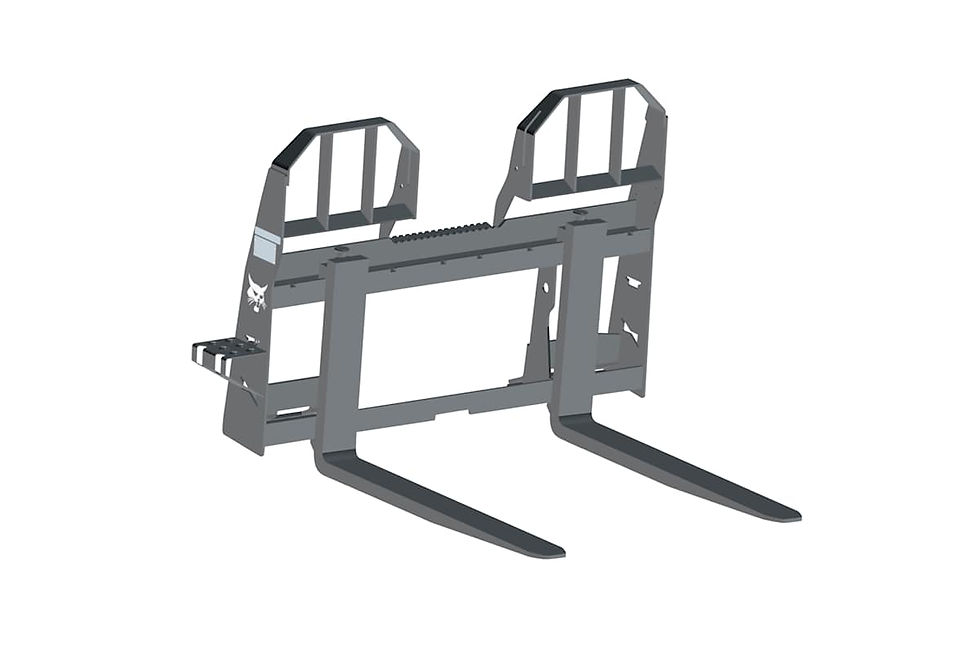
Landscape contractors switching between a bucket, a grapple, and an auger multiple times on a single property benefit most directly from a system that turns each swap into one cab-operated motion instead of a multi-step process requiring an exit every time. Demolition subs running breakers and grapples interchangeably on the same loader throughout a teardown depend on fast, damage-free hydraulic swaps to keep a crew moving. Snow removal operations swapping between a pusher, a blower, and a broom attachment across a single property route need reliable, quick connections in cold conditions where manually handling hydraulic couplers is miserable and more error-prone than usual. General contractors running a loader across varied daily tasks, material handling one hour, grading the next, get genuine time savings when every attachment change is a cab motion instead of a field stop.
Operator Training Gets Simpler, Not More Complicated
It's worth addressing a reasonable concern directly: does adding hydraulic automation to the coupler make a loader harder for a new operator to learn? The honest answer is the opposite. A single cab-operated switch that handles both the mechanical lock and the hydraulic connection is genuinely simpler to teach a new hire than a two-step process involving a cab switch for the mechanical lock plus a separate trip outside to wrestle with hydraulic fittings by hand. Fewer manual steps means fewer ways for a new or inexperienced operator to get a step wrong, which is a real advantage for any contractor bringing on seasonal or less-experienced crew during a busy season.
Cold-Weather Jobs Are Where the Time Savings Show Up Most
Anyone who's manually connected a hydraulic coupler in freezing weather with gloves on knows exactly why a cab-operated system matters most in winter. Cold makes O-rings stiffer, fittings harder to align by feel, and an operator's hands slower and clumsier at exactly the moment a fast, clean connection matters most. A snow removal or winter maintenance operation making a dozen attachment swaps across a single storm response route feels the benefit of a hands-free hydraulic connection far more acutely than a crew making one swap a week in mild weather. That's a genuine, practical reason this technology pays off hardest for exactly the trades that run attachments the most in the worst conditions.
What to Check Before Standardizing a Fleet Around One Coupler System
Before committing an entire attachment fleet to Bob-Dock adapter plates, it's worth confirming which specific attachments in your lineup are available with the adapter already installed versus which would need retrofitting, since not every attachment in Bobcat's catalog ships Bob-Dock-ready by default. It's also worth checking whether any attachments you already own, especially older or used units bought secondhand, can be retrofitted with an adapter plate rather than needing full replacement. Planning that transition deliberately, rather than assuming every attachment in your yard is automatically compatible, avoids a surprise mid-fleet-buildout.
Rent-vs-Own: A System Like This Only Pays Off on a Machine You Keep
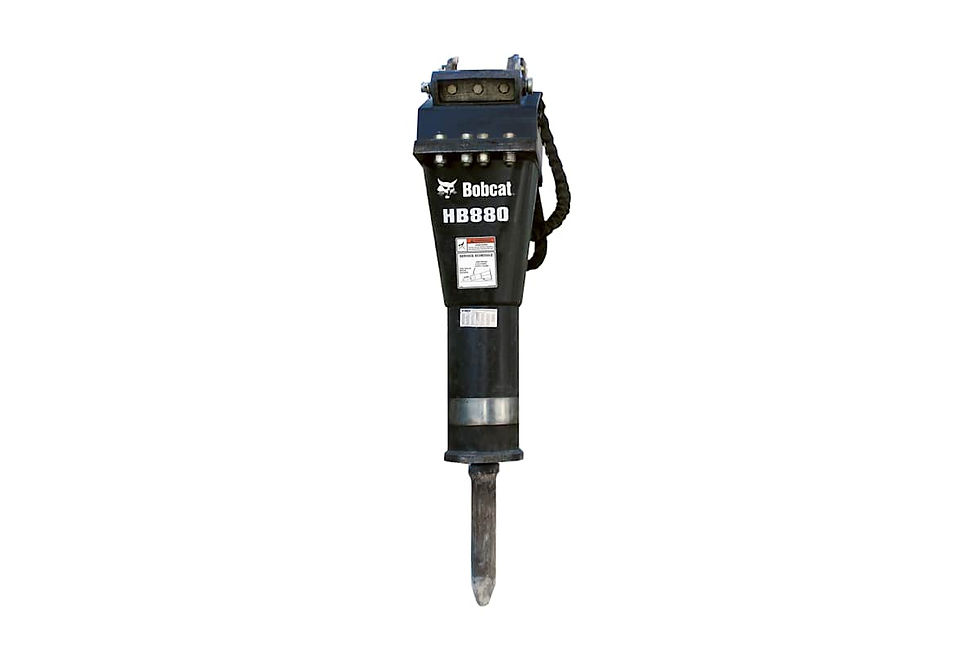
Bob-Dock and Power Bob-Tach are factory features built into specific Bobcat loaders and their matching adapter-equipped attachments, which means the real payoff comes from owning a consistent fleet rather than renting whatever happens to be on a yard's lot that week. A rental loader is unlikely to come Bob-Dock-equipped with the exact attachments your crew needs already fitted with adapter plates, so renting means losing the entire benefit of the system even if the base machine happens to have it. Owning the loader and building out your attachment fleet with matching adapter plates over time means every operator trains once and every swap afterward is faster and safer, a benefit that compounds the longer you keep the equipment.
Equipment financing through BFC is structured to cover the loader and its attachment package as one package rather than forcing a separate financing conversation for attachments after the fact, which matters directly if part of the value you're buying is a matched hydraulic quick-connect system across your whole fleet. Deposit requirements range from no money down for strong, established credit up to a moderate percentage for newer operations, and BFC works with contractors nationwide, not one region, whether you're outfitting a single loader or standardizing an entire fleet around one connection system.
How This Fits Alongside the Rest of Bobcat's Large-Frame Lineup
If you're considering a T770 or another large-frame CTL as the base machine for a Bob-Dock-equipped fleet, it's worth reading our spotlight on what actually changed from the T750 to the T770 to understand the full picture of what you're buying beyond the attachment system. And since Bobcat has been restructuring its broader compact loader lineup, understanding how the Classic vs. Pro tier split works helps clarify where machines like the T770 and its Bob-Dock compatibility sit relative to the rest of the current catalog. If you're deciding between CAT and Bobcat for your next machine, it's also worth reviewing how CAT's Pin Grabber coupler technology compares in philosophy to Bobcat's approach, since both brands are solving the same underlying problem with different engineering paths.
Financing a Fleet Built Around Fast, Safe Attachment Changes
A matched fleet of Bob-Dock-equipped loaders and adapter-plate attachments is a genuine productivity investment, not just a nice-to-have feature. BFC structures financing around the whole package your business actually needs, the machine and the attachments that make it work the way your crew works, so you're not left financing the loader now and scrambling to add the right attachments later at worse terms.



Comments