

Kubota's RTV-XG850 Sidekick vs. John Deere's Gator XUV835M: The Speed-First UTV Matchup
Kubota didn't build the RTV-XG850 Sidekick to replace the RTV-X1140. It built it to do something the hydraulic-dump-bed X1140 was never designed to do well: move fast. Debuted at the National Farm Machinery Show as Kubota's first dedicated high-speed, gas-powered RTV, the Sidekick trades some of the X1140's hauling muscle for a 40 mph top speed and a lighter, sportier chassis. That makes it Kubota's actual head-to-head rival for John Deere's gas-powered Gator XUV835M, not the diesel workhorse we already compared against the XUV865M or the gas-vs-diesel matchup in our RTV-X1140 vs. XUV835M comparison. This is the real speed-first, gas-on-gas fight.
Two Machines Built Around the Same Idea: Go Fast, Carry Enough
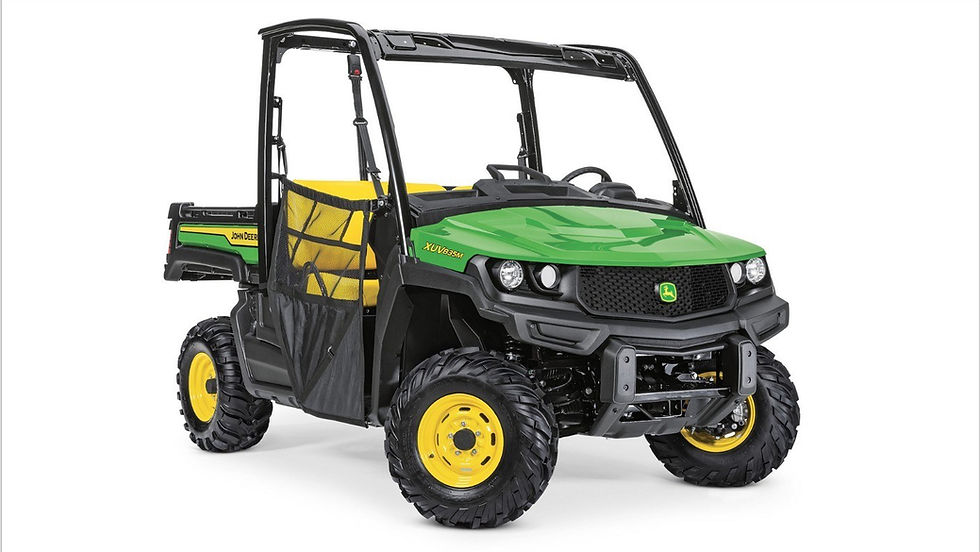
The Sidekick runs a water-cooled gasoline engine rated at 48 horsepower, paired with a continuously variable transmission and selectable, full-time four-wheel drive. It's rated for a governed top speed of 40 mph, a figure Kubota actively promotes because speed is the entire point of this model existing. The XUV835M runs a larger-feeling but similarly positioned 812 cc four-cycle gas engine with electronic fuel injection, rated at 54 horsepower, a 6-horsepower edge over the Sidekick. Deere doesn't publish an official top speed figure for the 835M on its spec sheet the way Kubota does for the Sidekick, which is a little unusual for a model clearly built to compete in the same speed-focused segment.
Horsepower alone doesn't settle this one. The Sidekick is tuned and marketed specifically around hitting and sustaining 40 mph safely and predictably across rough terrain, which is a chassis, suspension, and gearing exercise as much as an engine one. Deere's extra 6 horsepower buys real headroom, but Kubota is the manufacturer willing to put a number on the speed spec sheet, and that confidence is worth noting if top-end speed is actually what's driving your purchase.

Cargo and Towing: The Gap That Shows Up Again
The Sidekick's cargo bed holds 15.2 cubic feet and carries a payload rating of 1,000 pounds (California-spec units differ slightly). Towing capacity is rated at 2,000 pounds. The XUV835M's cargo bed is rated at 1,000 pounds as well, essentially a dead heat on bed capacity, but Deere publishes a separate overall payload capacity of 1,493 pounds and a towing rating of 4,000 pounds, double the Sidekick's number. If this pattern sounds familiar, it should: it's the same payload-and-towing gap we found between the diesel RTV-X1140 and the diesel XUV865M. Kubota and Deere have made the same basic engineering trade-off across both the gas and diesel versions of their competing UTV lines, which tells you this isn't an engine quirk, it's a brand-level design philosophy.
If you're towing a small trailer, a mower, or a water buffalo behind the UTV on any kind of regular basis, that 4,000-pound Deere number isn't a nice-to-have, it's the difference between towing inside the rated limit and towing past it. If your actual use case is moving people and light tools fast across a large property without much trailer work, the Sidekick's bed and payload numbers are more than adequate and the 40 mph rating is the more relevant spec.
Who the Sidekick Is Actually Built For
Golf course and large-property turf management crews were Kubota's original target market for the Sidekick, and that's still where it shines: wide, grass-friendly tires, a top speed that gets a superintendent or a crew foreman across 150 acres in minutes instead of a half hour, and a bed sized for tools and bagged material rather than pallets. On a construction site, the Sidekick's natural home is large-footprint horizontal work, multi-building commercial campuses, and big residential developments where site superintendents and safety managers are constantly moving between work fronts spread across dozens of acres, and where a 25 mph work-site UTV like the X1140 starts to feel slow by comparison.
The XUV835M earns its spot in the same conversation for crews that need that speed and also expect to tow something meaningful on a regular basis, a utility trailer with fencing material, a small skid-mounted generator, or a compact mower. Security and site-patrol functions on large commercial and industrial construction sites, property management companies running wide campuses, and ranch-adjacent site-prep contractors are the classic XUV835M buyers precisely because the towing capacity gives them flexibility the Sidekick doesn't quite match.
Fuel Tank Size and How Far Each One Actually Runs
A gas engine burns faster than the diesel units in the X1140 and XUV865M, so tank size matters even more here. Kubota doesn't publish a Sidekick-specific fuel capacity figure as prominently as it does for its diesel RTVs, but owners and dealers consistently report a tank in the same general range as the rest of the RTV lineup, enough for a full working day of mixed-speed use under normal conditions. Deere's XUV835M shares its 11.2-gallon, 42.4-liter fuel tank with the diesel XUV865M, since both ride on the same crossover chassis, which gives the gas Gator a genuine range advantage over a machine built on a smaller, lighter platform like the Sidekick. If your crew is covering serious acreage without a fuel truck nearby, that shared tank size is a real point in the Gator's favor, independent of the horsepower or towing numbers.
A Quick Word on What "Sidekick" Actually Replaced
Before the Sidekick, a contractor who wanted a fast Kubota UTV didn't really have one. Kubota's lineup was built around the RTV-X900, RTV-X1100C, and RTV-X1140, all general-purpose or worksite-oriented machines tuned for low-speed torque and hauling, not transport speed. The Sidekick wasn't a refresh of an existing RTV, it was a new product category for Kubota, built from the ground up to compete in the fast-UTV space that Deere's Gator XUV line, and competitors like Polaris and Can-Am, had already staked out. That context matters: when you're comparing the Sidekick to the XUV835M, you're comparing Kubota's answer to an established market segment against the Gator that's been playing in that segment for years. Deere has the longer track record here; Kubota has the newer, more focused answer.
Operator Comfort and Who's Actually Driving It
Both machines are designed to be handed to whoever's available on a given shift, not a single trained operator, and that shows up in how they're built. Automotive-style bucket or bench seating, a CVT instead of a manual shift pattern, and selectable rather than manually-locked four-wheel drive all point toward the same design goal: get a superintendent, a safety manager, or a material runner into the seat and moving in under a minute, with no training curve. That's a meaningfully different design brief than the RTV-X1140's dump-bed-and-diesel-torque identity, and it's worth keeping in mind that you're not just choosing a brand here, you're choosing a job description for the machine.
Drivetrain and Daily Use
Both machines are built around a CVT and selectable four-wheel drive, which keeps daily operation simple for a crew that's rotating through operators rather than handing the UTV to one dedicated driver. Neither manufacturer is asking the operator to manage a manual transmission or a complicated locking differential sequence mid-shift, which matters more than it sounds like when the person behind the wheel changes three times in a shift and isn't always the most mechanically inclined person on the crew.
Rent vs. Own: The Case for a Speed-First UTV
A rental yard will happily put a gas UTV on your site for a day rate or a weekly rate, and for a one-week punch-list job, that's probably the right call. But a Sidekick or an XUV835M earning its keep as the primary transport vehicle for superintendents, safety managers, and material runners on a multi-month horizontal project is a different animal entirely. That's a machine that's moving people and tools across the site dozens of times a day, every day the project is open, and the math on renting that kind of daily-use asset for months on end stops making sense fast.
We won't put a monthly payment number in front of you, because it depends on your credit, your term, your down payment, and the specific unit's out-the-door price, and nobody can responsibly guess that for you. What we can say is that a UTV purchase, gas or diesel, typically asks for a far smaller down payment than an excavator or a track loader, which is exactly why it tends to get overlooked as its own financing decision instead of an afterthought line item at the parts counter.
Sidekick vs. Gator Equipment Financing: Making the Right Call
If your crew's complaint is "the UTV is too slow to get across the site," the Sidekick's 40 mph rating and Kubota's confidence in publishing it directly address that complaint. If your crew's complaint is "we can't tow what we need to tow," the XUV835M's 4,000-pound rating solves a different problem entirely. Both are legitimate gas-powered utility vehicle financing decisions, and neither is the wrong answer in isolation, the wrong answer is buying on brand loyalty alone without running the actual numbers against the job you do.
For the full picture on Kubota's and John Deere's financing programs, including equipment financing terms that cover UTVs alongside the rest of your fleet, see our Kubota equipment financing and John Deere equipment financing pages. And if your crew actually needs hauling capacity more than top speed, go back and read our coverage of the Kubota RTV-X Worksite trim's hydraulic dump bed before you commit to the Sidekick.
Buying New vs. Buying Used
Both the Sidekick and the XUV835M show up regularly in the used equipment market, usually traded in by golf courses, municipalities, and larger contractors refreshing a UTV fleet on a three-to-five-year cycle. A used unit can be a legitimate way into either machine at a lower entry cost, but it comes with the same homework any used equipment purchase requires: verified hours, a look at tire and suspension wear given how hard these machines get driven at speed, and confirmation that any open recalls have been addressed. We've already covered the open recall question for the RTV-Series specifically in our piece on the 2025 Kubota RTV-Series ball joint recall, which is worth checking before you buy a used Sidekick just as much as before you buy a used X1140.
Whether you buy new or used, financing a UTV the same way you'd finance an excavator or a skid steer, rather than paying cash out of working capital, keeps that capital free for payroll, materials, and the next job's mobilization costs. A UTV purchase can also factor into the same Section 179 and bonus depreciation planning that applies to larger equipment purchases in a given tax year, something worth discussing with your tax professional rather than assuming it works the same way it did for your last skid steer purchase.
Whichever side of this you land on, BFC Equipment Loans structures financing for both the Kubota RTV line and the John Deere Gator lineup, nationwide, not just for the excavator or the track loader sitting next to it on the invoice. Head back to our home page to see the full scope of what we finance, browse our current equipment for sale and financing inventory, or go straight to the equipment financing application if you already know which machine you want. And if you want more honest, spec-driven breakdowns like this one in your inbox, subscribe to the BFC blog.



Comments