

CAT vs. Bobcat Resale Value: What EquipmentWatch's Data Actually Shows
Updated: Oct 3
Resale value rarely factors into an equipment purchase decision the way it should, mostly because contractors are focused on what a machine does on day one, not what it's worth five years later. There's actual third-party data on this, though, and it tells a more interesting story than "buy whatever brand you already trust."
What EquipmentWatch's Highest Retained Value Awards Actually Measure
EquipmentWatch runs an annual Highest Retained Value Awards program built on genuinely substantial data: year-over-year depreciation tracked across more than 12,000 models with up to 30 model years of pricing history, feeding a proprietary algorithm that projects residual value up to 84 months into the future. The awards themselves are decided on a 60-month, five-year retention basis, identifying which specific model in each of roughly 30 equipment categories is projected to hold the highest percentage of its original value after five years of standard use. Finalists are drawn from the most actively traded equipment on the resale channel over the preceding 12 months, which means these aren't theoretical rankings, they're built from real transaction activity.

Where Bobcat Has Actually Won
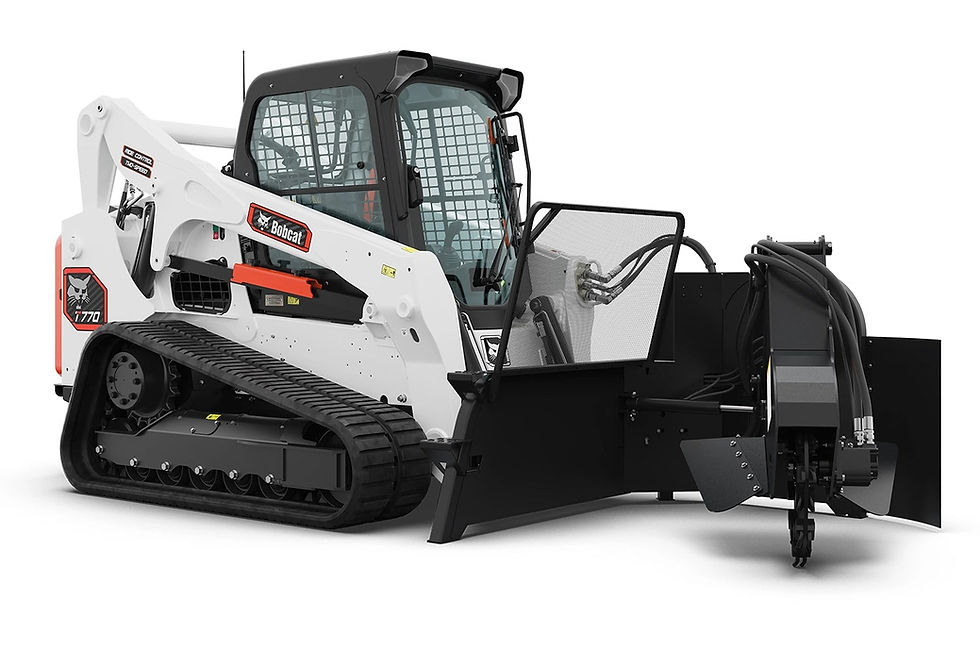
Bobcat's T770 compact track loader and S590 skid steer loader won their respective categories in EquipmentWatch's Highest Retained Value Awards for six consecutive years running as of the most recent cycle covering that streak. That's not a one-time fluke or a single good model year, it's a sustained pattern across both of Bobcat's primary compact equipment categories, loaders and skid steers, holding the top resale-value position against every other manufacturer's competing models in those classes year after year. Doosan Bobcat's own leadership framed the result around the brand's reputation for durability and uptime, but the award itself is independent, third-party data, not a manufacturer's own marketing claim.

Where CAT Has Actually Won
CAT isn't absent from this conversation. The CAT 325 won its category outright in the Crawler Medium Excavators class in an earlier EquipmentWatch awards cycle, taking the top resale-value spot in a category where excavators from Komatsu, Hitachi, Volvo, and other major manufacturers compete directly. That's a genuinely significant result in one of the most heavily contested equipment categories in the industry, medium crawler excavators are a volume class with intense competition, and winning outright there says something real about how the market values a used CAT 325 relative to its original price.
Why This Methodology Deserves More Trust Than a Brand's Own Claims
It's worth dwelling on why this particular award carries real weight rather than treating it as just another industry accolade. EquipmentWatch isn't owned by, or beholden to, any single equipment manufacturer, and its Values product is built from actual market transaction data, not survey responses or manufacturer-submitted figures. Tracking depreciation across 12,000-plus models with up to three decades of model-year history is a genuinely large dataset, and projecting 84 months forward while scoring the award on a 60-month basis means the methodology isn't cherry-picking a short window where one brand happened to have a good year. A manufacturer can claim its equipment "holds value well" in its own marketing copy; an independent firm with no stake in the outcome publishing a documented, repeatable ranking against 12,000 other models is a fundamentally different, and more trustworthy, kind of claim.
The Honest Read: Different Equipment Classes, Different Winners
The honest takeaway here isn't "Bobcat beats CAT on resale" or the reverse, it's that resale strength shows up differently by equipment class, and the smart move is checking the specific category that matches the specific machine you're actually buying rather than assuming brand reputation alone settles the question. Bobcat's compact track loader and skid steer dominance is well-documented and sustained across multiple award cycles. CAT's strength shows up clearly in its medium excavator lineup. A contractor buying a skid steer and a contractor buying a 20-ton excavator are making two different resale bets, and the data supports leaning toward Bobcat for the former and taking CAT's performance in the latter seriously rather than assuming either brand dominates every category uniformly.
What Actually Drives Strong Resale Value, Beyond the Badge
A brand name alone doesn't produce a resale-value win six years running, there's usually a real mechanical and market reason behind it. For Bobcat's compact track loaders and skid steers, that reason includes an enormous installed base that keeps used-equipment demand deep and liquid, a dense dealer and parts network that keeps older machines serviceable and therefore valuable longer, and a well-documented reputation for durability that buyers in the used market actively price into their offers. For CAT's medium excavators, the 325's strength reflects CAT's own massive dealer footprint, a huge global used-equipment market that treats CAT excavators as a known, trusted commodity, and a track record of components, including the Reman program covered in CAT's remanufacturing lineup, that genuinely extends a machine's serviceable life well past what a buyer might assume from hour meter alone. Resale value isn't magic, it's the market pricing in real, observable durability and support infrastructure, which is exactly why it's worth taking seriously as data rather than dismissing it as brand sentiment.
Why Resale Value Should Actually Factor Into a Purchase Decision
A machine's eventual trade-in or resale value directly affects the real cost of ownership over its working life, even though it's easy to ignore that number at the moment of purchase when the focus is on specs and price. Two machines priced identically on day one with meaningfully different five-year resale projections aren't actually the same financial decision, the one that holds value better effectively costs less to own once you account for what you'll recover when you eventually sell, trade in, or finance a replacement. For a contractor planning to run equipment for a defined ownership window rather than forever, that retained-value gap is real money, not an abstraction.
How to Actually Check This Before You Buy
EquipmentWatch's award winners and finalists lists are published annually and organized by equipment category, which means the practical step here is simple: before finalizing a purchase, look up whether the specific model and category you're considering has appeared in recent Highest Retained Value rankings, either as a winner or a finalist. A model's absence from the list isn't necessarily a red flag, not every solid machine wins an award, but a documented win or repeated finalist appearance is a genuine point in that model's favor worth weighing against price and specs. For a mixed-brand fleet decision, checking both candidates against the same category ranking gives you an apples-to-apples comparison point that a spec sheet alone can't provide, since specs don't tell you how the market has actually priced comparable used units over time.
What a Retained-Value Gap Actually Means Over an Ownership Window
A model that consistently lands at the top of its category's retained-value ranking versus one that sits in the middle of the pack isn't a marginal difference dressed up as a big deal, it compounds meaningfully over a typical five-year ownership window. The gap shows up at the exact moment it matters most financially: when you're trading in or selling that machine to fund its replacement. A stronger resale position means more capital recovered at that moment, which either reduces how much new financing you need for the next machine or improves your negotiating position with a dealer taking the old unit in trade. None of this requires guessing at specific dollar figures to understand directionally, a machine documented as retaining value better than its category average will put more money back in your pocket at trade-in than one documented as retaining value worse than average, full stop.
Named Scenarios Where This Data Should Change Your Decision
A contractor deciding between a Bobcat skid steer and a competing brand's comparable model, with specs and price close enough to be a toss-up, has real, independent data suggesting the Bobcat is the stronger long-term financial bet based on documented resale performance. A contractor planning a five-year equipment replacement cycle, trading in or selling machines on a set schedule rather than running them until failure, should weight retained-value data more heavily than a contractor planning to run equipment for fifteen years, since the resale gap matters most to someone who's actually going to realize it at trade-in. A fleet manager justifying a purchase decision to ownership or a lender benefits from citing independent, third-party resale data rather than relying on brand reputation alone, since it's a verifiable number rather than an opinion.
Rent-vs-Own: Resale Data Is Meaningless Unless You Own the Asset
None of this retained-value analysis matters at all to a contractor renting equipment job by job, since a renter never owns the asset whose future resale value is being projected, and never captures any of that retained value when the five-year mark actually arrives. Resale and retained-value data is exclusively relevant to ownership, which is itself a reason to lean toward owning rather than renting equipment you use regularly: renting forfeits not just the day-to-day cost advantage of ownership, but also the entire financial upside of buying equipment that happens to be documented as holding value exceptionally well. A contractor who's been renting a skid steer for years has been paying rental rates on a Bobcat or competing model without ever being in a position to capture the resale strength that machine class has actually demonstrated.
What This Means for Financing Structure
A machine with strong, documented resale value is a different collateral proposition than one without that track record, and that distinction can matter in how a loan or lease is structured. Equipment that holds value well gives both the contractor and the lender more confidence in the asset's worth throughout the loan term, which is part of why resale performance is worth raising directly in a financing conversation rather than treating it as a side consideration that only matters at trade-in time.
Equipment financing through BFC takes the whole picture into account, including how a specific machine's documented resale performance fits into the overall deal, not just its purchase price today. Deposit requirements range from no money down for strong, established credit up to a moderate percentage for newer operations still building a credit file, and BFC works with contractors nationwide, not one region, whether you're financing a Bobcat compact loader with a strong retained-value track record or a CAT excavator with its own documented resale strength.
Rounding Out the Comparison
If resale value has you looking more closely at Bobcat's compact track loader lineup, our spotlight on the Bobcat T770 compact track loader covers the specific machine behind one of these award wins in real depth. And since attachment and coupler technology factor into a machine's long-term value just as much as the base spec sheet, it's worth reviewing Bobcat's Bob-Dock hands-free hydraulic coupling system before deciding which platform fits your fleet. For a broader look at how both brands structure protection and support behind a purchase, how CAT's CVA protection plan compares to Bobcat's Protection Plus rounds out the full ownership picture beyond resale numbers alone.
Financing a Purchase Backed by Real Resale Data
A purchase decision informed by independent, documented resale performance is a stronger decision than one based on brand loyalty alone. BFC structures financing around the whole picture, including how a specific machine's track record fits your actual ownership timeline, so you're making a financially sound decision from day one, not just a comfortable one.


Comments